

Picking a hyperhidrosis treatment feels harder than it should. There are devices, prescriptions, gels, sessions, and a lot of "it depends" answers that don't really help you. The Dermadry vs Twofold question is one of the more practical comparisons out there right now because both are built for home use, both are accessible, and both take a totally different approach to the same problem. Here's what actually separates them.
TLDR:
- Dermadry uses electrical current through water trays to reduce palm and sole sweating, drug-free.
- If your sweating goes beyond hands and feet, a water tray cannot reach your face, back, or groin.
- Dermadry asks for 3 to 5 sessions a week; Twofold is one nightly gel application, no equipment needed.
- Dermadry is a ~$500 device purchase; Twofold runs $150 per quarter ($50/mo) with no hardware cost upfront.
- Twofold is a virtual sweat clinic where a dermatologist reviews your medical history and can adjust your plan over time.
What Is Dermadry?

Dermadry is a Canadian consumer device company that makes FDA-cleared, at-home iontophoresis machines for hyperhidrosis, a condition that causes sweating well beyond what the body needs to cool itself. The machines run a mild electrical current through tap water to reduce sweating in the hands, feet, and underarms. Its flagship device, the Dermadry Total, is drug-free and needle-free, bought as a one-time piece of hardware, though in the United States a prescription is required before you can purchase one.
What Is Twofold?
Twofold is a virtual sweat clinic. You fill out a short online intake, and a licensed dermatologist who specializes in sweating reviews it asynchronously, so there is no in-person appointment to schedule. If you are a good fit, they may write a prescription for a compounded topical oxybutynin 8% gel or oral medication that ships to your door. From your side, the whole thing happens at home, within 5-10 minutes, with unlimited dermatologist follow-up messaging if your dose or routine needs adjusting.
What Is Hyperhidrosis?
If you sweat so much that you sweat through shirts on a cool day, or leave damp prints on everything you touch, you are dealing with something more than being "a sweaty person." Hyperhidrosis is a medical condition where the body produces sweat far past what it needs to manage body temperature. It often shows up in focal hyperhidrosis zones like the hands, feet, underarms, and face, and it affects an estimated 4.8% of Americans, roughly 15 million people.
That distinction matters here. Which areas sweat, and how heavily, shapes which treatments make sense for you. A device built for palms and soles solves a different problem than a gel you can apply almost anywhere.
Treatment Areas: Where Can Each Option Be Applied?
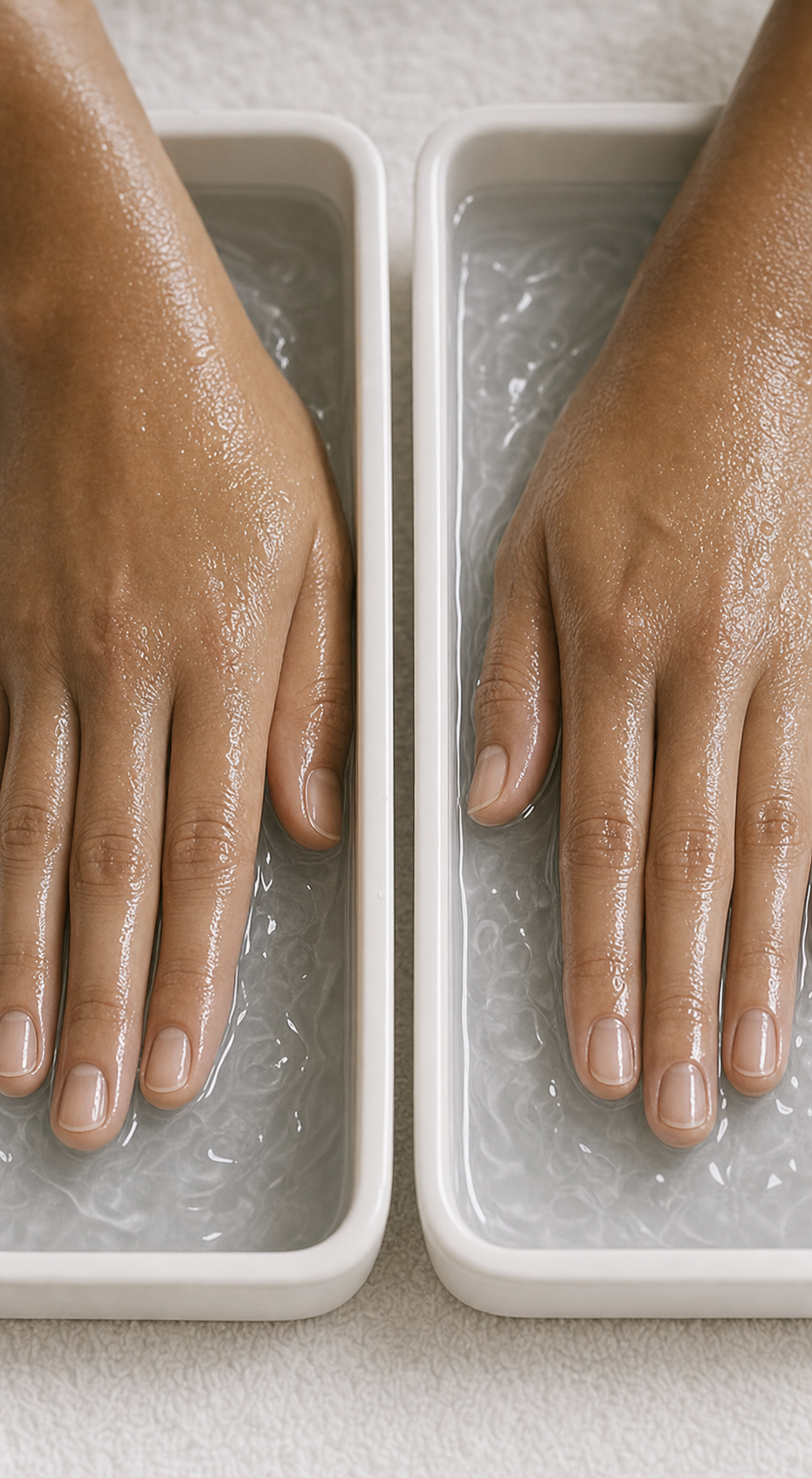
Coverage is where these two options split most cleanly. Dermadry's iontophoresis works by submerging a body part in a water tray or pressing a pad against skin, so its reach stops at palms, soles, and underarms. Fingers often sit above the waterline and get undertreated. Oxybutynin gel through Twofold takes a different shape. Because a dermatologist prescribes it as a topical, it may be applied almost anywhere on the body.
If your sweating stays on palms and soles, the difference may not matter much. Once it spreads to the face or torso, it becomes a real fit consideration.
How Each Treatment Works
The two approaches reduce sweat through completely different mechanisms, and knowing which one you find more workable can settle a lot of the decision.
Dermadry: iontophoresis
Dermadry sends a mild electrical current through tap water, which temporarily interrupts the nerve signals telling your sweat glands to fire near the skin surface. No drug is involved. Iontophoresis for hyperhidrosis has been studied since the 1940s, and a 2022 systematic review found that more than 80% of patients with palmoplantar hyperhidrosis saw improvement with iontophoresis, making it a well-evidenced, widely accepted way to quiet sweating in the hands and feet.1
Twofold: topical oxybutynin
Compounded oxybutynin 8% gel blocks acetylcholine, the neurotransmitter that switches sweat glands on. A 2024 systematic review found that topical oxybutynin produced a clinically meaningful improvement in sweating severity in 73.6% of patients versus 42.8% on placebo.3 The gel includes penetration-enhancing ingredients so it can reach through thicker skin on the palms and soles, where surface-level products often stall.
Session Commitment and Everyday Routine
Time is the hidden cost of any sweat treatment, and the two options ask for very different amounts of it.
Dermadry runs on a session schedule: typically 3 to 5 sessions a week early on, with each area taking 20 to 30 minutes in the water trays, before tapering to roughly weekly maintenance.2 Skip a stretch and sweating tends to creep back, so consistency matters more than it might seem upfront. The device is also on the bulkier side and does not pack well for travel. People who find that routine harder to keep up sometimes look at options like Botox for hyperhidrosis, which comes with its own set of trade-offs.
Twofold's routine asks much less of you. The gel goes on once at night, dries in minutes, and needs no trays or setup. A small bottle fits easily in a carry-on, and once the medication has taken effect, many patients work with their dermatologist to dial back frequency to every other night or less.
Pricing and Total Cost
Here the money splits into two shapes. Dermadry is a one-time device purchase; when choosing an iontophoresis machine, the Dermadry Total is built to cover hands, feet, and underarms, followed by smaller ongoing costs for consumables like replacement electrodes and underarm pockets. Twofold runs on a quarterly plan, $150 for a 3-month supply ($50/mo), with no hardware to buy, and 24/7 dermatologist support.
So it comes down to a real trade-off. Once you own the Dermadry device, upkeep stays modest. Twofold's cost recurs, but it folds in unlimited dermatologist messaging and carries no upfront equipment or appointment fees. Both are HSA/FSA eligible in the U.S., and since Dermadry also requires a prescription before purchase here, neither one is fully self-directed.
Medical Guidance and Ongoing Care
Buying a device and starting a prescription plan diverge most once you have questions. Dermadry offers support for the hardware, things like setup, electrode replacement, or troubleshooting a session. What it does not include is a clinician watching your progress or moving you to a different approach if iontophoresis alone is not cutting your sweating.
Twofold builds that oversight in. A sweat-specialized dermatologist reviews your intake within about 24 hours, then you get unlimited messaging through the portal to fine-tune your pumps or frequency.
If the gel is not enough alone, the same dermatologist can prescribe oral glycopyrrolate for hyperhidrosis or oral extended-release oxybutynin, including combination plans pairing a lower oral dose with topical on your worst areas.
Who Is Dermadry a Better Fit For?
Dermadry earns the nod in a few clear cases:
- You want a drug-free approach with no medication involved at all, relying on water and a mild current instead.
- You have mild to moderate excessively sweaty hands or sole sweating and can realistically keep up the regular session schedule at home.
- You live outside Twofold's covered states or outside the U.S. entirely, since Dermadry ships worldwide.
Why Many People Choose Twofold Over Dermadry
Dermadry deserves its reputation. Iontophoresis is drug-free, backed by decades of clinical use, and well-suited to isolated palm or sole sweating if you can keep up the sessions.
For many people, Twofold is a practical place to start before committing to a $500 device. The gel covers zones a water tray physically cannot reach, including the face, back, and groin, and fits into a broader look at how to stop sweating. The routine is one nightly application, no equipment, no sessions. A sweat-specialized dermatologist stays in the loop throughout and can add oral options or bring in Botox for hyperhidrosis if the topical alone is not moving things far enough. The cost is a flat quarterly subscription with no hardware to buy going in.
Final Thoughts on Dermadry vs Twofold
There is no wrong starting point here. Both options have helped people manage hyperhidrosis in different ways. Your body, your sweat zones, and your daily routine are the best guide to which one fits, and a dermatologist can always help you think it through.
FAQ
Should I choose Dermadry or Twofold if my sweating affects more than just my hands and feet?
If your sweating goes beyond palms and soles, covering areas like your face, back, chest, or groin, Twofold is the more practical fit, since Dermadry's iontophoresis trays physically can't reach those zones. Dermadry works well when sweating stays isolated to the hands, feet, and underarms and you're committed to regular sessions.
How is Twofold's topical oxybutynin gel different from Dermadry's iontophoresis approach?
Dermadry uses a mild electrical current through tap water to interrupt nerve signals near the skin surface, with no drugs involved. Twofold's compounded oxybutynin 8% gel blocks acetylcholine, the neurotransmitter that triggers sweat glands, and is applied once nightly at home; note that its use for hyperhidrosis is off-label and the compounded gel is not separately FDA-approved.
Who is Dermadry the right choice for?
Dermadry is a strong fit if you want a completely drug-free option, your sweating is mild to moderate and limited to palms, soles, or underarms, and you can realistically stick to a 3 to 5 session-per-week schedule. It also makes sense if you live outside Twofold's covered states.
What ongoing medical support does Twofold include that Dermadry doesn't?
Twofold includes a dermatologist review within about 24 hours of your intake, plus unlimited follow-up messaging through its portal to adjust your dose or frequency. If the topical gel alone isn't enough, your dermatologist can also prescribe oral glycopyrrolate or oral extended-release oxybutynin. Dermadry's support covers device setup and troubleshooting, but no clinical oversight is included.
Is a prescription required to start with either Dermadry or Twofold in the U.S.?
Yes, in the U.S., Dermadry requires a prescription before purchase, and Twofold's treatment begins with a free online medical intake reviewed by a licensed dermatologist, though a prescription is not guaranteed. Neither option is fully self-directed, so factor that into your decision if you were hoping to skip the medical step entirely.
If you see a mistake or something you think should be updated, let us know at hello@itstwofold.com!


