


Iontophoresis for hyperhidrosis keeps coming up as a recommendation, and if you're seeing it everywhere from iontophoresis physiopedia pages to iontophoresis Reddit threads, you're probably wondering whether it's actually worth it. The short version: for sweaty hands and feet, the evidence is pretty strong. The longer version involves understanding how iontophoresis works, what an iontophoresis machine costs, what iontophoresis side effects to expect, and whether there are alternatives that fit your lifestyle better. That's exactly what we're covering here.
TLDR:
- Iontophoresis (eye-on-toe-fuh-REE-sis) uses mild electrical current through water to calm overactive sweat glands
- A 2022 systematic review found 80%+ of people with palmoplantar (palm and sole) hyperhidrosis saw meaningful improvement
- Home devices ($500 to $1,000) can be easier to stay consistent with than clinic visits due to scheduling ease
- Side effects are mostly minor, but skip iontophoresis if you have a pacemaker, metal implants, or are pregnant
- Twofold offers an online dermatologist visit plus prescription treatments as a device-free alternative
What Is Iontophoresis
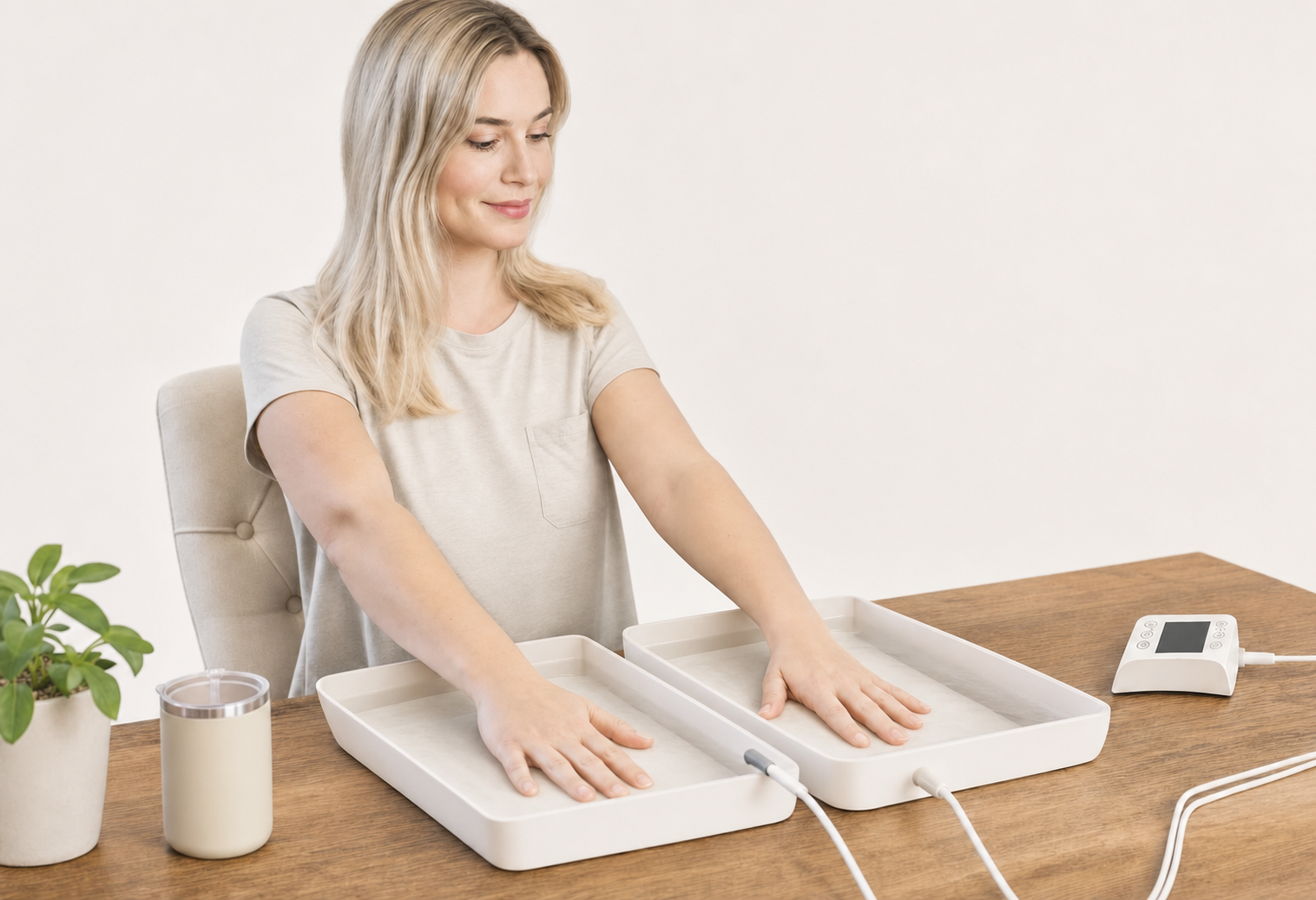
Iontophoresis uses a mild electrical current to push substances through the skin, or to quiet the glands beneath it. In practice, you sit with your hands or feet in shallow trays of water while a low current runs through them.
You say it eye-on-toe-fuh-REE-sis. The word blends "ion," a charged particle, with the Greek root for movement.
Clinically, it shows up in two places. Dermatologists calm overactive sweat glands, and physical therapists deliver medication into sore tissue without a needle.
How Iontophoresis Works
The current itself does the work. A direct electrical charge runs through tap water into the outer layer of skin, where it interferes with how your sweat glands operate. Why that happens stays a bit murky.
Researchers have a few working theories, none settled:
- Ions physically plug the sweat ducts, blocking flow near the surface
- The current disrupts the nerve signaling that tells glands to fire
- A local drop in sweat gland pH suppresses production
We don't fully understand the mechanism. It works for some people, though the exact reason stays partly open.
What Iontophoresis Is Used For
Two fields lean on iontophoresis, and they use it for opposite reasons.
Managing excessive sweating
In dermatology, it treats hyperhidrosis, most often on the palms and soles where sweating runs heaviest. Underarms respond too, though the trays fit hands and feet more easily than armpits. The goal is simple: fewer excessively sweaty hands day to day.
Delivering medication in physical therapy
Physical therapists use the current differently. Instead of quieting glands, they push anti-inflammatory drugs like dexamethasone through the skin into sore tissue, treating pain and swelling without an injection.
What to Expect During an Iontophoresis Session
A session starts with water. You settle your hands or feet into shallow trays of tap water, or press wet electrode pads against your underarms. Once the device switches on, most people feel a mild tingling where skin meets the surface, and you can adjust intensity to stay comfortable. Sessions run 20 to 30 minutes with no recovery time. Most protocols open with three to four sessions weekly, then taper to weekly maintenance, continuing indefinitely since results fade if you stop.
Does Iontophoresis Work for Hyperhidrosis
For hands and feet, the evidence holds up well. A 2022 systematic review found that more than 80% of people with palmoplantar hyperhidrosis saw meaningful improvement with iontophoresis for hyperhidrosis, which is why it stays a common recommendation for sweaty palms and soles.
The catch is adherence. Results track closely with sticking to the schedule, and sweating creeps back once you stop, so it works as ongoing management of focal hyperhidrosis, not a one-time fix.
Underarms are less certain. The systematic review rests mostly on hands and feet, where the trays fit.
Iontophoresis Side Effects and Risks
Side effects tend to be minor, and most cluster in the skin where the current meets it.
- Dryness and redness after sessions
- Mild irritation or a tingling that lingers briefly
- Small blisters or localized peeling, usually where contact was strongest
Most of this settles on its own. A moisturizer after each session may help, and turning the current down a notch often clears up irritation that keeps coming back. Serious reactions are uncommon in clinical reports, and iontophoresis has a long track record of use in dermatology, though as with any treatment, talking with a provider about your specific situation is a good idea.
Who Should Not Use Iontophoresis
Iontophoresis works well for many people, but a few situations rule it out.
- Cardiac pacemakers or other implanted electronic devices, since the current can interfere with them
- Metal implants in the path the current travels, which calls for a provider's sign-off
- Pregnancy
- Open wounds, cuts, or active skin infections in the treatment area
- Certain heart conditions
If any apply to you, skip the device and talk with a provider first. Standard clinical guidance flags pacemakers, metal implants, and pregnancy as the clearest reasons to avoid it.
Iontophoresis at Home vs. In-Clinic
You can get iontophoresis two ways: in a clinic, run by a dermatologist or physical therapist, or at home with your own device.
The trouble with the clinic route is scheduling. Since the protocol asks for several sessions a week, driving in each time gets impractical fast, and missed sessions are exactly what lets sweating return. Home use sidesteps that friction. FDA-cleared personal devices are widely available, and sticking to a steady home routine makes it easier to stay on the frequent schedule that results depend on.
Iontophoresis Machine Cost and What to Know Before Buying
Buying your own machine runs $500 to $1,000 out of pocket, a one-time cost regardless of how long you use it. In-clinic sessions bill separately, visit by visit. Insurance coverage for iontophoresis varies widely, check with your specific plan and provider, as coverage is not guaranteed.
Before you buy, weigh a few things:
- DC versus AC current, since DC is the standard for sweat control
- Device certification and whether it's FDA-cleared
- Clear manufacturer protocols for your treatment area
- Upfront price against replacement pads and long-term upkeep
Iontophoresis vs. Phonophoresis
Both push medication into tissue without a needle, but the driver differs. Iontophoresis uses a low electrical current to move charged ions through the skin. Phonophoresis uses ultrasound waves, vibrating a topical drug deeper into tissue.
| Iontophoresis | Phonophoresis | |
|---|---|---|
| Driver | Electrical current | Ultrasound waves |
| Common use | Hyperhidrosis, inflammation | Musculoskeletal pain |
| Typical drug | May be drug free | Anti-inflammatory gels |
For sweating, iontophoresis is the one that matters. Phonophoresis stays in the musculoskeletal lane.
Iontophoresis Alternatives for Hyperhidrosis
If iontophoresis is not the right fit, several other options treat sweating, each suited to different zones and levels of commitment.
| Option | Zones | Invasiveness | Commitment |
|---|---|---|---|
| Prescription antiperspirants for sweat control | Underarms, palms | None | Nightly (minutes) |
| Topical anticholinergics | Hands, feet, face, underarms | None | Nightly (minutes) |
| Oral anticholinergics | Whole body | None, systemic | Daily (minutes) |
| Botox for hyperhidrosis | Targeted zones | Injections | Every 3 to 6 months |
| Microwave thermolysis | Underarms only | In-office | One or two sessions |
| Hyperhidrosis surgery (ETS) | Palms, underarms | Surgical | One-time, permanent |
Which one fits depends on where you sweat and how to stop sweating based on how much upkeep you want.

How Twofold Fits for People Managing Hyperhidrosis
If the spending hours a week rhythm sounds like more than you want, our approach at Twofold is worth a look. You complete a free online medical intake, a sweat-specialized dermatologist reviews it within about 24 hours, and if treatment is a good fit, a prescription gets sent to a partner pharmacy and shipped to your door. Treatment can include a compounded topical oxybutynin 8% gel applied once nightly, though a dermatologist may prescribe an oral option like oral oxybutynin or glycopyrrolate if that fits your situation better, similar to how glycopyrrolate for hyperhidrosis works as an anticholinergic approach. No trays, no device, no drive.
The trade-offs are simple. No machine, no per-visit billing, just a flat $50/mo for a three-month supply with unlimited dermatologist follow-up. We don't take insurance.
Final Thoughts on Iontophoresis as a Sweating Treatment
The evidence for iontophoresis is strong, especially for hands and feet, and it's been around long enough that the clinical picture is pretty clear. Consistency is what drives results. Whether you go the device route or try something else entirely, the right fit is the one you can actually keep up with.
FAQ
Is iontophoresis for hyperhidrosis permanent, or do you have to keep doing it?
Iontophoresis is ongoing management, not a one-time fix. Results fade once you stop, so most protocols taper from three to four sessions weekly down to regular maintenance sessions that continue indefinitely to keep sweating under control.
What's the difference between iontophoresis and phonophoresis for treating hyperhidrosis?
Iontophoresis uses a low electrical current to quiet overactive sweat glands, making it the go-to option for hyperhidrosis on the hands and feet. Phonophoresis uses ultrasound waves to push anti-inflammatory drugs into musculoskeletal tissue and stays in the physical therapy lane, so it is not used for excessive sweating.
How much does an iontophoresis machine cost, and is it worth buying one?
A personal iontophoresis machine runs $500 to $1,000 as a one-time purchase, and home use can be easier to stay consistent with because the protocol requires several sessions a week. Before buying, check that the device is FDA-cleared, uses DC current for sweat control, and includes clear protocols for your specific treatment area.
Can I use iontophoresis if I have a pacemaker or metal implants?
No. A pacemaker or implanted electronic device is a hard contraindication since the electrical current can interfere with the device. Metal implants in the path the current travels and pregnancy are also reasons to avoid iontophoresis and speak with a provider before trying any electrical treatment.
What are the main iontophoresis side effects I should know about?
Side effects are generally mild and include skin dryness, redness, brief tingling, and occasional small blisters at the contact points. Most clear on their own; applying a moisturizer after each session and lowering the current intensity usually handles any irritation that keeps coming back.
If you see a mistake or something you think should be updated, let us know at hello@itstwofold.com!


