
Most of us have been using antiperspirant since our teens without thinking much about it, but lately there's been a wave of concern around things like aluminum in deodorant, antiperspirant side effects, and whether aluminum-free antiperspirant brands are a smarter choice. The worry about whether antiperspirant is bad for your skin, your health, or something worse is understandable. So here's a clear look at what the research actually shows, so you can make a call that makes sense for you.
TLDR:
- No studies confirm aluminum in antiperspirant causes breast cancer, Alzheimer's, or kidney damage in healthy people
- Daily antiperspirant use is safe for most people; skin irritation from fragrance is the real concern to watch
- "Aluminum-free antiperspirant" products work more like deodorant and offer less sweat control
- If you still soak through shirts despite daily antiperspirant, hyperhidrosis (overactive sweating) affects about 4.8% of people in the U.S. and is treatable
- Twofold is a virtual sweat clinic offering prescription treatment for excessive sweating, entirely online
How Antiperspirant Works
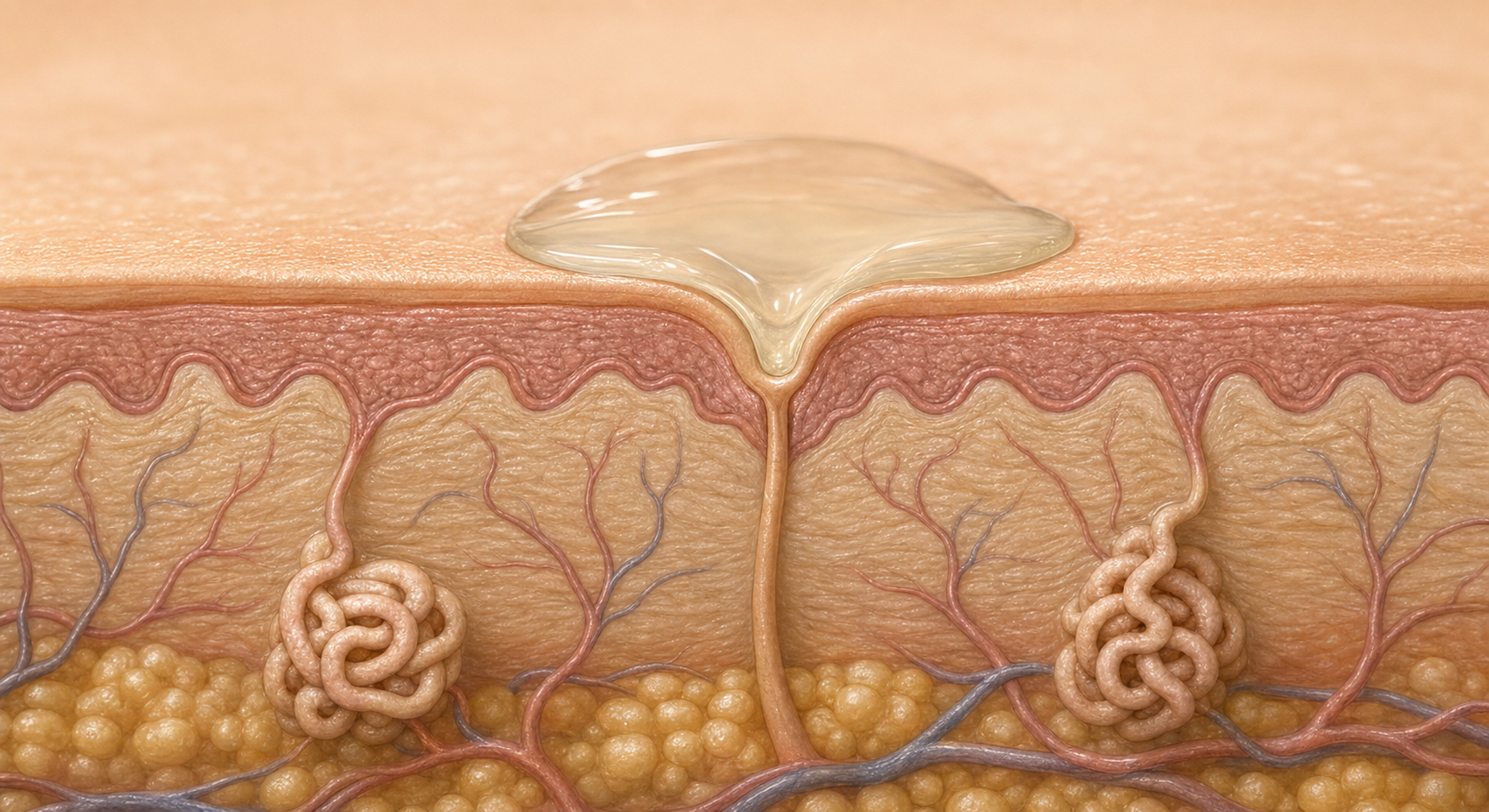
Every time you roll on an antiperspirant, aluminum based compounds go to work in a simple way. As soon as they meet the moisture in your sweat, they dissolve and form a soft gel that settles near the opening of each sweat duct. That gel acts like a temporary plug, narrowing the channel so less sweat reaches your skin.
Hold onto that word: temporary. The plug loosens over time and doesn't permanently shut down your glands. Wash it away, skip a few days, and the ducts open right back up.
Worth knowing: the FDA treats antiperspirants as over-the-counter drugs, not cosmetics, because they alter a body function. Deodorant sits in the cosmetic category. That comes straight from how dermatologists classify antiperspirants.
Antiperspirant vs. Deodorant
Here's where a lot of confusion starts, because the two products get shelved side by side and often live in the same stick. They solve different problems.
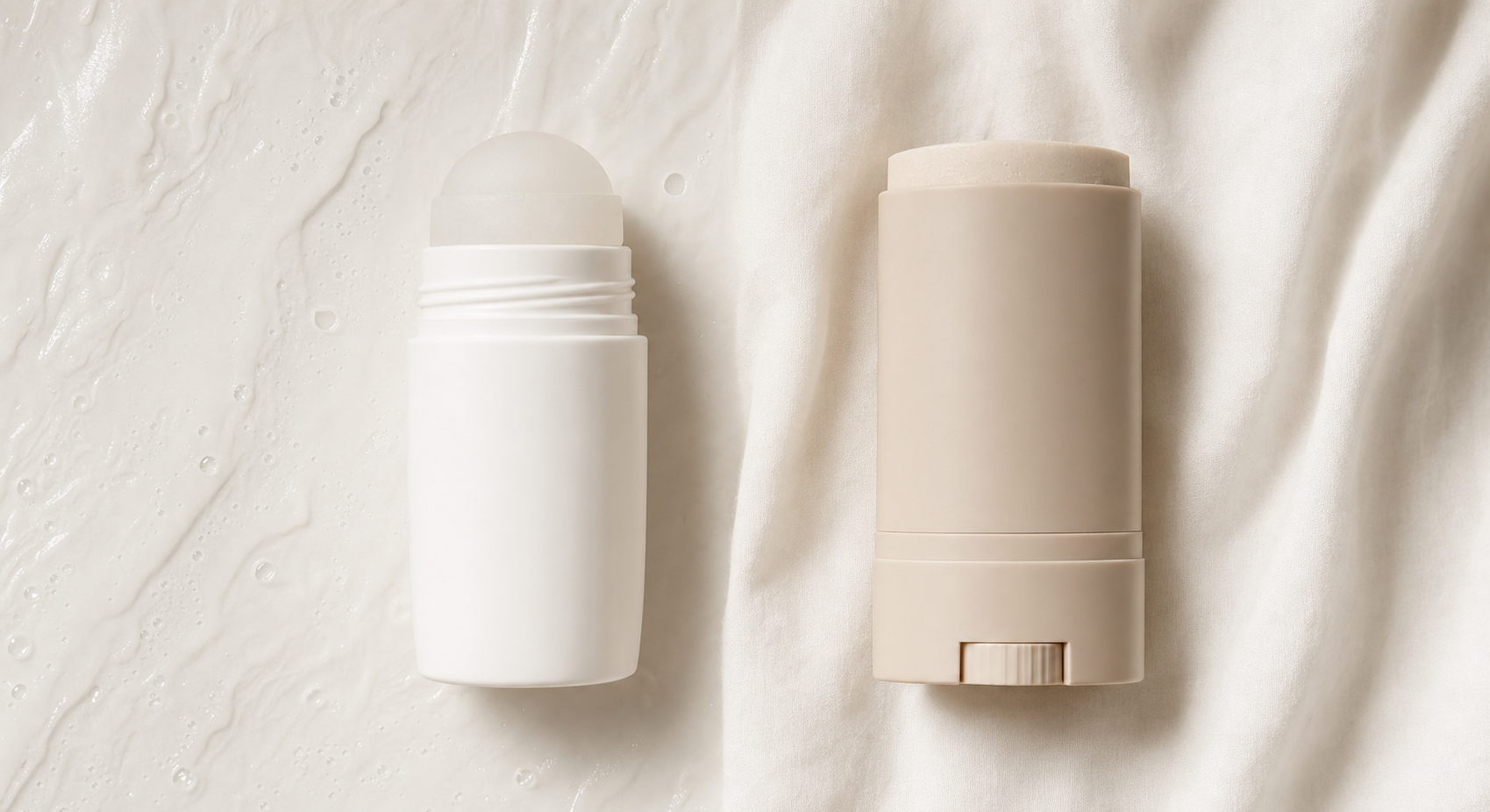
Deodorant goes after smell. Sweat itself is nearly odorless; the funk comes from bacteria feeding on it. Deodorants either mask that odor with fragrance or use antimicrobial agents to cut down the bacteria. What they don't do is stop you from sweating.
Antiperspirant tackles the sweat itself, and many formulas fold in deodorant ingredients too. So plenty of products labeled "antiperspirant/deodorant" handle both wetness and odor at once.
If smell is your only worry, deodorant covers it. If the dampness is the issue, you need an antiperspirant.
| Antiperspirant | Deodorant | |
|---|---|---|
| Primary job | Reduce sweat | Reduce odor |
| How it works | Aluminum compounds form a temporary plug that narrows sweat ducts | Masks odor with fragrance or kills odor-causing bacteria |
| Active ingredient | Aluminum chloride, chlorohydrate, or zirconium | Fragrance, antimicrobial agents (e.g., triclosan) |
| Stops sweating? | Yes (temporarily) | No |
| Stops odor? | Often (many formulas include deodorant ingredients) | Yes |
| FDA classification | Over-the-counter drug up to certain concentrations | Cosmetic |
| Best for | Wetness and odor | Odor only |
What's Actually in Antiperspirant
Flip any antiperspirant over and the label splits into two camps: the one active ingredient blocking sweat, and a supporting cast for smell, texture, and shelf life.
The active is always an aluminum based compound. You'll often see one of three:
- Aluminum chloride, the strongest and most likely to sting
- Aluminum chlorohydrate, the common drugstore workhorse
- Aluminum zirconium, often in tri- or tetrachlorohydrex form
Everything else is secondary. Fragrances cover odor but can irritate sensitive skin. Parabens, in some older formulas, preserve the product and have raised hormone questions. Other preservatives keep it stable.
Each concern gets its own section ahead.
Antiperspirant, Aluminum, and Breast Cancer Risk
The fear goes like this: you apply antiperspirant near breast tissue, aluminum seeps in, and over years it fuels cancer. It's the most-searched worry, so it deserves a straight answer.
The evidence doesn't back the link. The National Cancer Institute states plainly that no studies confirm aluminum raises breast cancer risk. A 2001 study found only 0.012% of applied aluminum enters the body, less than you get from eating.
Some researchers want more long-term data. Fair. But the science doesn't show antiperspirant causing breast cancer.
Other Claimed Health Risks: Alzheimer's Disease and Kidneys
Two other worries make the rounds, so let's clear them up.
Alzheimer's disease
The Alzheimer's theory traces back to older research that seemed to tie aluminum to the disease. Later studies didn't hold up that connection. Today, Alzheimer's Research UK and other major health bodies don't list aluminum from antiperspirants as a risk factor for Alzheimer's.
Kidneys
You'll spot a kidney warning right on the label, aimed at people who already have kidney disease. Healthy kidneys clear the trace amount of aluminum absorbed through skin without trouble, and that amount carries no documented risk for anyone with normal kidney function.
Antiperspirant Side Effects on Your Skin
The concern that holds up is irritation you can see and feel. Aluminum compounds work on the lining of your sweat ducts, and that action can leave underarm skin red, stinging, or burning. Stronger formulas raise the odds, so if you need guidance on choosing, see the best antiperspirant for sweat control. Underarm skin is thin and easily provoked, so it reacts first.
Fragrance deserves a closer look. Added scent is a leading cause of allergic contact dermatitis, often ahead of aluminum. If you get itchy or bumpy, fragrance is the likelier culprit.
Timing matters too. Applying right after shaving pushes product into razor nicks, a fast track to burning. Wait a while, or apply at night.
Is It Safe to Use Antiperspirant Every Day
For most people, using an OTC-strength antiperspirant every day is fine. The bigger worry with daily use is cumulative skin irritation, not anything toxic building up inside you.
A few habits keep your skin happier:
- Apply to clean, dry skin so the active can seal the duct properly
- Try applying at night, when sweat glands are calmer and skin is drier, so the product has time to set
- Switch to a gentler formula if you notice recurring redness
Night application also lets you use deodorant come morning, keeping you fresh without doubling up.
Is Antiperspirant Safe for Teens and Kids
Good news for parents: there's no clinical rule against healthy teens using antiperspirant. Puberty ramps up sweat, so aim for the lowest concentration that works, then watch for redness or stinging.
Younger kids are a different conversation. Before reaching for prescription-strength products, check with a pediatrician. And if a child sweats heavily for no obvious reason, that's worth a proper look. Asking why do I sweat so much can help surface an underlying condition. When in doubt, ask a professional who can weigh in on your kid's situation.
Aluminum-Free Antiperspirant: Does It Actually Work
Let's be straight about the label first. Products sold as "aluminum-free antiperspirant" don't plug your sweat ducts. Most swap in zinc oxide or moisture-absorbing ingredients that soak up dampness and cut odor, so they behave more like deodorants than true antiperspirants. If you're considering that route, the best deodorant for hyperhidrosis covers top-rated picks.
That means less sweat control. For mild sweating, aluminum sensitivity, or personal preference, they're a reasonable pick. If wetness is your real problem, expect the trade-off.
When Antiperspirant Isn't Enough
If you've used antiperspirant faithfully and still soak through your shirt, the product may not be the problem. Antiperspirants are built for everyday sweating. Sweating well beyond what cooling requires, on your underarms, palms, feet, or face, points to focal hyperhidrosis, an overactive sweat response affecting about 4.8% of people in the U.S. It's treatable, and OTC antiperspirant is just the first rung on a longer ladder. If you suspect hyperhidrosis, learning how to stop sweating can help you understand the full range of options that fit your situation.
Beyond Antiperspirant: How Twofold Treats Excessive Sweating
If antiperspirant keeps falling short, this is where we come in. Twofold pairs you with sweat-specialized dermatologists online, with prescription shipped to your door. If you're still learning about the condition, our guide to hyperhidrosis symptoms, causes, and treatments is a good place to start.
Through Twofold, a dermatologist may prescribe, if appropriate, a compounded topical oxybutynin 8% gel, applied once nightly. Instead of plugging the duct the way aluminum does, it blocks the acetylcholine signal that tells your sweat glands to fire. Different mechanism, and it's aluminum-free.
When an oral option fits better, our dermatologists can prescribe glycopyrrolate for hyperhidrosis or extended-release oxybutynin instead.
For personal medical questions, talk with a healthcare provider first.
Final Thoughts on Antiperspirant, Deodorant, and What's Actually Safe
Antiperspirant is safe for most people, and the big health scares around aluminum largely don't hold up. Your skin is the thing most likely to push back, especially with stronger formulas or fragrance. If you're past the point where OTC products help, a dermatologist can point you toward real options.
FAQ
Does aluminum in antiperspirant cause cancer or Alzheimer's disease?
No credible scientific evidence links aluminum in antiperspirant to breast cancer or Alzheimer's disease. The National Cancer Institute states no studies confirm aluminum raises breast cancer risk, and only about 0.012% of applied aluminum enters the body, which is less than what you absorb from food. The Alzheimer's connection traces back to older research that later studies did not support, and major health bodies do not list antiperspirant aluminum as a risk factor.
Is it safe to use antiperspirant every day, or does it build up and cause harm?
Daily use of OTC antiperspirant is considered safe for most people, and there is no documented evidence of toxic buildup from regular application. The more realistic concern with everyday use is cumulative skin irritation, particularly if you apply right after shaving or skip letting your skin dry first. Applying at night to clean, dry skin gives the active ingredient time to work and tends to reduce redness over time.
Aluminum-free antiperspirant vs. regular antiperspirant: which actually controls sweat?
Standard antiperspirants with aluminum compounds genuinely reduce sweat by forming a temporary gel plug in your sweat ducts; aluminum-free options swap in zinc oxide or moisture-absorbing ingredients, so they behave more like deodorants and offer less sweat control. For mild sweating or aluminum sensitivity, aluminum-free options are a reasonable choice. If persistent wetness is your real problem, expect a meaningful trade-off in performance.
What should I do if antiperspirant stops working no matter how consistently I use it?
If you are using antiperspirant faithfully and still soaking through clothing, the product likely is not the issue. Sweating well beyond what your body needs for temperature regulation (on your underarms, palms, feet, or face) can point to hyperhidrosis, a medical condition affecting about 4.8% of people in the U.S. OTC antiperspirant is the first step, but a provider can walk you through prescription-strength and clinical options, including treatments like Twofold's compounded topical oxybutynin 8% gel, which works by blocking the nerve signal that tells sweat glands to fire, instead of plugging the duct the way aluminum does.
How do I use antiperspirant and deodorant together without irritating my skin?
Apply antiperspirant at night to clean, dry skin so it has time to form the duct-narrowing gel without competing with sweat, then use deodorant in the morning to handle any remaining odor. Avoid applying antiperspirant right after shaving, since open nicks make burning far more likely. If you notice recurring redness, fragrance in your deodorant is often the culprit, so switching to a fragrance-free formula is worth trying before blaming the antiperspirant itself.
If you see a mistake or something you think should be updated, let us know at hello@itstwofold.com!


