

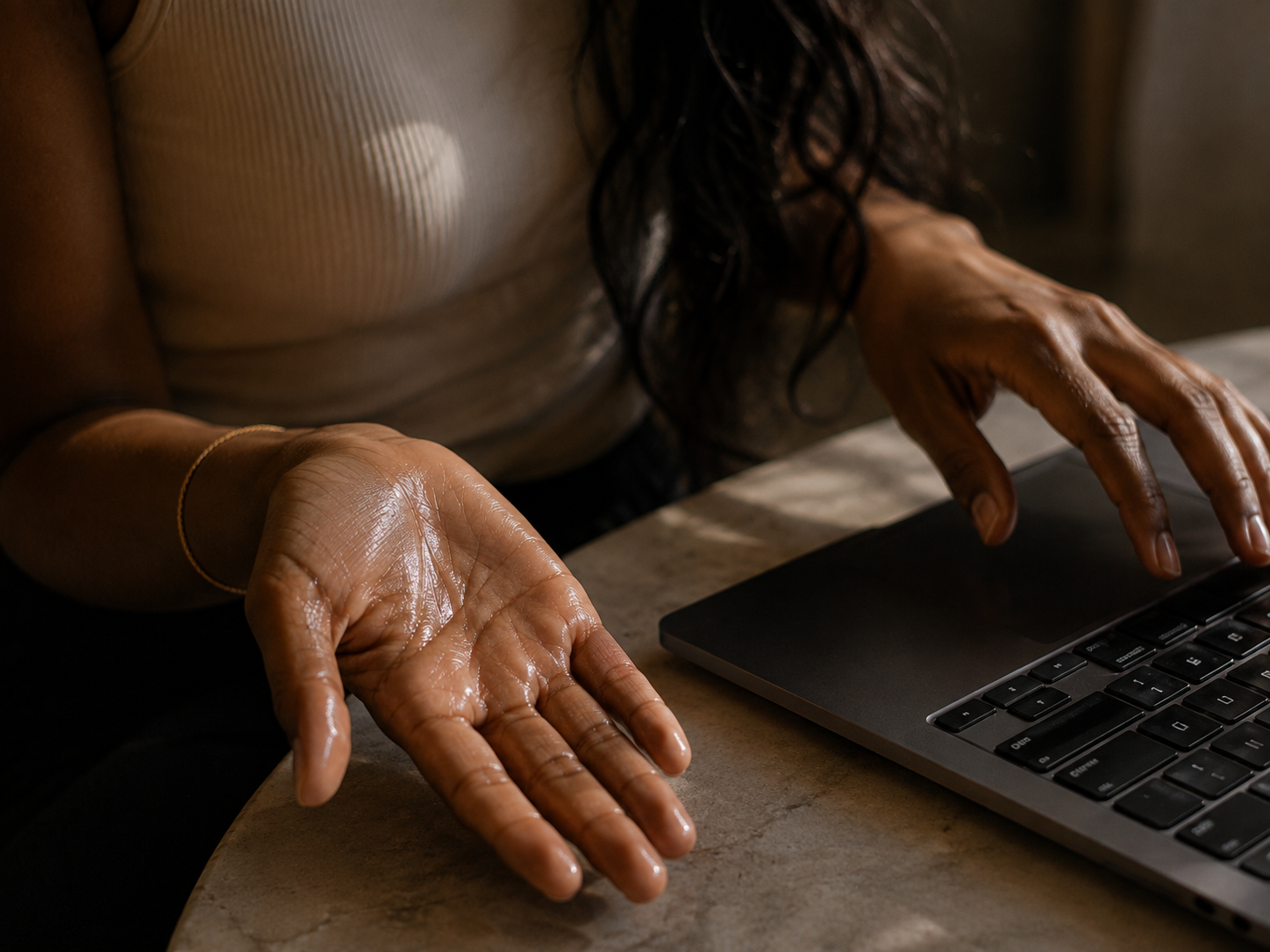
Your palms are sweating again, and you're not even warm. If that's been your reality for years, it's worth knowing that palm sweating goes beyond an anxiety quirk or a personality trait. It has a name, it has causes, and it has real treatment options that most people never get told about.
TLDR:
- Sweaty palms (palmar hyperhidrosis) affect about 15.3 million Americans and are a real medical condition, not a case of nerves
- Sudden-onset palm sweating in adulthood can signal thyroid issues, hormonal changes, or medication side effects worth checking out
- No home remedy will permanently manage sweaty hands; they help day-to-day but do not correct the nerve signaling underneath
- Treatments range from aluminum chloride antiperspirants to iontophoresis, which improved over 80% of users per a study in the International Journal of Dermatology
- Twofold connects individuals with sweat-specialized dermatologists online for prescription treatment options
What Are Sweaty Palms?
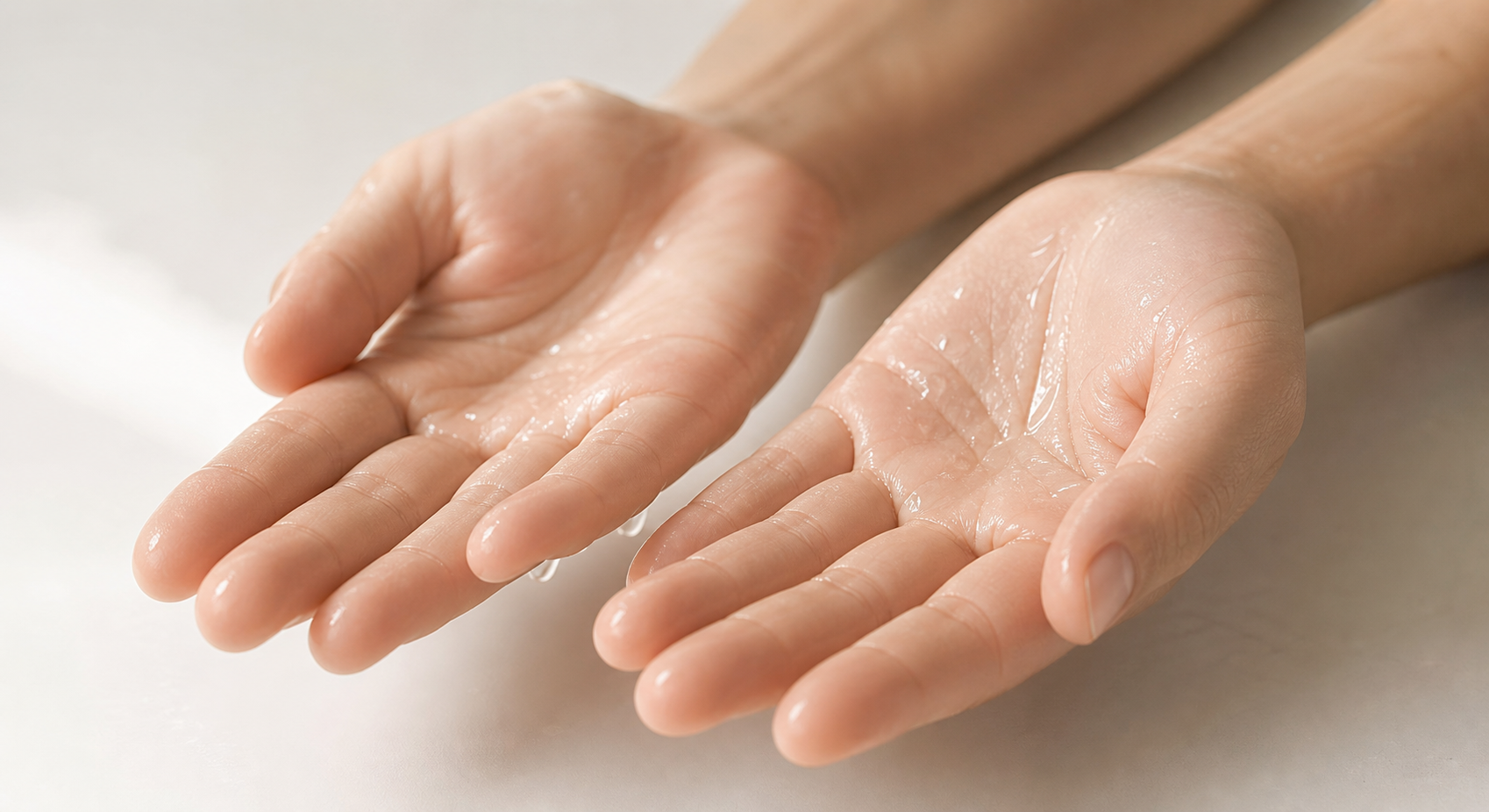
If your hands turn slick for no clear reason, sitting in a cool room, holding a phone, shaking someone's hand, you are dealing with something real. Palm sweating has a clinical name: palmar hyperhidrosis. It happens when the eccrine sweat glands in your hands, the ones meant to cool you down, fire off far more sweat than your body needs to manage its temperature.
This is a medical condition, not a personal quirk or a sign you are unusually nervous. It affects roughly 4.8% of the U.S. population, or about 15.3 million Americans, a condition known as hyperhidrosis.
And the weight of it goes beyond damp hands. Around 75% of people with hyperhidrosis report negative effects on their mental health, social relationships, and emotional well-being. So if this feels like more than a minor annoyance, you are not imagining it.
What Causes Sweaty Palms?
Sweaty palms fall into two buckets, and telling them apart matters for how you handle them.
Primary palmar hyperhidrosis
Most cases are primary, meaning no underlying illness drives the sweat. This form is also called focal hyperhidrosis. Your sympathetic nervous system, the part that controls automatic functions like heart rate, sends overactive signals to the sweat glands in your hands. It runs in families and usually shows up before age 25. If your palms have been damp since childhood with no obvious cause, this is the likely culprit.
Secondary causes
When palm sweating starts suddenly in adulthood, something else may be triggering it. Common secondary triggers include:
- Anxiety and stress, which activate the fight-or-flight response and switch on sweat glands
- Low blood sugar
- Hyperthyroidism, or an overactive thyroid
- Menopause and other hormonal changes, including pregnancy
- Certain medications, such as some antidepressants, beta-blockers, and stimulants
- In rarer cases, infections or other systemic conditions
I am not here to diagnose you. If your sweating appeared out of nowhere or comes paired with other symptoms, that pattern is worth flagging to a doctor.
Symptoms of Palmar Hyperhidrosis
So how do you know if what you have is genuinely palmar hyperhidrosis and not the occasional damp palm everyone gets? A few signs tend to show up together.
- Both hands sweat at once, in a fairly even, symmetric pattern
- The sweating happens at rest, with no heat or exertion to explain it
- Your palms feel cold and clammy, or in heavier cases drip visibly
- It eases or stops while you sleep
- It likely started in childhood or your teens, not last month
Emotional triggers make it worse. Stress, nervousness, or the anticipation of shaking a hand can set your palms streaming for no thermoregulatory reason at all. The more you worry about it, the more it shows up.
One more thing worth naming: plenty of people with sweaty palms also deal with sweaty feet, which is why searches pair the two. If you are wondering about the root causes, see our overview of excessively sweaty hands. Both usually respond to similar approaches.
Is Palmar Hyperhidrosis Dangerous?
The short answer: primary palmar hyperhidrosis will not hurt your body in a life-threatening way. But calling it harmless would miss the real toll it takes.
Constant moisture on the skin raises your odds of trouble. People with hyperhidrosis face a roughly 30% greater risk of skin infections, including fungal and bacterial ones, since damp skin gives those organisms a place to grow. The mental load is just as real. Research consistently finds people with hyperhidrosis run more anxious and depressed than other dermatology patients.
The one time sudden sweaty palms deserve urgent attention is when they arrive with chest pain, shortness of breath, or dizziness. That combination can point to something separate from your hands, and it warrants emergency care right away.
When to See a Doctor
Reaching for a doctor does not mean things have gotten dire. It means you would like the sweat to stop running your day. A few patterns are worth bringing to a provider:
- Sweating gets in the way of ordinary tasks like writing, holding a phone, gripping tools, or shaking hands without leaving a wet mark
- Over-the-counter antiperspirants or drying products have brought little change
- The sweating showed up suddenly with no clear trigger, or arrived alongside new symptoms
- The pattern points toward secondary hyperhidrosis: whole-body sweating, night sweats, unexplained weight changes, or fatigue
Here is something worth sitting with. Only about half of people with hyperhidrosis ever discuss their symptoms with a provider. Many assume damp hands are just their lot. It is a treatable condition, and a provider can rule out an underlying cause and point you toward options that fit.
How to Treat Sweaty Palms
Treatment usually climbs a ladder, starting with the gentlest options and moving up only when milder ones fall short.
| Treatment | How it works | Main trade-off |
|---|---|---|
| Antiperspirants for hands (OTC and prescription) | Aluminum chloride plugs sweat ducts; 20% aluminum chloride hexahydrate is used when OTC fails | Irritant dermatitis, burning, stinging that can force you to stop |
| Topical anticholinergics | Oxybutynin gel and glycopyrrolate block acetylcholine signals to sweat glands | Off-label for hyperhidrosis, compounded versions not separately FDA-approved; mild application-site reactions |
| Oral anticholinergics | Oral glycopyrrolate or oxybutynin for moderate-to-severe or multi-site sweating | Potential side effects, most often dry mouth |
| Iontophoresis for hyperhidrosis | A low electrical current through water lowers gland activity | 3 to 4 sessions weekly at first, devices run $500 to $1,000, not for pacemakers or metal implants |
| Botox for hyperhidrosis | Injected into palms in-office to block nerve signals | Repeat sessions every few months; about two-thirds see temporary grip weakness |
| Hyperhidrosis surgery (ETS) | Cuts the sympathetic nerves, for severe, treatment-resistant cases | Compensatory sweating elsewhere |
Topical oxybutynin improved 73.6% of patients versus 42.8% on placebo. Over 80% of palmoplantar users improved with iontophoresis. No single option wins for everyone.
Home Remedies and Lifestyle Tips for Sweaty Palms
Before anything else, a straight answer to the question people keep typing into search bars: no home remedy will permanently manage sweaty hands. These approaches help day-to-day, but they do not touch the overactive nerve signaling underneath. Keep that in mind, and a few can still make ordinary moments easier.
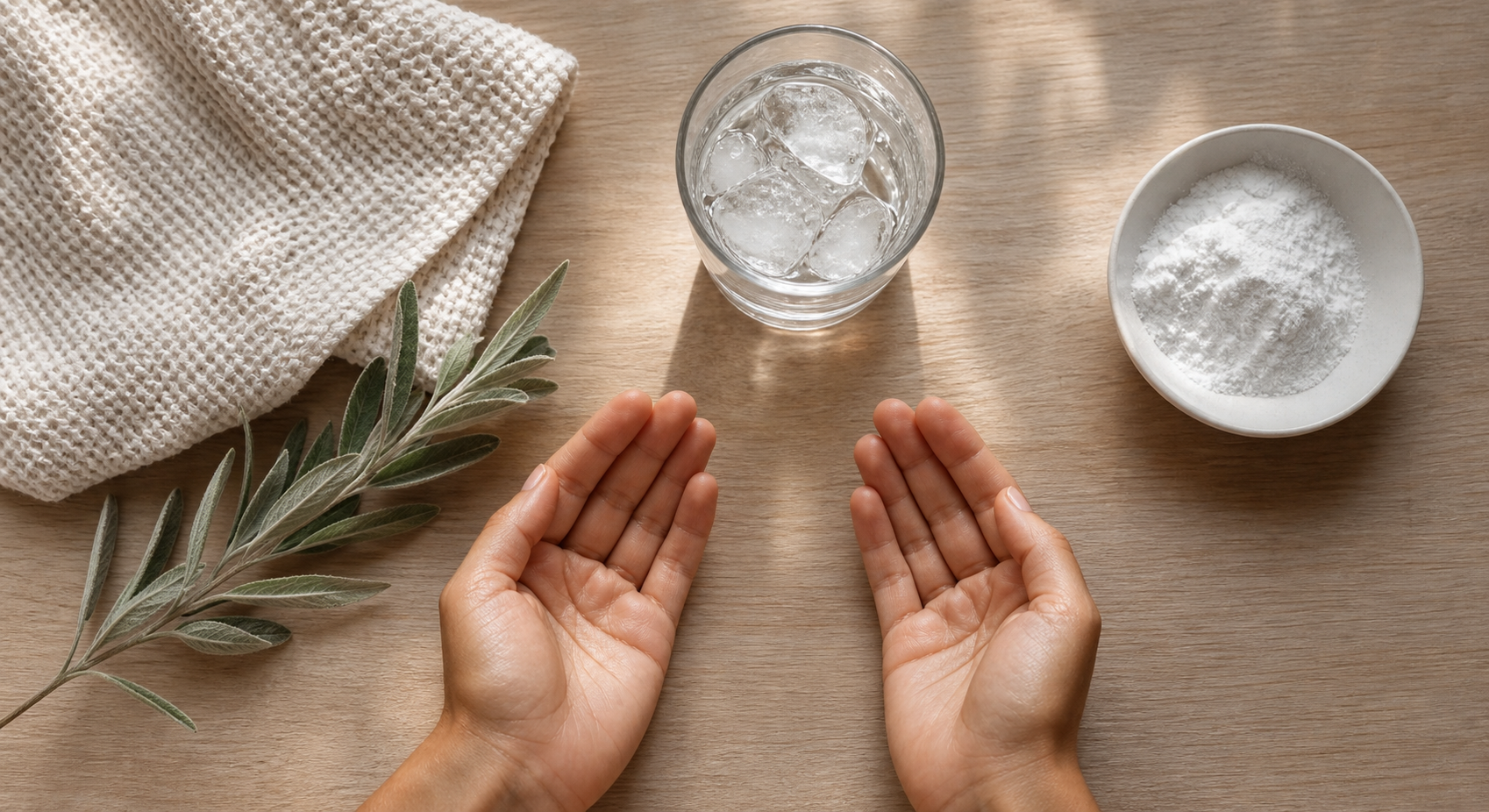
- Apply an over-the-counter antiperspirant to clean, dry hands at night. Aluminum chloride is more effective when palms are cool and inactive during sleep, then wash it off in the morning. For a broader look at your options, see this guide on how to stop sweating.
- Keep hands cool and dry. Carry a small towel or tissues, and rinse with cool water when heat builds.
- Wear breathable, natural-fiber clothing like cotton so trapped heat does not spill into more sweating.
- Practice stress and anxiety management. Since nerves set palmar sweating off, slow breathing or meditation can quiet a trigger before it starts.
- Sip sage tea. The evidence is anecdotal, but some people find its tannins help curb sweating.
- Dust a little baking soda on your palms before a handshake.
For milder days these may be enough, so treat them as support and not a permanent fix.
How to Prevent Palm Sweating Day to Day
Prevention is about staying ahead of triggers, not reacting once your hands are already wet. A little planning goes a long way.
- Learn your personal triggers. For some it is heat, for others a specific food or a high-pressure meeting. Track when episodes hit and steer around the patterns you spot.
- Ease up on caffeine and alcohol. Both can rev up your nervous system and turn a mild day into a soaked one.
- Stick to your treatment routine. If a dermatologist has you on a prescription plan, apply it consistently. Skipping nights lets sweating creep back.
- Keep moisture-wicking gloves handy for grip-heavy tasks like driving, gaming, or lifting.
- Plan for the big moments. Before a handshake or presentation, dry off, cool down, and settle your nerves.
Managing Sweaty Palms with Twofold
If working through the ladder above and wet hands still decide how your day goes, this is where we come in. Twofold connects you with sweat-specialized dermatologists entirely online, no in-person visit to book.
The flagship treatment available is a compounded topical oxybutynin 8% gel, applied once nightly. It sits on a penetration-enhancing base built for the thicker skin of hands and feet, where standard topicals often fail to absorb. Oxybutynin blocks the acetylcholine signal that tells your glands to fire, and because it acts at the application site, it carries less systemic burden than a pill.
When an oral approach fits better, dermatologists may also prescribe oral glycopyrrolate for hyperhidrosis and oral extended-release oxybutynin, including combination plans.
A few things worth knowing:
- Plans run $150 for a three-month supply (averages to $50/mo), no insurance required, with free shipping and unlimited dermatologist follow-up through the portal.
- There is a four-week money-back guarantee for patients who commit to the full regimen.
- Results are not permanent. Sweating returns if you stop.
Final Thoughts on Managing Palm Sweating
Palmar hyperhidrosis is common, treatable, and far better understood than most people realize. If your hands have been wet your whole life, that pattern does not have to hold. Treatment can make a real difference in day-to-day life, even if it requires ongoing management. Talk to a provider, find the approach that fits your life, and go from there.
FAQ
What causes sweaty palms all of a sudden in adults?
Sudden palm sweating in adults often points to a secondary trigger and not primary palmar hyperhidrosis, which typically starts in childhood. Common culprits include anxiety, hormonal changes like menopause or pregnancy, hyperthyroidism, low blood sugar, and certain medications such as antidepressants or stimulants. If your sweaty palms arrived alongside other new symptoms like fatigue, weight changes, or night sweats, bring that full picture to a doctor.
Is palmar hyperhidrosis dangerous, or does it just affect quality of life?
Primary palmar hyperhidrosis is not life-threatening, but calling it harmless undersells the real impact. Persistently damp skin raises your risk of fungal and bacterial skin infections by roughly 30%, and research shows people with hyperhidrosis experience higher rates of anxiety and depression than other dermatology patients. The one scenario that warrants emergency attention is sweaty palms paired with chest pain, shortness of breath, or dizziness, which can signal something unrelated to hyperhidrosis.
Palmar hyperhidrosis treatment options: topical oxybutynin vs. iontophoresis vs. Botox for hands?
All three work, but with different trade-offs. Topical oxybutynin gel blocks acetylcholine signals at the application site with minimal systemic burden and no needles or equipment; iontophoresis requires three to four weekly sessions and can run $500 to $1,000 device; Botox injections deliver strong results but need repeat in-office visits every few months and cause temporary grip weakness in about two-thirds of patients. The right fit depends on how severe your sweating is, how much routine you can commit to, and whether you want a clinic-based or at-home approach.
How do I know if home remedies for sweaty palms are enough, or if I need a prescription treatment?
Home remedies like nighttime antiperspirant application, stress management, and limiting caffeine can take the edge off milder days, but they do not touch the overactive nerve signaling that drives palmar hyperhidrosis. If sweating regularly disrupts writing, gripping tools, shaking hands, or using your phone, and over-the-counter options have made little difference, that gap between daily impact and symptom control is a clear signal to talk to a dermatologist about prescription-strength options.
Can I get palmar hyperhidrosis treatment without going to a dermatologist's office?
Yes. Telehealth platforms like Twofold connect you with sweat-specialized dermatologists entirely online through an asynchronous intake reviewed within about 24 hours, so no waiting room or in-person appointment is needed. If a prescription is a good fit for your situation, compounded medication ships directly to you, and is typically within two to five business days.
If you see a mistake or something you think should be updated, let us know at hello@itstwofold.com!


