


Sweaty feet aren't a hygiene problem. If you're searching for why do my feet sweat so much all of a sudden, or how to stop feet from sweating in shoes, or why your feet smell so bad after wearing shoes no matter what you try, the answer usually comes down to how your sweat glands and nervous system work together. Once you understand that, figuring out how to get rid of smelly feet or how to stop the sweating actually starts to make sense.
TLDR:
- Your feet have two sweat triggers at once: heat and emotions, making them sweat more than most body parts.
- Cold and sweaty feet together happen because stress narrows blood vessels while your sweat glands keep firing.
- Sweating that persists for 6+ months regardless of temperature may point to hyperhidrosis, a recognized medical condition.
- Closed shoes trap moisture and keep your sweat glands firing; wool or moisture-wicking socks help break that cycle.
Why Feet Sweat More Than Most Body Parts
Your feet aren't sweating by accident. The soles carry one of the densest populations of eccrine glands on your body, packed tightly across a small surface area. These are the glands that produce thin, watery sweat, and on your feet they are among the most active on the body.
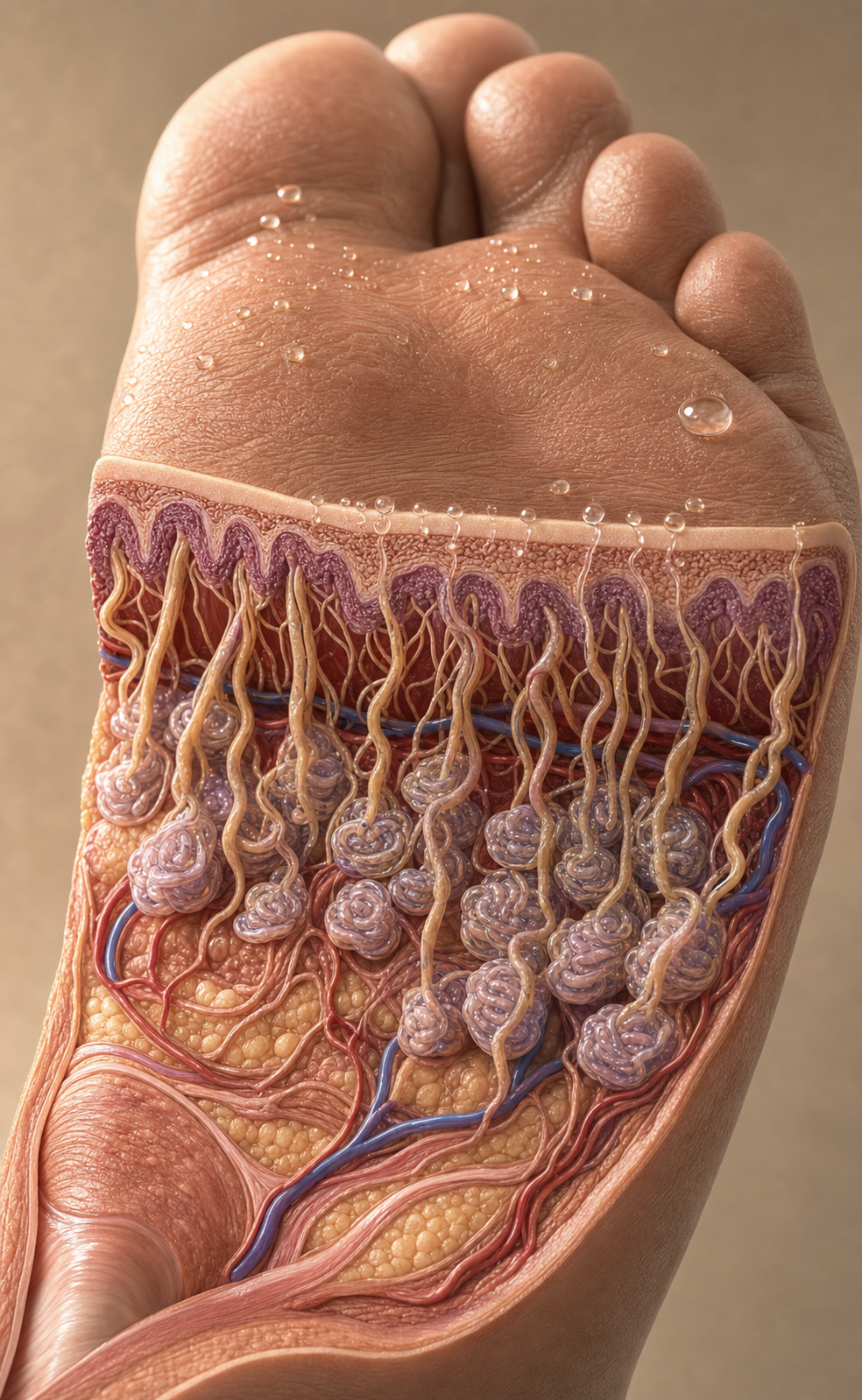
There's a second layer. Emotional sweating, triggered by stress or nerves through your sympathetic nervous system, shows up most on the palms, soles, face, and underarms. So your feet respond to both heat and how you feel, stacking two triggers onto one small patch of skin. Research on eccrine gland distribution backs this up.
Common Causes of Sweaty Feet
Sweaty feet fall along a range, and knowing roughly where you sit helps you decide what to do next. This is a map, not a diagnosis.
For many people, the cause is primary plantar hyperhidrosis. It's idiopathic, meaning no underlying disease, driven by an overactive sympathetic nervous system plus genetics. It usually starts before age 25 and shows up in excessively sweaty hands and feet together. Around 4.8% of the U.S. population lives with hyperhidrosis.
Secondary sweating means something else is driving it:
- Hyperthyroidism
- Diabetes
- Higher body weight
- Anxiety disorders
- Some antidepressants
- Menopause or pregnancy
Sudden adult onset warrants ruling out a secondary cause with a provider.
Why Your Feet Feel Cold and Sweaty at the Same Time
Cold and sweaty at once feels like a contradiction, but both share one trigger. When your sympathetic nervous system fires up from stress, anxiety, or hyperhidrosis, it does two things:
- Vasoconstriction: blood vessels in your feet narrow, pulling warm blood away from the surface.
- Eccrine glands keep firing: the same signal tells your sweat glands to produce sweat.
The result: less warm blood reaches the skin while sweat keeps running, so your feet turn damp and cool at the same time.
Signs Your Sweating May Be Hyperhidrosis
Situational sweat has a clear cause, like sprinting for the bus or sitting in a stuffy room. Hyperhidrosis looks different, and a few markers help you tell them apart:
- Sweating that shows up regardless of temperature or activity
- A symmetric pattern, both feet affected about equally
- Episodes that have persisted for six months or longer
- Interference with daily life: ruined shoes, feet sliding inside your sneakers
Primary hyperhidrosis usually stops while you sleep, so sweat soaking the sheets at night points toward a secondary cause worth checking.
If several sound familiar, worth a conversation. Only about half of people with hyperhidrosis mention it to a provider.
What Sweaty Feet Lead To: Odor, Infections, and Skin Changes
Keep feet damp long enough and the skin pays for it. Constant moisture softens and breaks down the outer layer, a process called maceration, which is why people with hyperhidrosis carry roughly a 30% greater risk of skin infections.
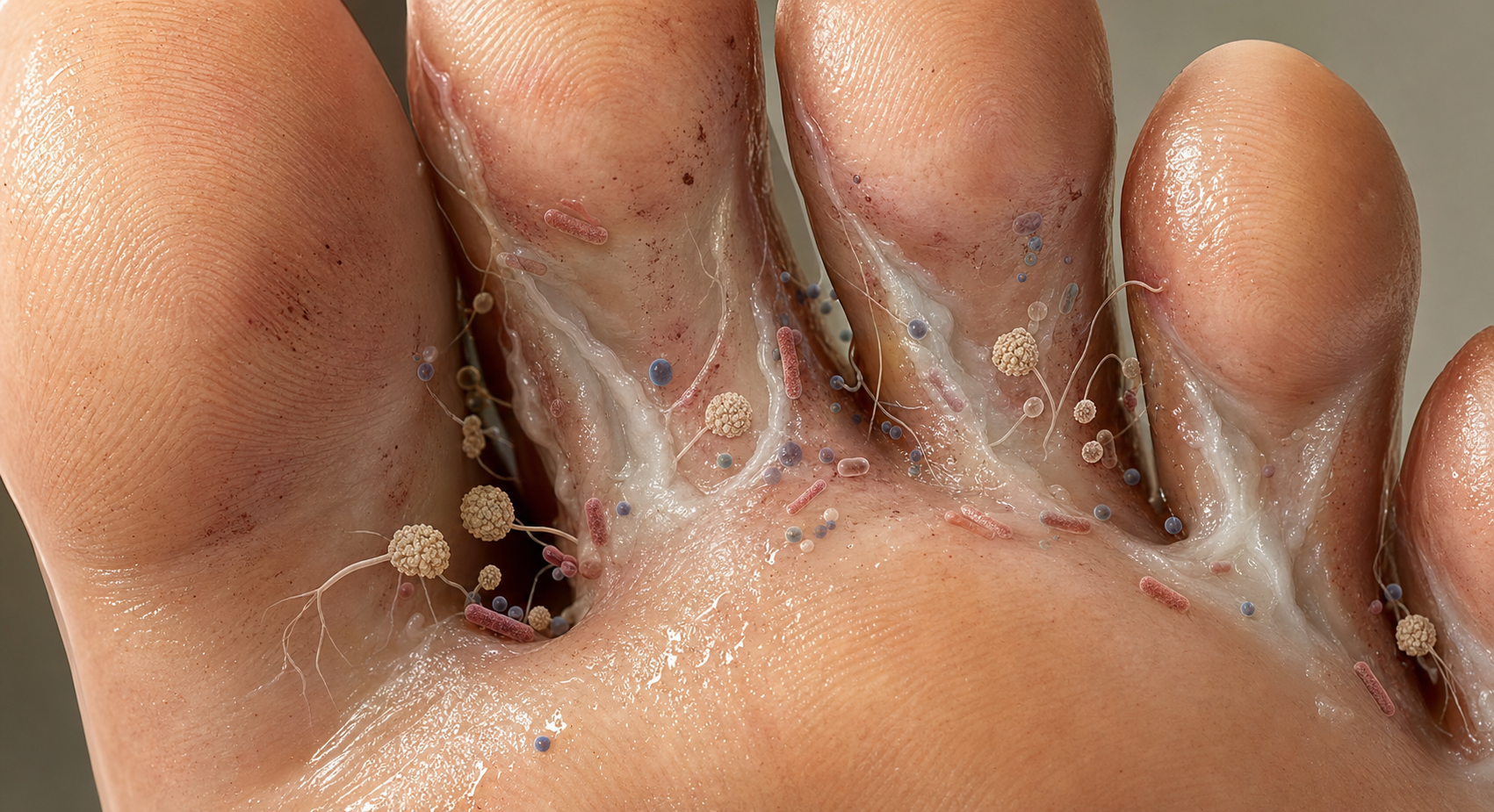
Three problems come up most:
- Bromhidrosis, the medical name for odor caused by bacteria breaking sweat down into sulfur compounds. It can affect any area where sweat accumulates, and the feet are one of the most common sites because of how long they stay damp inside shoes.
- Athlete's foot (tinea pedis), a fungal infection that thrives in warm, damp skin between the toes.
- Pitted keratolysis, a bacterial infection that carves tiny craters into the soles, with a strong smell and itch, common in closed shoes.
If your feet still smell soon after a wash, that is why: bacterial activity and sulfur byproducts worked into the skin, not surface dirt.
Why Feet Sweat More in Shoes Than in Sandals or Without Socks
Here's the mechanism tying most of your questions together: occlusion. A closed shoe traps the heat and moisture your soles put out all day. Warm, damp air has nowhere to go, so it circles back onto the skin, and the wetter that chamber gets, the more your glands keep firing. Synthetic uppers worsen this since they don't let air move through.
Sandals and bare feet break the loop by letting sweat evaporate fast. Crocs and foam clogs still seal moisture against the sole even with vents, because the material doesn't breathe.
Skipping socks backfires too. Wool or moisture-wicking socks pull sweat off your skin, which is one key tip for managing excessive feet sweating. Without them, sweat pools against your sole and lining, leaving you damper and giving odor-causing bacteria a wetter place to grow.
Why Feet Sweat at Night and in Bed
A common mix-up trips people up here. Primary hyperhidrosis, the kind behind most sweaty feet, tends to switch off once you fall asleep, because your sympathetic nervous system settles down for the night.
So if your feet, or your whole body, soak the sheets night after night, something else is likely at work. Sleep-only or generalized night sweats point toward secondary causes:
- Hormonal changes, including menopause and pregnancy
- Thyroid trouble
- Infections
- Certain medications, some antidepressants among them
That is real, and worth taking seriously. Consistent night sweating, especially if it started suddenly, is a conversation to have with a provider.
Home Remedies and Daily Habits That Help
Before medical treatment, a few habits can take the edge off. None fix the underlying cause, but they may help you get through the day.
- Soak your feet in cooled black tea, Epsom salts, or dilute vinegar to cut surface bacteria and briefly tighten pores.
- Wear merino wool or moisture-wicking socks over cotton.
- Rotate shoes so each pair fully dries between wears.
- Dust soles with foot powder or cornstarch to absorb dampness.
- Apply an OTC clinical-strength antiperspirant for feet to your soles at night.
For true hyperhidrosis, most people need medical treatment for real relief.
When to See a Doctor About Sweaty Feet
Sweaty feet are treatable. There are proven ways to stop feet sweat, and hyperhidrosis is a recognized medical condition, not a hygiene failure. Book a visit if you notice:
- A sudden change in your sweating pattern with no clear cause
- Sweating only during sleep
- Sweat alongside chest pain, fever, or unexplained weight loss
- Recurring foot infections
- Sweating that disrupts work, relationships, or daily life
Medical Treatments for Excessive Foot Sweating
Most people don't start at the top of this ladder. Treatment usually escalates step by step, from the gentlest option upward, based on severity and what has already failed.
| Treatment | How it works | Worth knowing |
|---|---|---|
| Prescription aluminum chloride | Aluminum salts plug the sweat ducts near the skin surface; applied nightly to the soles | First-line, but irritant dermatitis (burning, stinging) makes many people stop |
| Topical anticholinergic gels and wipes | Block the nerve signal to sweat glands instead of plugging ducts | Targeted, once-daily, minimal systemic effect |
| Oral anticholinergics | Taken as a pill to cut sweat body-wide | Suited to moderate-severe or multi-site cases; dry mouth is the common trade-off |
| Iontophoresis for hyperhidrosis | A mild electrical current passes through water to quiet the glands | Works well for palms and soles, but needs 3 to 5 sessions a week plus ongoing maintenance |
| Botulinum toxin injections | Injections block nerve signals to sweat glands in a targeted zone | Well-validated; results last roughly 4 to 6 months, then repeat |
| Hyperhidrosis surgery (ETS) | Cuts the sympathetic nerves under general anesthesia | Reserved for severe, treatment-resistant cases; carries a real compensatory sweating risk |
How Twofold Treats Plantar Hyperhidrosis Online
Through Twofold you get matched with a sweat-specialized dermatologist online, fill out an intake, and if you're a fit, treatment ships to your door.
Our flagship treatment is a compounded topical oxybutynin 8% gel, built on a penetration-enhancing base designed to get through the thick skin on your soles where standard topicals tend to fall short. You apply it once nightly, just before bed, and it works by blocking the acetylcholine signal to your sweat glands right at the site of application.
When a pill fits better, our partner dermatologists prescribe oral glycopyrrolate for hyperhidrosis or extended-release oxybutynin.
Here's how the plan works:
- $150 for a 3-month supply, flat pricing
- Free shipping, no insurance needed
- Unlimited dermatologist follow-up through the portal
For a lot of people, the hardest part is just finding a clear starting point, and the cost of not finding one is real. About 75% of people with hyperhidrosis report it affecting their mental health and relationships. Twofold is set up to give you exactly that: a dedicated dermatologist, a treatment built for your feet, and a path that doesn't require a waiting room. Sweaty feet are common, but common doesn't mean you have to live with it.
Final Thoughts on Why Feet Sweat and How to Stop It
The biology is real, the treatments are real, and so is the relief. Start with what you can do today, and go from there.
FAQ
Why do my feet sweat so much even when they feel cold?
Cold, sweaty feet can happen because your sympathetic nervous system triggers two responses at once: it narrows blood vessels in your feet (pulling warm blood away) while simultaneously signaling your eccrine glands to produce sweat. The result is feet that are damp and clammy but feel cool to the touch. Stress, anxiety, and hyperhidrosis are the most common drivers of this pattern.
Why do my feet sweat so much and smell, even right after I wash them?
The odor comes from bacteria breaking sweat down into sulfur compounds, and that bacterial activity works into the skin itself, well beyond the surface. Washing removes surface debris, but if your feet stay damp for hours inside shoes, bacteria keep feeding and the cycle restarts fast. Rotating your shoes to let them fully dry between wears, using moisture-wicking socks, and treating the underlying sweating are the most reliable ways to break that loop.
How do I stop my feet from sweating so much in shoes?
Start by swapping synthetic-lined shoes for breathable options and wearing merino wool or moisture-wicking socks, which pull sweat off your skin instead of letting it pool. Apply a clinical-strength antiperspirant to your soles at night, and dust with foot powder during the day to absorb dampness. If those habits don't move the needle, excessive sweating that soaks shoes regardless of conditions is worth discussing with a provider, since it may be plantar hyperhidrosis and not ordinary sweat.
Is Twofold's topical oxybutynin gel a good option if I've already tried OTC antiperspirants for sweaty feet?
OTC antiperspirants work by plugging sweat ducts near the surface, which many people find irritating and only partially effective on thick sole skin. Twofold's compounded oxybutynin 8% gel works differently: it blocks the nerve signal to sweat glands directly, and its penetration-enhancing base is designed to get through the thicker skin on your soles where standard topicals tend to fall short.
Why are my feet sweating all of a sudden when they never did before?
A sudden change in sweating pattern in adulthood, with no obvious trigger like a hotter climate or new exercise routine, is worth taking seriously. New-onset sweating can point to secondary causes including thyroid changes, blood sugar issues, new medications, hormonal changes, or anxiety disorders, all of which need a provider to rule out. Primary hyperhidrosis typically starts before age 25 and involves both feet and hands, so adult-onset sweating that doesn't fit that picture is a reason to get checked sooner than later.
If you see a mistake or something you think should be updated, let us know at hello@itstwofold.com!


