



Reaching for a new antiperspirant deodorant for excessive sweating every few weeks and still dealing with soaked clothes or sweaty palms gets exhausting. If that's where you're at, you're not alone, and you're also probably using the wrong product for your level of sweating. Finding the best antiperspirant for hyperhidrosis goes beyond picking the highest-rated stick at the drugstore. The right fit depends on whether you need an antiperspirant for hyperhidrosis hands, your underarms, your feet, or your face, what concentration of aluminum actually does anything for overactive glands, and at what point an OTC antiperspirant for hyperhidrosis stops being enough.
TLDR:
- Deodorant only fights odor; if you sweat through it, you need an antiperspirant that actually plugs sweat ducts.
- Apply clinical-strength antiperspirant at night on fully dry skin for 6 to 8 hours to get real results.
- Hands and feet need higher concentrations and longer contact time, so standard sticks often fall short there.
- If 4 to 6 weeks of correctly used clinical-strength OTC still leaves you soaked, a dermatologist visit makes sense.
- Twofold is a virtual sweat clinic where sweat-specialized dermatologists can prescribe, if medically appropriate, prescription-strength topical or oral options when OTC antiperspirants stop working.
What Hyperhidrosis Is and Why Standard Antiperspirants Fall Short
If you sweat through shirts on a cool day, or your palms drip when you shake hands, that goes beyond ordinary temperature control. Hyperhidrosis is a medical condition where sweat glands fire far more than the body needs to cool itself, often in focused zones like the underarms, hands, feet, or face. It affects about 4.8% of the U.S. population, yet only about half ever mention it to a provider.
Standard drugstore antiperspirants are built for typical sweating. Their aluminum concentrations run lower, so for overactive glands they blunt the problem without touching it, which is why relief often feels partial at best.
Antiperspirant vs. Deodorant: Why the Difference Matters for Excessive Sweating
The two words get tossed around like synonyms, and drugstore shelves do not help by stacking them side by side. They do separate jobs.
Deodorant works on smell. It uses fragrance and antibacterial agents to cut the odor that shows up when bacteria break down sweat on your skin. The antiperspirant vs deodorant distinction matters more than most people realize. The sweating itself stays untouched.
Antiperspirant works on the sweat. Its active ingredient plugs the sweat ducts near the skin surface, so less moisture reaches the outside.
| Product | What it targets | Effect on sweat volume |
|---|---|---|
| Deodorant | Odor | None |
| Antiperspirant | Sweat output | Reduces it |
For hyperhidrosis, this distinction is the whole game. If you keep soaking through a deodorant, it was never built to slow your sweat. That mismatch is why people decide "nothing works" before trying the right product.
How Antiperspirants Work on Sweat Glands
Aluminum is the active ingredient doing the work. When you apply an antiperspirant, the aluminum compounds dissolve in the sweat on your skin and get pulled into the pore, forming a soft gel plug just below the surface that narrows the duct and holds back moisture.
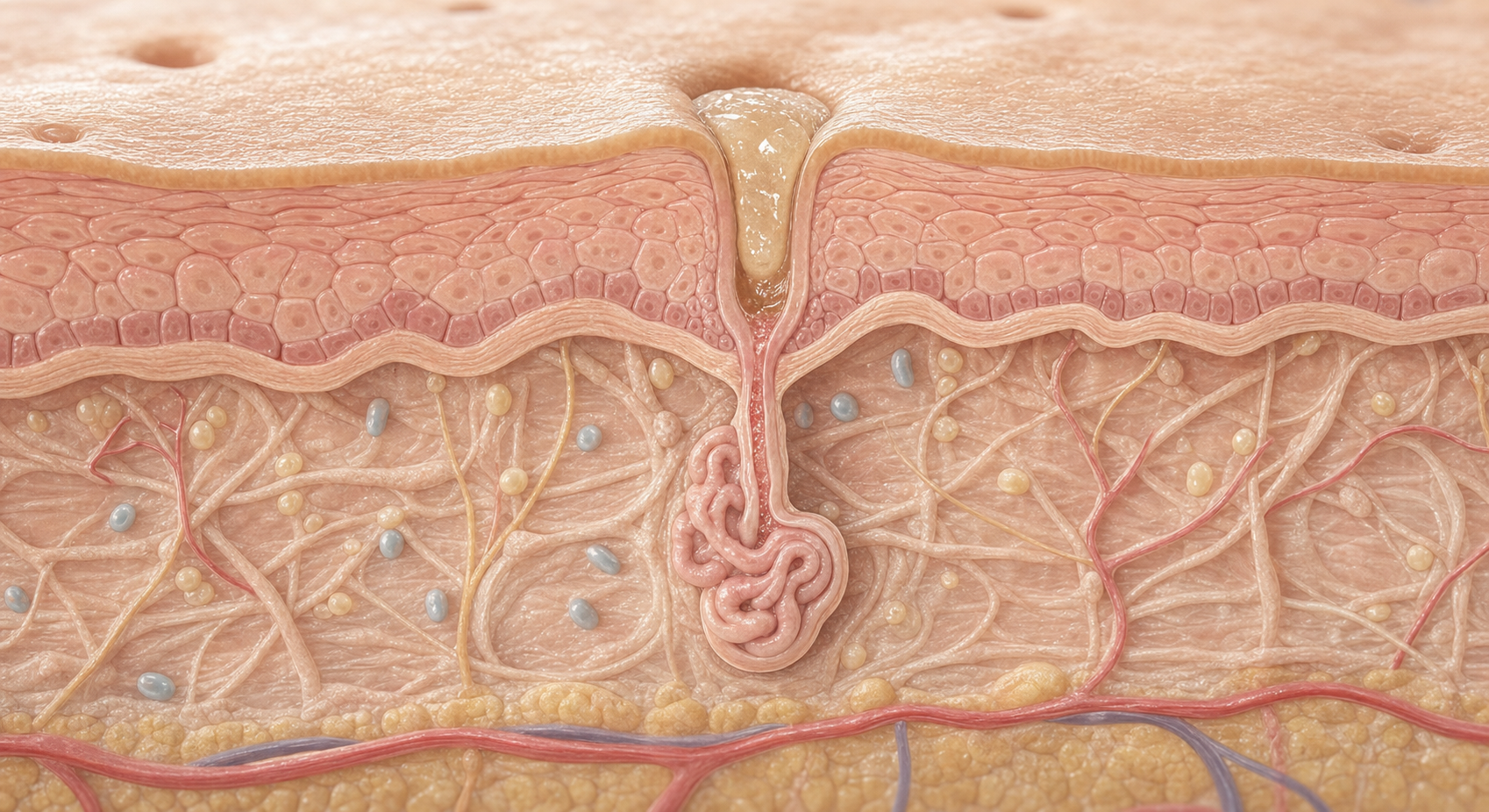
Your glands keep making sweat behind that plug, but it cannot get out. As your skin renews itself over a few days, the plug clears and sweating resumes, which is why you reapply to hold the effect.
Because this is the least invasive route, antiperspirants sit first in line for underarms, hands, feet, and sometimes the face, per the International Hyperhidrosis Society.
OTC vs. Prescription Antiperspirants for Hyperhidrosis
Antiperspirants come in three strengths, and most people never make it past the first.
Regular drugstore formulas use lower concentrations of active ingredient. Clinical-strength versions you can still buy over the counter push higher, which is why they work when the basic stick does not. Prescription options step into a different compound: aluminum chloride hexahydrate, classically Drysol at 20% aluminum chloride hexahydrate, applied at night.
The trade-off is irritation. Aluminum chloride hexahydrate can cause burning, stinging, and inflamed skin, the most common reason people stop using it. For mild-to-moderate underarm sweating, a well-applied antiperspirant for sweat control works for plenty of people first.
What to Look for in an Antiperspirant If You Have Hyperhidrosis
A few things separate a product that helps from one you abandon in a drawer.
- Active ingredient and strength: for real sweating, look for aluminum chloride or aluminum chloride hexahydrate at a clinical concentration, not a low-percentage everyday formula.
- Format: roll-ons and gels spread thin and dry cleanly, while creams and lotions sit heavier and can trap heat. Wipes suit hard-to-reach spots.
Palms and soles are stubborn. Their skin is far thicker, so standard aluminum chloride struggles to plug the ducts there.
Newer gels pairing aluminum chloride hexahydrate with salicylic acid tend to sit better, easing the usual burn.1
Aluminum-free routes have thinner hyperhidrosis-specific evidence and hold up best for milder cases.
How to Apply Antiperspirant for the Best Results
Most people apply antiperspirant like lotion: a quick morning swipe on damp skin after a shower. That timing works against you.
The active ingredient needs dry skin and a long stretch when your glands are quiet, which is why the International Hyperhidrosis Society recommends applying at bedtime. The protocol worth trying:
- Dry the skin fully first. A cool hair dryer helps if the area stays damp.
- Apply at night so it sits 6 to 8 hours while sweating slows during sleep.
- Skip freshly shaved or irritated skin, which stings faster.
- Wash it off in the morning.
Once sweating eases, usually after a week or two, space applications to every other night.
Antiperspirants by Body Area: Underarms, Hands, Feet, and Face
The response you get from an antiperspirant depends heavily on where you put it.

Underarms
The most responsive zone. Skin is thin, ducts sit close to the surface, and the aluminum plug forms readily, so clinical-strength formulas often work here first. Still, excessive underarm sweating can persist even with consistent use.
Hands and feet
Palms and soles fight back. Their skin is far thicker, and for palmar hyperhidrosis antiperspirants for hands may need higher aluminum chloride concentrations held on for 6 to 8 hours, making burning and stinging common.
Face and groin
Both sit near sensitive skin and mucous membranes. Use gentler formats, patch test, and keep the product away from your eyes.
Keep your expectations grounded here: antiperspirants alone often fall short on hands, feet, and the face, which is where other treatments enter the picture.
When Antiperspirant Irritates Your Skin: Managing Side Effects
Irritant dermatitis is the usual culprit here. Aluminum salts react with moisture, so applying to fully dry skin, starting every few nights, and using a lower concentration first all cut the burn. A salicylic acid gel base helps some people who failed standard formulas. If irritation stays severe, talk to a dermatologist about alternatives instead of pushing through the discomfort.
When Antiperspirant Is Not Enough: The Hyperhidrosis Treatment Ladder
Escalating up the ladder does not mean you failed. Clinicians move step by step, matching treatment to how severe your sweating is and what has already come up short.
| Step | Option | Where it fits |
|---|---|---|
| 1 | Prescription antiperspirants (aluminum chloride hexahydrate) | Mild-to-moderate, when OTC falls short |
| 2 | Topical anticholinergics (compounded gels, Qbrexza and Sofdra, both FDA-approved for underarms) | Localized or multi-zone |
| 3 | Oral anticholinergics | Generalized or multi-site sweating |
| 4 | Iontophoresis for hyperhidrosis | Palms and soles |
| 5 | Botox for hyperhidrosis | Targeted zones |
| 6 | Microwave thermolysis | Underarms only |
| 7 | Surgery | Severe, treatment-resistant, last resort |
Each rung adds coverage or staying power, and most people find their answer well before the bottom.
Signs It Is Time to See a Dermatologist About Your Sweating
A few clear signals mean it is worth booking a dermatologist instead of reaching for one more product:
- Correctly used clinical-strength OTC antiperspirant, applied at night on dry skin for 4 to 6 weeks, still leaves you soaked.
- Sweating disrupts your work, relationships, or daily choices about what to wear and where to sit.
- You keep getting moisture-related skin problems like athlete's foot or recurring rashes in damp areas.
- Sweating started later in life or came on suddenly, which can point to secondary hyperhidrosis tied to an underlying cause and deserves a medical workup, not a stronger stick. See our guide on how to stop sweating for a fuller breakdown.
Hyperhidrosis is a recognized medical condition. Asking for help is routine, and a dermatologist can sort out what is actually driving your sweating.
How Twofold Approaches Prescription Treatment for Hyperhidrosis
If clinical-strength antiperspirants haven't cut it, prescription treatment is the next move. Twofold is a virtual sweat clinic connecting you with sweat-specialized dermatologists online.
Our flagship is a compounded topical oxybutynin 8% gel. Instead of plugging the duct, it blocks the acetylcholine signal telling the gland to fire, right where you apply it. Its penetration-enhancing base suits thick-skinned zones like hands and feet. Consult a dermatologist or healthcare provider to determine whether this treatment is appropriate for your situation.
- $150 for a 3-month supply ($50/mo
- A dermatologist reviews your intake within about 24 hours
- Free shipping, no insurance required, unlimited follow-up messaging
When topicals are not the fit, our dermatologists prescribe oral glycopyrrolate for hyperhidrosis or extended-release oxybutynin, including combination plans.
Final Thoughts on Antiperspirants and Hyperhidrosis Treatment
Your sweating is not a personal failure, and there are more options than the drugstore aisle suggests. A clinical-strength antiperspirant applied the right way at night is a fair starting point. If it does not move the needle after a few weeks, that is useful information, not a dead end, and a dermatologist can help you figure out what comes next.
FAQ
What's the best antiperspirant for hyperhidrosis when clinical-strength OTC products have stopped working?
When clinical-strength OTC antiperspirants top out around 20% aluminum and still leave you soaked, prescription aluminum chloride hexahydrate (such as Drysol at 20%) is the standard next step for underarms. If that also falls short, or irritation makes it unusable, topical anticholinergic gels like compounded oxybutynin 8% available through Twofold work differently by blocking the nerve signal to the sweat gland instead of plugging the duct, which makes them a useful option for multiple body zones including hands and feet.
Can you use antiperspirant for hyperhidrosis on your hands and feet, or does it not work there?
Antiperspirants can work on palms and soles, but the thick skin in those areas makes it harder for aluminum compounds to reach the ducts, so you often need higher concentrations and longer contact time, which increases the risk of burning and stinging. Many people find that standard antiperspirant for palmar hyperhidrosis gives partial relief at best, which is why dermatologists often recommend stepping up to iontophoresis or a prescription topical anticholinergic gel with a penetration-enhancing base for hands and feet in particular.
How do I apply antiperspirant correctly if I have excessive sweating?
Apply to completely dry skin at bedtime, not after a morning shower, so the aluminum has 6 to 8 hours to form a plug while your glands are least active. Use a cool hair dryer on the area first if it stays damp, skip freshly shaved or irritated skin, and wash the product off in the morning. Once sweating reduces, usually within one to two weeks, you can space applications to every other night to maintain the effect.
Antiperspirant deodorant vs antiperspirant for hyperhidrosis: does the combination product actually help with excessive sweating?
Combination antiperspirant deodorant products handle both sweat and odor, but the active ingredient doing the real work on sweat volume is still the aluminum compound, and most combination products use lower concentrations aimed at typical sweating and not hyperhidrosis. If excessive sweating is your main concern, a dedicated clinical-strength antiperspirant may offer better sweat control than most combination products for hyperhidrosis, even if it means adding a separate deodorant for odor on the side.
When should someone with hyperhidrosis move from the best OTC antiperspirant they can find to seeing a dermatologist?
If you have used a clinical-strength OTC antiperspirant correctly, applied at night on dry skin for four to six consecutive weeks, and you are still soaking through, that is a clear signal to involve a dermatologist. The same applies if sweating is affecting your work, social life, or daily decisions, or if it started suddenly later in life, since that pattern can point to secondary hyperhidrosis tied to an underlying medical cause that warrants a proper workup. Consult a dermatologist or healthcare provider for guidance specific to your situation.
If you see a mistake or something you think should be updated, let us know at hello@itstwofold.com!


