

There's a reason the dermadry iontophoresis machine keeps showing up in hyperhidrosis forums, on dermadry reddit threads, and in dermadry amazon reviews. For people dealing with sweaty hands, feet, or underarms, it checks a lot of boxes on paper: FDA-cleared, no prescription required in most cases, usable at home. But whether it's actually worth the dermadry price, how to use dermadry underarms correctly, what dermadry side effects look like in practice, and how it stacks up against other options like miraDry are all fair questions. We're going to go through all of it, including what real users are saying in dermadry reviews and what to consider if the device route isn't for you.
TLDR:
- Dermadry is an FDA-cleared at-home iontophoresis device ($500 to $1,000) for sweaty hands, feet, and underarms
- Results take consistency: plan 3 to 5 sessions weekly for up to 6 weeks, then weekly maintenance to keep sweating down
- Over 80% of hand and foot cases improved, per a systematic review, though results fade if you stop
- U.S. shoppers need a prescription to buy Dermadry, even through Amazon
- Twofold is a virtual sweat clinic where a dermatologist can prescribe treatments shipped to your door
What Dermadry Is and Who It Is Designed For
If you have been researching ways to manage sweaty hands, feet, or underarms, Dermadry has probably shown up in your searches more than once. It is a tap water iontophoresis machine made in Canada and cleared by the FDA for home use in the United States (note: U.S. buyers need a prescription; no clinic visit is required for use).
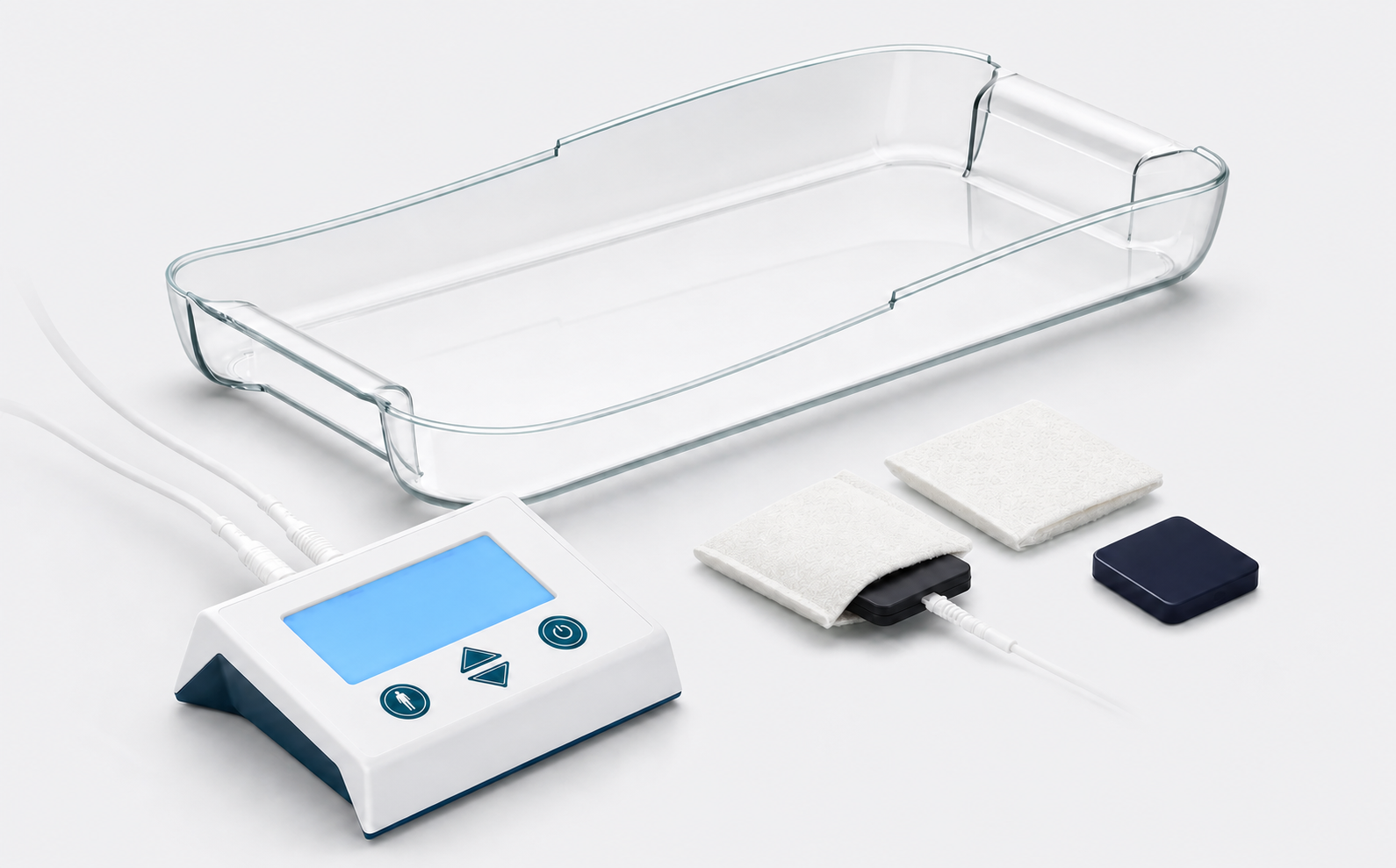
It is a medical device, so no pill, cream, or in-office procedure. You fill trays with tap water, connect the machine, and run sessions yourself. It is built for people whose excessive sweating shows up in the hands, feet, and underarms.
How Dermadry Works
Iontophoresis is not new. Doctors have used iontophoresis for hyperhidrosis for decades, giving the approach a long clinical history.
Here it is in plain terms. You submerge the target area in shallow tap water, and the machine sends a low-level current into your skin. That current temporarily disrupts the nerve signal telling your sweat glands to switch on, so the area produces less sweat.
One thing to be clear about: the effect fades. Sweating gradually returns once you stop, so keeping results means running regular maintenance sessions.
The Dermadry Product Line
Dermadry sells three versions. The machine is identical across all of them; only the trays and accessories differ.
Dermadry Hands and Feet
Built for palmar and plantar sweating. If you're wondering about excessively sweaty hands, you place hands or feet flat into shallow water trays, treating each area one at a time per session.
Dermadry Underarms
Made for axillary sweating. It uses dampened underarm pads you hold against each armpit while the current runs.
Dermadry Total
Includes both trays and the underarm pads, so you can treat all three zones with one device.
How to Use Dermadry: Setup, Sessions, and Maintenance
Operating Dermadry is straightforward once your setup is sorted. For hands and feet, fill the trays with tap water and rest each flat inside while the current runs. For underarms, soak the electrode pockets and hold one under each arm.
Sessions typically run 20 to 30 minutes per zone, per device instructions.[1] You treat one zone at a time.
The initial phase
Most people run 3 to 5 sessions weekly for up to 6 weeks.[1]
The maintenance phase
You space sessions to roughly once a week. Skip too many and sweating creeps back.
Dermadry Results: What to Realistically Expect
So does it actually work? For most people, yes, though not instantly. Consistent use tends to bring the first noticeable drop in sweating within the first couple of weeks.
How much you improve, and how fast, depends on you. Milder cases often respond quickly. More severe severe hyperhidrosis can take two to three months of sticking with the schedule.
Keep one point grounded: the device dials sweating down while you keep up with sessions, and results loosen their grip once you let the routine lapse.
Dermadry Side Effects and Safety
Most side effects stay mild and short lived. During or after a session you might notice skin irritation, redness, tingling, or dryness at the treated area. These usually settle on their own, and lowering the current often helps.
Iontophoresis is not right for everyone. Avoid Dermadry if you:
- Have a cardiac arrhythmia or pacemaker
- Are pregnant
- Have metal implants in the treatment area
- Have severely reduced skin sensation there
Unsure? Always check with your doctor first.
Dermadry Price and Where to Buy
Dermadry prices climb with what each kit covers, so the Total costs more than the single-zone Hands and Feet or Underarms versions. Broadly, home iontophoresis devices run $500 to $1,000 out of pocket, and Dermadry sits within that range.
You can buy it directly through Dermadry's own website, which ships to most regions including Europe. It's also available on Amazon in the U.S., UK, Australia, and Belgium, and through third-party medical device retailers across Europe and other regions.
One catch for U.S. shoppers: a prescription is required to purchase the device, even through Amazon.
What Users Are Saying About Dermadry
Pull together feedback from Trustpilot, Reddit, and Amazon and a fairly consistent picture forms.
On the positive side, users tend to praise:
- Simple setup and easy operation out of the box
- Solid sweat reduction for hands, feet, and underarms
- Responsive, helpful customer support
The recurring complaints cluster around fit:
- Sessions eat up time, several per week, even in the maintenance phase
- Skin dryness or mild irritation after treatments
- The commitment to ongoing maintenance can be unsustainable, since sweating returns once you stop
Most frustration comes from the ongoing routine.
Dermadry vs. miraDry
If you have searched "dermadry vs miradry," you are weighing two different approaches. miraDry uses microwave energy in-office to permanently destroy underarm sweat glands. Dermadry is the at-home device you know.
Neither wins outright. Sweaty hands and feet? miraDry cannot help. Want a longer-lasting underarm fix and can handle the cost? miraDry may offer longer-lasting underarm results than a maintenance-dependent device like Dermadry.
Who Is Iontophoresis Actually Right For?
Iontophoresis usually enters the picture after clinical-strength antiperspirants for sweat control have let you down, or after topical anticholinergics. It shines for palmoplantar sweating, where a systematic review found over 80% of hand and foot cases improved.
That said, it asks for a steady schedule, it does little for the face or scalp, and some health conditions take it off the table entirely.
Other Hyperhidrosis Treatments to Know About
Dermadry is one rung on a longer treatment ladder, and choosing an iontophoresis machine requires seeing the rest before you commit. Here is a quick map of the main alternatives.
| Treatment | How it works | Zones | Key tradeoff |
|---|---|---|---|
| Prescription antiperspirants | Aluminum salts plug sweat ducts | Underarms, palms | Irritation and stinging are common |
| Topical anticholinergics (Qbrexza, Sofdra, compounded gels through Twofold) | Block the nerve signal to sweat glands | Underarms mainly; compounded versions cover more | Mild skin reactions; FDA-approved ones are underarm-only |
| Oral anticholinergics | Reduce sweat body-wide | Generalized or multi-site | Systemic effects like dry mouth |
| Botox for hyperhidrosis | Injections block sweat nerve signals | Underarms, palms, face | In-office, repeat every 4 to 6 months |
| Hyperhidrosis surgery (ETS) | Cuts sympathetic nerves | Palms, underarms | Irreversible; high rate of compensatory sweating |
Where you land usually tracks severity and what has already failed you. None of this is medical advice, so talk with a provider about which fits your situation.
If Iontophoresis Is Not the Right Fit, Consider Twofold
If a device-based routine sounds like more than you want, Twofold is a virtual sweat clinic worth knowing about. You complete an online intake, a sweat-specialized dermatologist reviews it, and prescription treatment ships to your door. No trays, no sessions, no weekly time commitment.
A flagship treatment is a compounded topical oxybutynin 8% gel, available exclusively through Twofold, that blocks the acetylcholine signal to your sweat glands. It pushes through the thicker skin on hands and feet, where many topicals stall out. You apply it once at night, and that is the whole routine.
For multi-zone or generalized sweating, our dermatologists also prescribe oral glycopyrrolate for hyperhidrosis and oral extended-release oxybutynin when those fit better.
A few practical points:
- $150 for a three-month supply ($50/mo), no insurance needed
- Unlimited dermatologist follow-up included
Final Thoughts on Dermadry and Home Iontophoresis
Iontophoresis has decades of use behind it, and Dermadry makes it accessible at home. The device can work for some, but your results depend on keeping up with sessions long term. Knowing that going in makes the decision a lot clearer.
FAQ
How does the Dermadry iontophoresis machine work, and how long before you see results?
Dermadry sends a low-level electrical current through tap water into your skin, temporarily disrupting the nerve signal that tells your sweat glands to activate. Some users notice a meaningful drop in sweating within the first couple of weeks of consistent use, though more severe hyperhidrosis can take two to three months of sticking with the session schedule.
Dermadry vs. miraDry for underarm sweating: which should you choose?
Dermadry is the at-home option covering hands, feet, and underarms at roughly $500 to $1,000, while miraDry is an in-office procedure costing $1,500 to $3,000 or more that targets underarms only with longer-lasting results. If your sweating is limited to underarms and you want to reduce the ongoing maintenance commitment, miraDry may be worth the higher upfront cost; if you sweat on your hands or feet, miraDry cannot help and Dermadry is the relevant device.
Can you treat hands, feet, and underarms with one Dermadry machine?
Yes, the Dermadry Total includes both water trays for hands and feet and underarm pads, so one device covers all three zones. Each zone is treated in a separate session, with hands and feet running about 20 minutes each and underarms about 15 minutes.
What are the most common Dermadry side effects, and is it safe?
Most Dermadry side effects are mild and temporary, including skin redness, tingling, dryness, or minor irritation at the treated area during or after a session; lowering the current intensity usually helps. Iontophoresis is not safe for everyone, so avoid it if you have a pacemaker, cardiac arrhythmia, metal implants in the treatment area, or if you are pregnant, and check with your doctor if you are unsure.
What is the alternative to Dermadry if you want to skip the weekly session routine?
If the high upfront cost and ongoing session schedule feels like too much, a prescription-based approach through a telehealth service like Twofold may be a better fit. Twofold's dermatologists may prescribe - if appropriate - topical or oral anticholinergic treatments with no trays or weekly time blocks required.
If you see a mistake or something you think should be updated, let us know at hello@itstwofold.com!


