
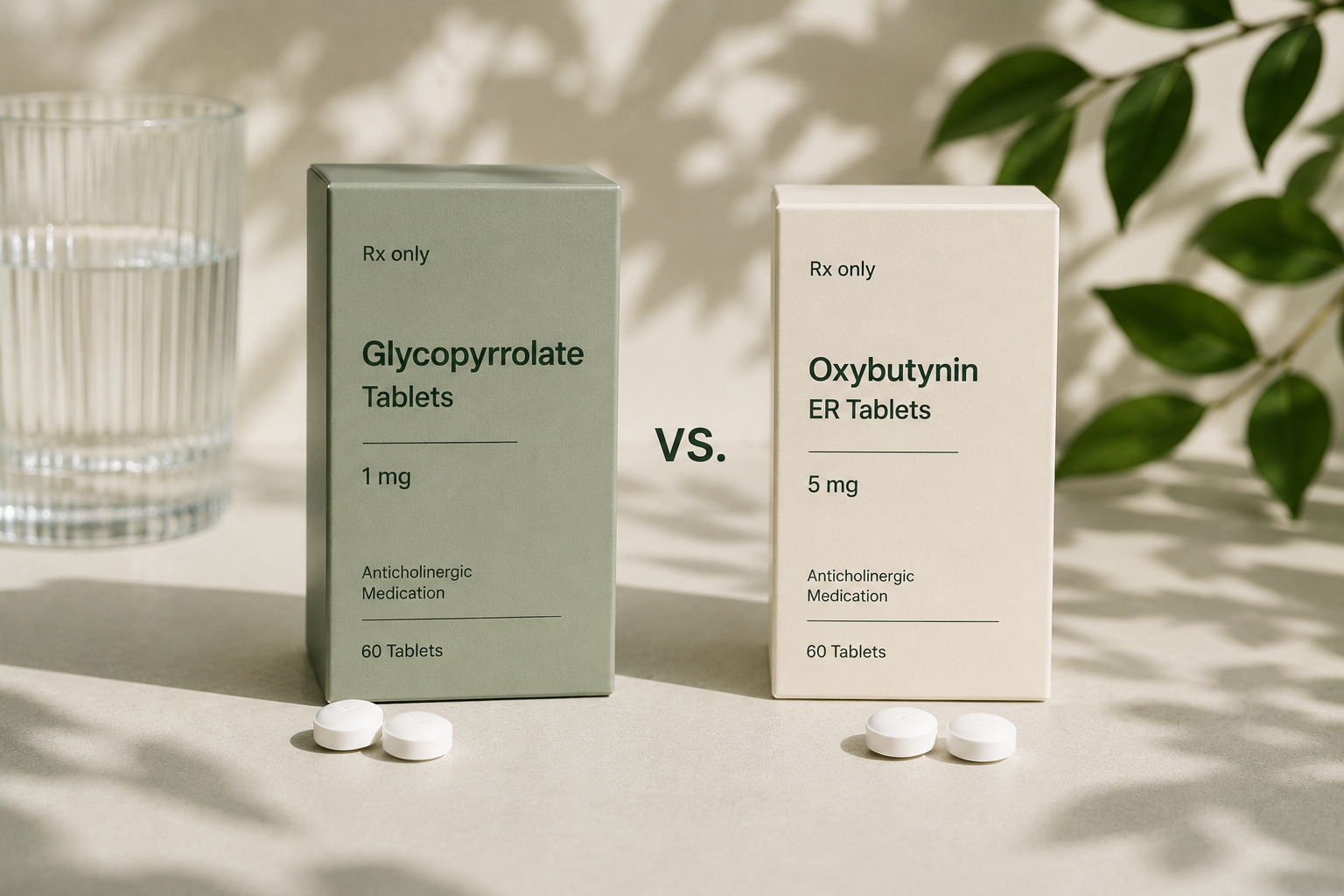
Sweating through every shirt despite trying everything is exhausting, and landing on the right medication feels like guesswork. Glycopyrrolate and oxybutynin are two widely prescribed oral options for hyperhidrosis, but they're not always interchangeable. Here's a clear look at how they compare so you can have a better conversation with your provider.
TLDR:
- Both glycopyrrolate and oxybutynin are off-label anticholinergics that reduce sweating with similar response rates (60-97%).[1][2]
- Oral glycopyrrolate mostly stays out of the brain, so it may carry less risk of drowsiness and mental fog than oxybutynin.
- Topical forms lower body-wide side effects sharply compared to pills; topical oxybutynin scored a larger HDSS improvement (-1.95 vs. -1.11 for topical glycopyrrolate) per a 2025 JAAD Reviews analysis.
- Twofold is a virtual sweat clinic where board-certified dermatologists may prescribe (if appropriate) oral glycopyrrolate, extended-release oxybutynin, or a compounded topical oxybutynin 8% gel.
What Are Glycopyrrolate and Oxybutynin?
Both glycopyrrolate and oxybutynin belong to a drug class called anticholinergics, which block a chemical messenger your body uses to switch on certain glands. Neither was originally built for sweating.
Glycopyrrolate, sold as Robinul, was FDA approved to reduce excessive secretions like saliva and stomach acid. Oxybutynin, known as Ditropan, was approved to calm an overactive bladder.
Sweat glands respond to that same chemical signal, so both quiet excessive sweating too. That use is off-label, sitting outside the original approval, but prescribing them for hyperhidrosis is common and well-documented in dermatology.
How Each Drug Works for Sweating
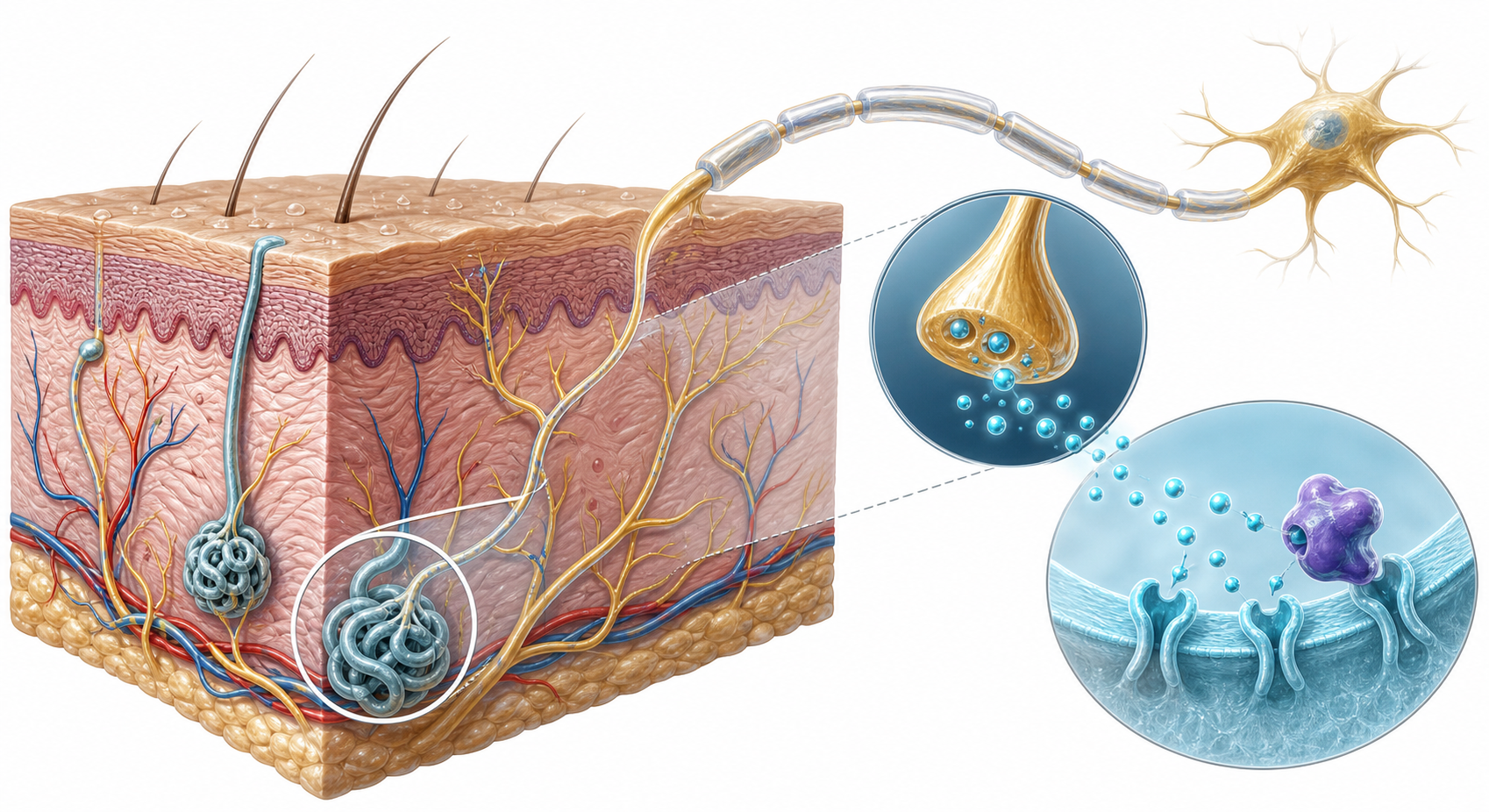
Sweat glands fire when acetylcholine, a nerve signaling chemical, lands on their receptors. Both drugs block those receptors, so the "sweat now" message never gets through. That shared braking action calms excessive sweating.
The structural split matters more. Oxybutynin is a tertiary amine, small and fat-soluble enough to cross the blood-brain barrier. Glycopyrrolate carries a charge and mostly stays out of the brain, acting on peripheral glands.
So oxybutynin can reach the central nervous system while glycopyrrolate largely does not, which is why oral oxybutynin risks more brain-related effects like drowsiness or fog.[4]
Oral Glycopyrrolate vs. Oral Oxybutynin: Efficacy for Sweating
For oral treatment, the numbers land in a similar range, which is part of why neither drug is a default.
A 2025 review found oral oxybutynin, dosed at 2.5 to 7.5 mg per day, improved symptoms in 60% to 97% of patients, strongest in plantar (foot) sweating, a type of focal hyperhidrosis.[1] Oral glycopyrrolate, at 1 to 10 mg per day, worked in approximately 75% to 90% of patients across reviewed studies.[2][1]
| Drug (oral) | Typical daily dose | Response rate |
|---|---|---|
| Oxybutynin | 2.5 to 7.5 mg | 60% to 97% |
| Glycopyrrolate | 1 to 10 mg | 75.5% to 90% |
Sources: JAAD Reviews 2025 anticholinergic review; Gong & Kim, Korean J Pain 2013
The overlap means the choice often comes down to how you tolerate each one. If one fails, dermatologists commonly switch to the other, and glycopyrrolate has helped patients who did not respond to oxybutynin.[3]
Topical Glycopyrrolate vs. Topical Oxybutynin: What the Data Shows
Applied to the skin, the drug stays mostly where you put it, so body-wide side effects drop sharply compared to a pill.
A 2025 JAAD Reviews analysis found topical oxybutynin produced a larger improvement on the Hyperhidrosis Disease Severity Scale, with a score change of -1.95 versus -1.11 for topical glycopyrrolate.
Qbrexza, a glycopyrrolate wipe in glycopyrronium tosylate form, is FDA approved for underarm sweating. Compounded oxybutynin gel is used off-label and is not separately FDA approved for hyperhidrosis.
Side Effects: Glycopyrrolate vs. Oxybutynin
Because both drugs block the same signal, they share anticholinergic side effects, including (but not limited to):
- Dry mouth
- Constipation
- Blurred vision
- Difficulty urinating (urinary retention)
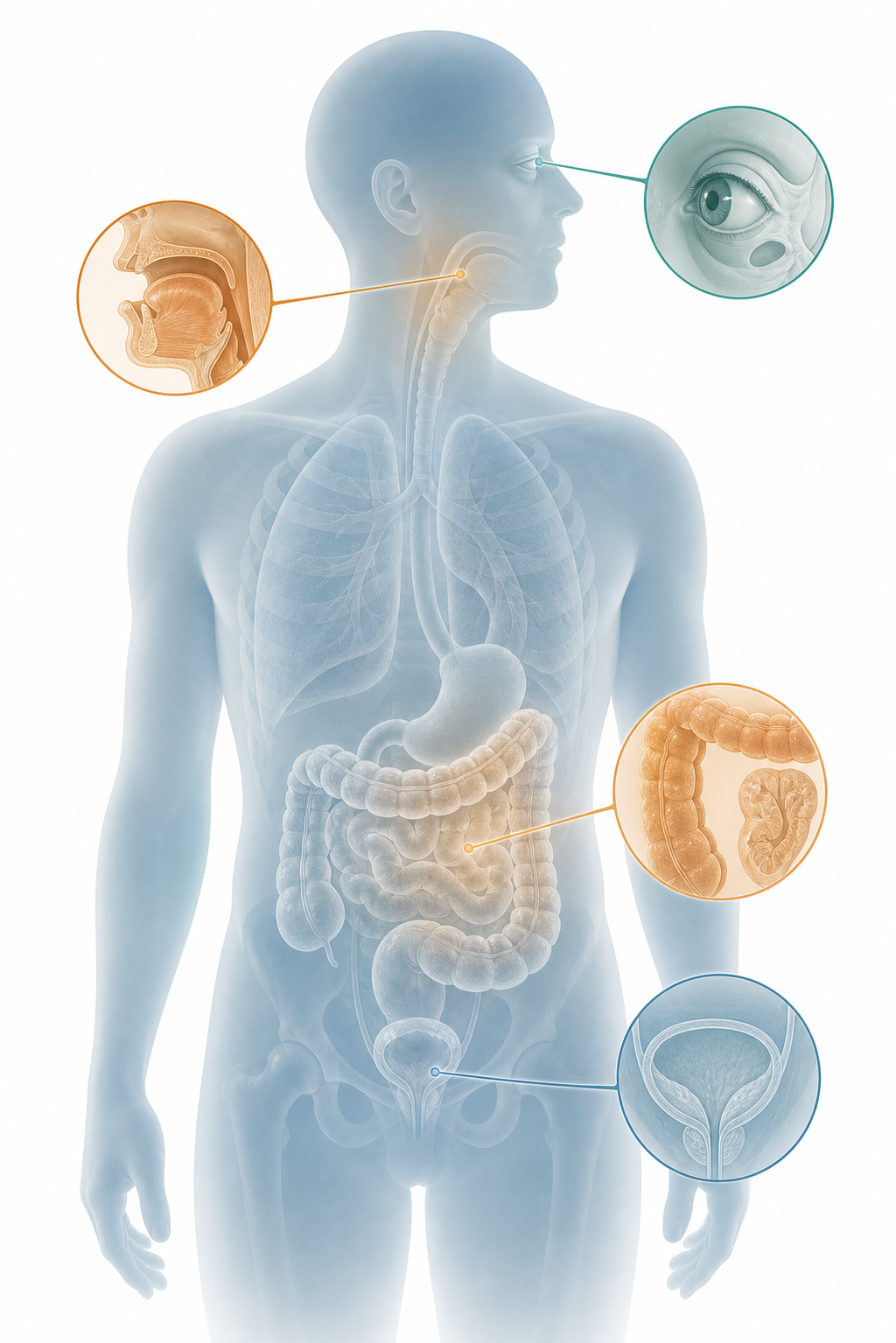
They split on frequency. The 2025 JAAD Reviews analysis logged adverse effects in 26.2% of topical oxybutynin users, 40% for topical glycopyrrolate, and 55.1% for oral glycopyrrolate.
Oxybutynin can cross into the brain, potentially raising the risk of drowsiness and mental fog. Both drugs can also cause heat intolerance, so talk to a provider about anything you notice.
Long-Term Safety Concerns with Anticholinergic Use
Most short-term use passes without much worry. The longer question turns toward older adults, aged 65+.
Some large observational studies have reported a possible association between long-term oral oxybutynin use and dementia risk in older adults (aged 65+), which is one reason some patients look into alternatives like Botox for hyperhidrosis. Other published research has investigated a possible link between cumulative high-dose oral anticholinergic use and cognitive effects.[5] No causal relationship has been confirmed - this is an observational association only, and the relevant research has focused on oral anticholinergic use; topical forms have not been studied in this context. A notable limitation is that many of these studies were conducted in older adults who were already predisposed to cognitive decline, making it difficult to isolate the drug's contribution from pre-existing risk.[5] The evidence is observational and not conclusive; a provider can help you weigh your personal risk. Read a plain-language summary of these dementia risk findings.
Since glycopyrrolate mostly stays out of the brain, its profile may differ. Ask a provider about your personal risk.
Glycopyrrolate and Oxybutynin Dosage for Sweating
If you have just filled a prescription, the dosing rhythm of these two drugs looks different in practice.
Glycopyrrolate usually starts at a low dose and gets nudged upward from there.[4] Because it clears the body quickly, it is often taken two or three times a day to hold the effect steady.
Extended-release oxybutynin runs on a simpler schedule, one dose each morning.
That 1 mg figure is a starting line for the glycopyrrolate, not necessarily your target. Your provider adjusts up or down based on how well it works and how your body handles it, so leave the tweaking to them.
How Long Does Glycopyrrolate Take to Work for Sweating?
Oral glycopyrrolate is immediate-release, so you may feel dry within a few hours of your first dose. A reliable drop in sweating typically takes one to two weeks of regular dosing before a steady pattern shows up. Extended-release oxybutynin releases more evenly across the day.
Give any dose several weeks of consistent use before judging it. And once you stop, sweating returns, so this is ongoing management. For a broader look at options, see our guide on how to stop sweating.
Who Should Not Take Glycopyrrolate or Oxybutynin
Some people should steer clear of these drugs entirely. Both glycopyrrolate and oxybutynin can be risky or outright contraindicated if you have, including but not limited to:
- Myasthenia gravis
- Narrow-angle glaucoma
- Urinary retention or trouble emptying the bladder
Oxybutynin needs extra caution with Parkinson's disease or dementia treated with cholinesterase inhibitors. Adults 65 and older are more sensitive to anticholinergic effects like confusion, falls, and urinary complications, and trying lifestyle tips and OTC sweat remedies may be preferable for some. Pregnancy is another reason to pause. None of this is a diagnosis, so talk it through with a licensed provider before starting either.
Can You Take Oxybutynin and Glycopyrrolate Together?
Generally, no, not on your own. Because both are anticholinergics, taking them together stacks up your total anticholinergic load, raising the odds of dry mouth, constipation, urinary retention, and mental fog.
Some providers do pair a lower oral dose with a topical to trim systemic exposure, but that is their call and closely monitored. Always ask yours before combining anything.
Accessing Glycopyrrolate and Oxybutynin: Rx, Online, and OTC Alternatives
Both glycopyrrolate and oxybutynin are prescription-only in the US, so no true over-the-counter version exists. Generic glycopyrrolate tablets are available at pharmacies with a valid prescription.
The closest OTC alternative is a clinical-strength antiperspirant for sweat control with aluminum chloride. It plugs sweat ducts, but will not match a prescription anticholinergic for stubborn cases.
If an in-person visit feels like a hurdle, telehealth has widened access. Online providers can review your symptoms and write a prescription when appropriate.
Managing Hyperhidrosis with Twofold: Glycopyrrolate, Oxybutynin, and Beyond
Ready for an actual next step? This is where we can help. At Twofold, a virtual sweat clinic, board-certified dermatologists may prescribe oral glycopyrrolate and oxybutynin when appropriate, sometimes a low oral dose paired with topical treatment.
The compounded topical oxybutynin 8% gel, applied nightly, is built to reach sweat glands through thicker skin on hands and feet while keeping systemic exposure low.
Everything runs online:
- A free medical intake takes five to ten minutes
- A dermatologist reviews it within about 24 hours
- Your prescription ships to your door
Plans run $150 for a three-month supply ($50/mo), no insurance needed, with unlimited dermatologist messaging for tweaks.
Final Thoughts on Using Glycopyrrolate or Oxybutynin for Sweating
Both drugs take real sweat seriously, and both have solid evidence behind them. Your tolerance, dosing preference, and medical history will shape which one fits. A dermatologist can help you start at the right dose and adjust from there.
FAQ
Glycopyrrolate vs oxybutynin for hyperhidrosis: which one should I try first?
Neither drug is a clear default, and most dermatologists choose based on your health history, which areas sweat most, and how you tolerate anticholinergic side effects. Response rates for both fall in a similar range (60 to 97% for oral oxybutynin, 75.5 to 90% for oral glycopyrrolate), so if one does not work for you, providers commonly switch to the other.
Can you take oxybutynin and glycopyrrolate together for sweating?
Taking both at the same time is not something you should do on your own, because it stacks your total anticholinergic load and raises the risk of dry mouth, constipation, urinary retention, and mental fog. Some providers do pair a lower oral dose of one with a topical treatment to keep systemic exposure down, but that is a closely monitored clinical decision, not a DIY approach.
How long does glycopyrrolate take to work for sweating?
Because glycopyrrolate is immediate-release, you may notice some dryness within a few hours of your first dose, but a reliable, steady drop in sweating typically takes days to a couple of weeks of consistent use. Give any new dose several weeks before judging whether it is working, and keep in mind that sweating returns once you stop, so this is ongoing management and not a one-time fix.
What is the difference between glycopyrrolate and oxybutynin side effects?
Both share the same core anticholinergic side effects: dry mouth, constipation, blurred vision, and difficulty urinating. The key split is that oxybutynin crosses the blood-brain barrier while glycopyrrolate largely does not, which means oxybutynin carries a higher risk of drowsiness and mental fog. Long-term oral use has been associated with dementia risk in older adults in observational studies per Coupland et al., JAMA Internal Medicine 2019 - though no causal link has been confirmed, and topical forms have not been studied in this context.
Who should not take glycopyrrolate or oxybutynin for sweating?
Both drugs are contraindicated if you have myasthenia gravis, narrow-angle glaucoma, or urinary retention, and oxybutynin needs extra caution in people with Parkinson's disease or dementia treated with cholinesterase inhibitors. Older adults and pregnant individuals should also discuss the risks carefully with a licensed provider before starting either medication.
If you see a mistake or something you think should be updated, let us know at hello@itstwofold.com!


