

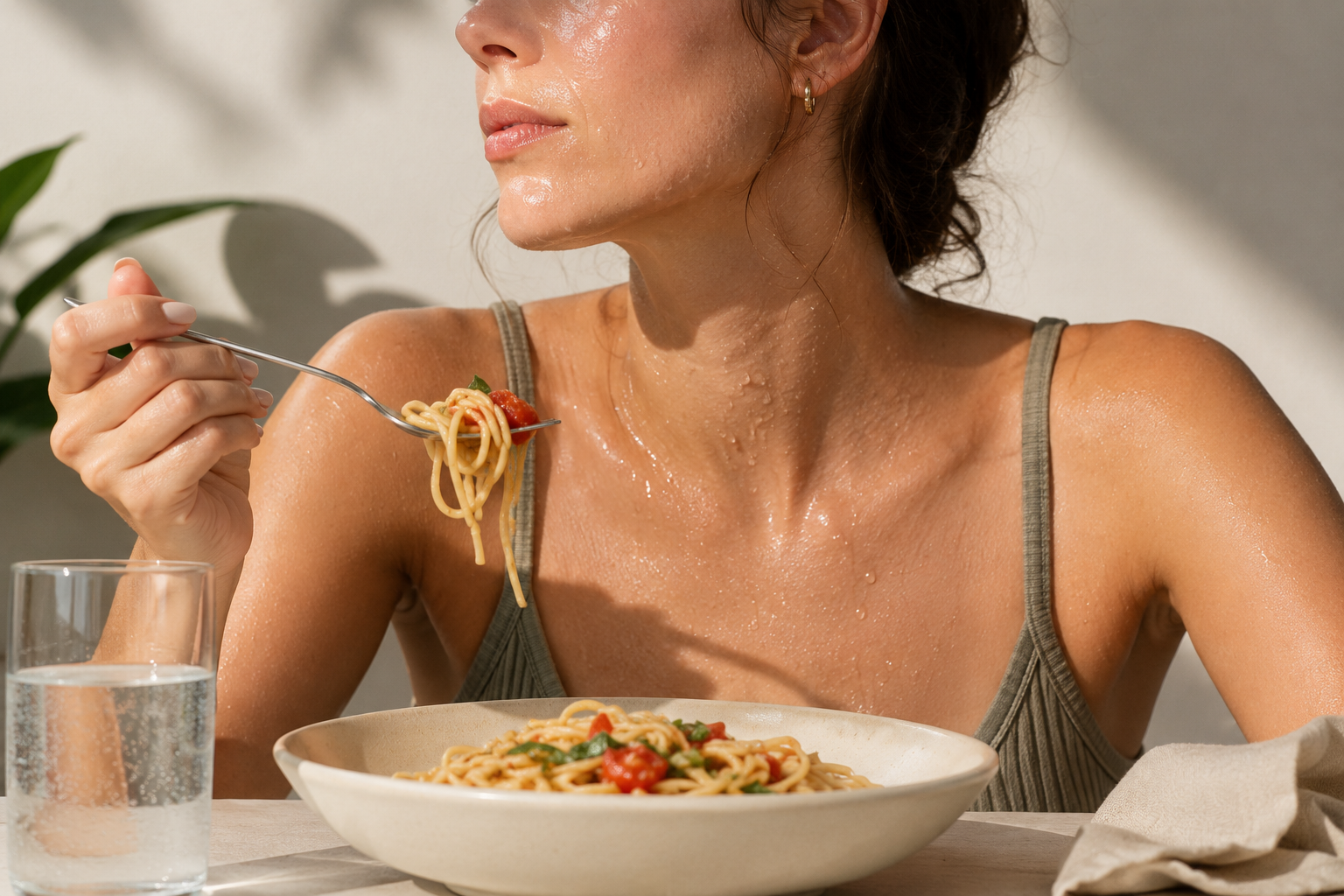
Why do I sweat when I eat? It's one of those questions that feels embarrassing to google but is actually pretty common. Whether it's gustatory sweating, a blood sugar response, or something else entirely, the pattern of when and where you sweat tends to point toward the cause.
TLDR:
- Sweating during spicy or hot food is normal biology; sweating during mild, room-temperature meals is worth flagging to a provider
- The auriculotemporal nerve triggers both saliva and sweat, so when it misfires or gets damaged, eating can set off unexpected sweating
- One study on diabetic gustatory sweating found gustatory sweating in 69% of people with diabetic nephropathy, versus under 5% without those complications
- A sudden cold sweat paired with chest pain or shortness of breath warrants emergency care, not a wait-and-see approach
- Twofold connects you with board-certified dermatologists online for sweating that goes well beyond the dinner table
What Is Gustatory Sweating?
Gustatory sweating is exactly what it sounds like: sweat that shows up when you eat, and sometimes even when you just think about or smell food. For most of us, this is ordinary biology. Bite into a spicy curry and your forehead beads up within seconds. That reaction is common, expected, and usually nothing to worry about.
The wrinkle is that gustatory sweating lives on a range. On one end sits the mild flush you get from hot soup or a fiery pepper. On the other sits sweating that fires off no matter what you eat, sometimes soaking your face or scalp during a plain, room-temperature meal.
That second pattern is worth paying attention to. When the trigger stops making sense, the sweating can point to an underlying cause, and the rest of this article walks through what those might be.
How the Body Triggers Sweat When You Eat
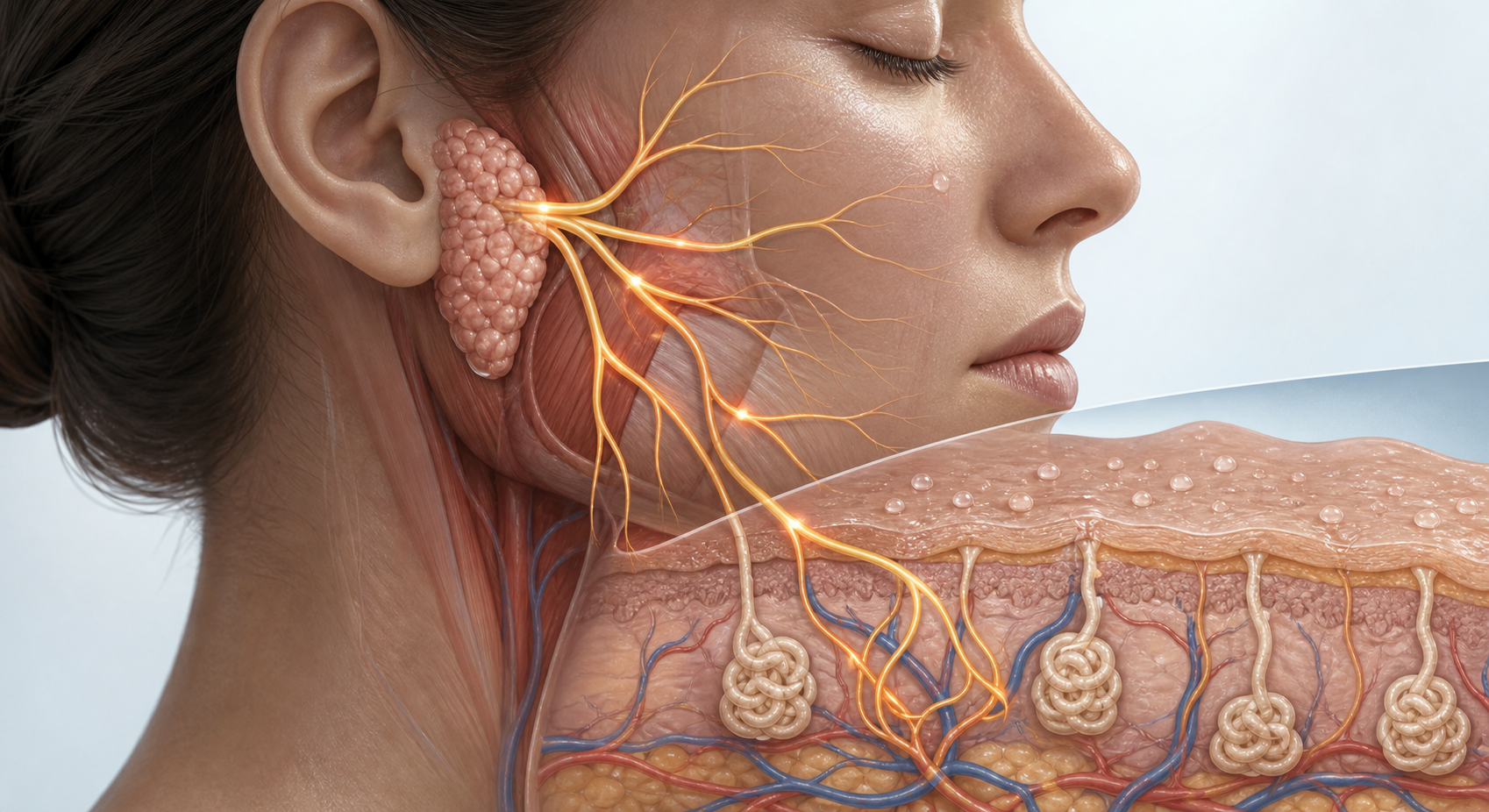
Every time you eat, your body runs a quiet background process. The autonomic nervous system, the part that handles functions you never think about, tells your salivary glands to get to work and can nudge nearby sweat glands too. Usually the response stays small.
The key player is the auriculotemporal nerve, a branch of the trigeminal nerve near your ear and jaw. This single nerve does double duty. It tells your parotid gland, the large salivary gland in your cheek, to produce saliva, and it also carries signals to the sweat glands in your face and scalp. You can read more about the auriculotemporal nerve anatomy for the full map.

When those wires cross or the nerve is damaged, the message meant for your salivary gland spills over to your sweat glands. Your brain says "make saliva," and your skin hears "make sweat."
Specific Foods That Make You Sweat
Not every food triggers sweat the same way. Some heat you up from the inside, some hit taste and pain receptors that share wiring with your sweat response, and some point to something about your own body.
Here is how the common culprits break down:
| Food or drink | Why it can trigger sweat |
|---|---|
| Spicy food, hot sauce | Capsaicin activates heat-sensing receptors |
| Hot coffee, tea, soup | Warmth raises body temperature |
| Sour candy, vinegar, ketchup | Sharp, acidic taste stimulates salivary and sweat nerves |
| Sugar, candy, sweets, fruit | Blood sugar swings, or an insulin response |
| Meat, cheese | Heavier digestion and metabolic heat |
| Alcohol | Widens blood vessels and raises skin temperature |
The bigger clue is not spicy food. If you sweat during plain, mild, room-temperature meals, that pattern is worth closer attention than the sweat that comes with a bowl of chili.
Frey's Syndrome: When Nerve Damage Causes Eating-Related Sweating
Remember that nerve doing double duty for saliva and sweat? Frey's syndrome is what happens when it gets damaged and heals wrong.
It usually starts with surgery near the parotid gland, the large salivary gland in your cheek. When the auriculotemporal nerve is cut, the fibers try to regrow. Sometimes they reconnect to the wrong target, wiring themselves to nearby sweat glands instead. So eating now produces sweat where it once produced saliva.
The sweating shows up on one side of the face, along the cheek, temple, or upper neck. Trauma or infection near the parotid can cause it too.
To map where it fires, doctors use the starch-iodine test, which turns dark blue wherever sweat appears.
Sweating While Eating and Diabetes
Chronic high blood sugar can damage the nerves controlling your sweat glands, a condition called diabetic autonomic neuropathy. When those nerves misfire, mealtime sweating turns abnormal, showing up in odd patterns or unexpected places.
The link is stronger than most assume. One study found gustatory sweating in 69% of people with diabetic nephropathy and 36% with diabetic neuropathy, versus under 5% without those complications, according to research on diabetic gustatory sweating.
Diabetes drives sweat another way too. When blood sugar drops too low (hypoglycemia), your body releases adrenaline, which can trigger cold, clammy sweat. This can happen at any time, including during sleep.
Still, sweating after eating rarely means diabetes. When it turns frequent and unexplained alongside fatigue, thirst, or blurry vision, raise it with a healthcare provider.
Other Conditions That Can Cause Sweating While Eating
Diabetes and Frey's syndrome are the usual suspects, but a few other things can turn up the heat at the table.
- Menopause: hormonal changes and hot flashes can hit mid-meal, layering onto the normal warmth of eating.
- Overactive thyroid: an overworked metabolism runs your body hot, sweating included.
- Anxiety and stress: a tense meal can flip on your fight-or-flight stress response, and sweat comes with it.
- Idiopathic hyperhidrosis: sometimes the sympathetic nervous system is simply overactive with no clear cause.
The one to take seriously is your heart. Excessive sweating can accompany cardiovascular trouble, and a sudden cold sweat paired with chest pain, shortness of breath, or unusual fatigue is not something to wait out. That combination warrants emergency care, not a wait-and-see approach.
Is Sweating While Eating Normal or a Warning Sign?
For most of us, sweating through a plate of wings or a bowl of ramen is just biology doing its job. No red flag there. The pattern worth flagging to a provider is sweating during mild, room-temperature food, especially when it is heavy, frequent, or limited to your face and scalp from excessive face sweating, or upper chest.
Bring it up sooner if the sweat comes with any of these:
- Dizziness, trembling, or heart palpitations
- Fatigue that lingers after you eat
- Sweating that is new and unexplained
- Sweating with no food trigger at all
Asking a provider about it is a reasonable move, not an overreaction.
How to Stop Sweating While Eating
Start with the lifestyle levers, because they cost nothing and often take the edge off:
- Skip the known triggers when it matters: spicy dishes, piping-hot drinks, caffeine, and alcohol. For more strategies on how to stop face sweating, see our dedicated guide.
- Lean toward cooler, milder foods and eat somewhere well-ventilated.
- Stay hydrated and wear breathable fabrics so your body sheds heat instead of trapping it.
When lifestyle tweaks fall short, medical options open up in rough order of intensity. Clinical-strength antiperspirants are a reasonable first step. Anticholinergic medications, topical or oral, block the acetylcholine signal that tells sweat glands to fire. Botox for hyperhidrosis injections have documented evidence for gustatory sweating and Frey's syndrome.
For Frey's syndrome, clinical guidelines for gustatory sweating name topical glycopyrrolate, oral oxybutynin, and intradermal botulinum toxin A as recommended first-line therapies.
Before picking any of this, have a provider pin down the underlying cause first.
Managing Excessive Sweating Beyond the Dinner Table
For some of us, the sweating never stops at the table. When gustatory sweating is one symptom of generalized hyperhidrosis, mealtime relief only solves part of the problem. Oxybutynin for sweating is one option worth discussing with a provider. Sweat still shows up during meetings, workouts, and quiet moments that have nothing to do with food.
That is where we come in. Twofold connects you with board-certified, sweat-specialized dermatologists online. On treatment offered is compounded oxybutynin gel which sits on a penetration-enhancing base built to reach sweat glands through skin that can be difficult for topical medications to penetrate. It blocks the acetylcholine signal that tells those glands to fire.
A quick note: A dermatologist should confirm it fits your situation before starting any treatment. If you have questions about your own health or symptoms, consult a qualified healthcare provider for personalized guidance.
Final Thoughts on What Causes Sweating While Eating
Spicy food and hot drinks triggering sweat is just normal physiology at work. The situations worth flagging are frequent, unexplained sweating during ordinary meals, or sweat paired with symptoms like dizziness, fatigue, or chest discomfort. Once you know what is driving it, your options for managing it become a lot clearer.
FAQ
Is gustatory sweating a sign of diabetes?
Sweating after eating can be connected to diabetes, but it rarely means diabetes on its own. When diabetic autonomic neuropathy damages the nerves controlling sweat glands, mealtime sweating can show up in unusual patterns. As covered in the diabetes section above, research links gustatory sweating strongly to diabetic nephropathy and neuropathy. If the sweating is frequent and unexplained alongside fatigue, unusual thirst, or blurry vision, that combination is worth raising with a healthcare provider.
Why do I sweat when I eat non-spicy food?
Sweating during mild, room-temperature meals is a more telling pattern than sweating from spicy food, which is ordinary biology. When plain food triggers a sweat response, the possible causes include nerve damage from conditions like diabetes or prior parotid gland surgery (Frey's syndrome), hormonal changes from menopause, or an overactive sympathetic nervous system with no clear cause (idiopathic hyperhidrosis). A provider can help pin down which of these fits your situation.
What is Frey's syndrome and how does gustatory sweating from nerve damage get treated?
Frey's syndrome happens when the auriculotemporal nerve, which normally controls both saliva and facial sweat, is cut during surgery near the parotid gland and regrows wired to sweat glands instead of salivary tissue. The result is facial or scalp sweating triggered by eating, not by spicy food or heat. Clinical guidelines name topical glycopyrrolate, oral oxybutynin, and intradermal botulinum toxin A as recommended first-line therapies, according to guidelines from the International Hyperhidrosis Society.
How do I stop sweating while eating?
Start with the low-effort adjustments: avoid known triggers like spicy dishes, hot drinks, caffeine, and alcohol; eat in a cool, ventilated space; and wear breathable fabrics. When those changes fall short, medical options include clinical-strength antiperspirants, anticholinergic medications (topical or oral) that block the signal telling sweat glands to fire, and botulinum toxin injections, which have documented evidence for gustatory sweating and Frey's syndrome. A provider should confirm the underlying cause before selecting any treatment, since the right approach depends on why the sweating is happening.
Gustatory sweating vs. generalized hyperhidrosis: should I treat them differently?
Gustatory sweating that fires only at meals usually points to a specific trigger, such as nerve damage, a metabolic condition, or certain foods, and treatment targets that cause. Generalized hyperhidrosis is a broader pattern where the sympathetic nervous system is overactive across multiple body zones regardless of what you eat, and managing it typically calls for a whole-body approach that goes well beyond mealtime adjustments. If sweating follows you beyond the dinner table, connecting with a sweat-specialized dermatologist gives you a clearer path to targeted treatment.
If you see a mistake or something you think should be updated, let us know at hello@itstwofold.com!


