
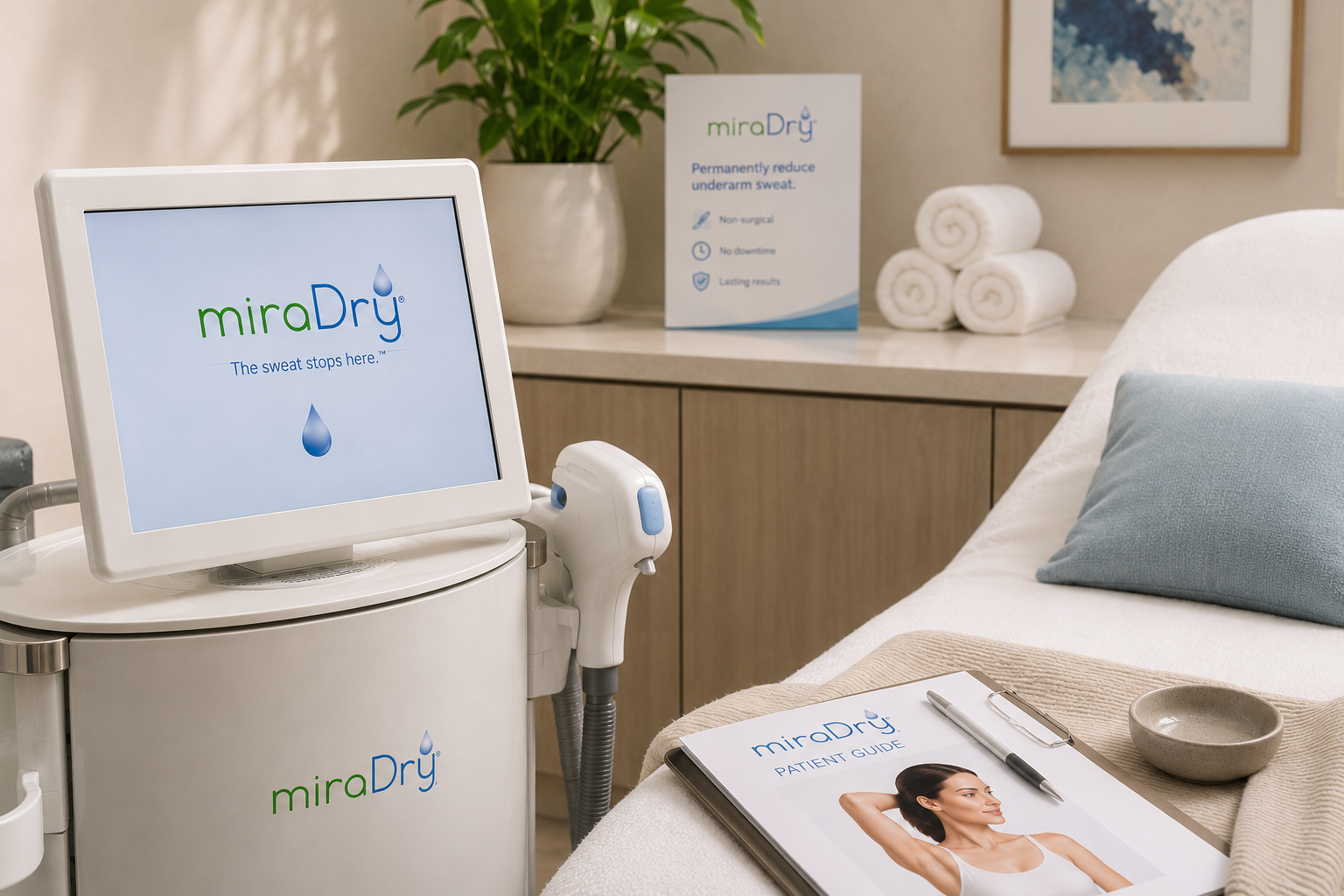
If you've been dealing with underarm sweat that no antiperspirant can touch, miraDry has probably come up in your search. One to two sessions, some downtime, and potentially permanent results sounds appealing, but there's a lot to unpack before you decide. We're going to walk through how it works, what it costs, and who it actually makes sense for.
TLDR:
- miraDry uses microwave energy to destroy underarm sweat glands for near-permanent reduction, with no incisions needed
- Studies show 61 to 70% average sweat reduction, with results lasting years after one or two sessions
- A single session costs $1,500 to $3,000 in the U.S.; most insurance plans will not cover it, but HSA/FSA funds often can
- Side effects like bruising and swelling are common but typically clear within two weeks
- Twofold is a virtual sweat clinic offering non-invasive dermatologist-prescribed treatment for hands, feet, face, and more
What Is miraDry?
Years of soaking through shirts probably led you to miraDry. It is an in-office procedure, cleared by the FDA, using microwave energy to target the sweat and odor glands in your underarms, particularly if excessive underarm sweating is your main concern.
The clinical name is microwave thermolysis. A handheld device sends controlled microwave energy into the skin layer where your glands live, heating and destroying them without any incisions or general anesthesia, so it counts as non-invasive.
How miraDry Works
Here is the part earlier skipped: the cooling. As the device pulls your skin snug, microwave energy heats the deeper dermis where sweat and odor glands sit, while a built-in cooling system chills the top layers. The glands absorb the heat and break down, and once destroyed they do not grow back.
Worried about losing your ability to cool down? Your underarms hold a small fraction of your body's total sweat glands, so the vast majority keep working normally.

Before, During, and After Your miraDry Appointment
Before: The Consultation
Your first visit is a conversation. A provider confirms your hyperhidrosis symptoms and causes are centered on the underarms, reviews your history, and sets expectations. Skip antiperspirant that morning so they see your natural sweat pattern.
During: Treatment Day
Expect about an hour in the chair. The area gets marked, then numbed with local anesthetic so you stay awake and comfortable while the handpiece moves across each underarm.
After: The First Days
Swelling and soreness are normal. Ice and pain relief help. Skip the gym for a few days.
miraDry Results: Sweat Reduction and Longevity
So what does the evidence actually show? A long-term survey with a mean 38-month follow-up reported average sweat reduction of 61 to 70%. And a three-year follow-up study of 103 patients found durable improvement after just one or two sessions.
On permanence: destroyed sweat glands are unlikely to regenerate, so results tend to last. Some people do notice partial return over time, which is why a second treatment gets discussed.
How Many miraDry Treatments Are Needed
Most people walk away from one session with a real drop in sweat. That single treatment is enough for many.
If your hyperhidrosis runs more severe, a provider may suggest a second treatment about three months later to reach glands the first pass missed. In a randomized controlled trial, 76% preferred microwave thermolysis over botox for hyperhidrosis.
A third round is uncommon but exists for stubborn cases. Your provider will check how your first result settled first.
miraDry Side Effects
Here is what to expect with recovery. Side effects after miraDry are common, mostly short-term, and tend to fade fast.
A one-year follow-up study tracked how often each showed up:
| Side effect | Patients affected |
|---|---|
| Bruising | 67% |
| Pain | 56% |
| Swelling | 44% |
| Numbness | 28% |
| Nodules | 22% |
Most cleared within two weeks, and all resolved within 12 weeks. Ice and over-the-counter pain relief handle the soreness and puffiness meanwhile.
miraDry Long-Term Side Effects and Rare Risks
Search for "miraDry horror stories" and you will find the same worries: numbness that lingers, tingling that will not quit. Most numbness is temporary, fading over several months. Longer-lasting nerve effects are uncommon. What moves the odds is who holds the device. Ask how many treatments yours has performed. A good provider answers without flinching.
miraDry Treatment Cost
Let me talk numbers, since that is likely why you scrolled here. In the U.S., a single miraDry session generally runs $1,500 to $3,000, though costs vary by location, provider credentials, and clinic tier.
A few things move that figure:
- Where you live
- Your provider's credentials and experience
- Whether the consultation is bundled in
- How many sessions are planned
If a second session is needed, ask your clinic for a written quote up front, since pricing for follow-up treatments varies by provider.
Is miraDry Covered by Insurance
Here is the frustrating part about paying for miraDry: most insurance plans will not touch it. Even with a documented hyperhidrosis diagnosis, many insurers file the procedure as elective or cosmetic, putting the full cost on you.
A few ways to soften the blow:
- HSA and FSA funds can often go toward the cost with a qualifying diagnosis on record, and pairing miraDry with OTC products and prescriptions for excessive sweating may help manage any residual sweating.
- Some clinics offer financing or payment plans that spread the bill over months.
In rare cases, patients secure partial coverage through prior authorization and documented medical necessity. It takes paperwork, persistence, and appeals, and even then nothing is guaranteed.
Who Is a Good Candidate for miraDry
miraDry fits best if your worst sweating happens in your underarms. Whether you have a formal hyperhidrosis diagnosis or just sweat more than feels livable, you are a candidate if you are in good health and want a lasting fix without hyperhidrosis surgery.
Where it falls short is everywhere else. miraDry is cleared for underarms only, so it cannot touch:
- Sweaty palms or hands
- Sweaty feet
- Facial or scalp sweating
- Whole-body sweating
If excessively sweaty hands are the real problem, miraDry will not help, and a provider should point you toward an option covering those zones.
miraDry for Hands, Feet, and Other Areas
Searching "miraDry treatment for hands" and hoping for a fix? Here is the straightforward answer: miraDry is FDA-cleared for the underarms only. The device was never designed for palms or soles, so no reputable provider will run it there.
Palmar and plantar sweating is just as disruptive, but different zones need different tools:
- Iontophoresis for hyperhidrosis, well-suited to palms and soles
- Topical anticholinergics like glycopyrrolate for hyperhidrosis, which can cover hands, feet, and multiple areas
- Botulinum toxin injections for targeted zones
miraDry vs. Other Hyperhidrosis Treatments
How does miraDry stack up against other options? Trade-offs come down to durability, zones reached, and cost over time.
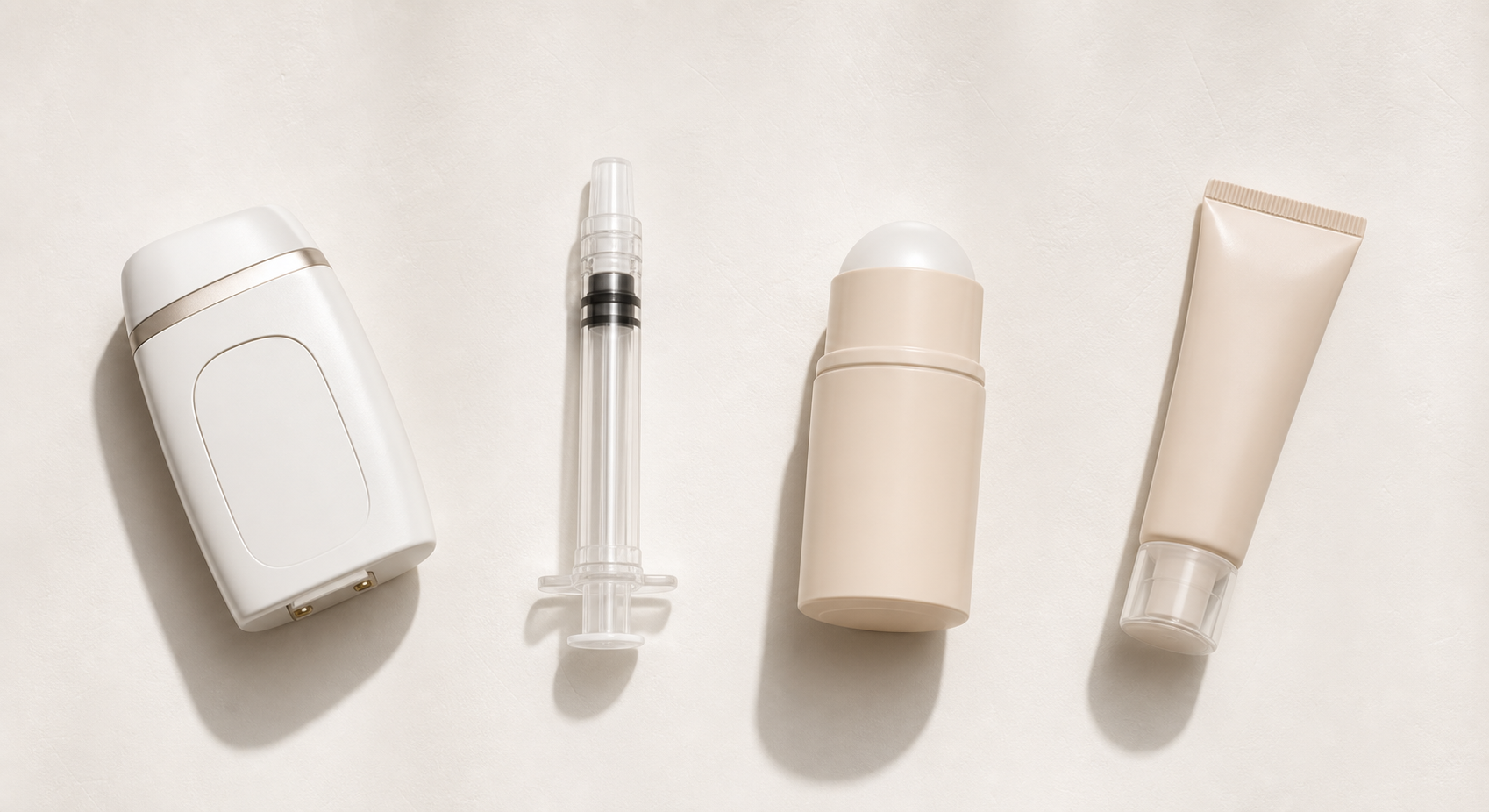
| Treatment | Durability | Zone coverage | Downtime |
|---|---|---|---|
| miraDry | Near-permanent | Underarms only | A few days |
| Botulinum toxin | 4 to 12 months, needs repeats | Multiple targeted zones | Minimal |
| antiperspirants for excessive sweating | Ongoing daily use | Underarms, palms | None |
| Topical/oral anticholinergics | Ongoing use, reversible | Multiple zones | None |
For underarm-only, treatment-resistant sweating, miraDry suits you if you want lasting results and can absorb the upfront cost. Elsewhere, non-invasive multi-zone options win; see the full breakdown of how to stop sweating for every zone.
How to Find a miraDry Provider
Finding a provider is easy. Finding the right operator takes a few questions. Before you book, check that:
- The provider has miraDry device training and real hands-on volume, not a handful of cases.
- A licensed medical professional oversees or performs the numbing and treatment.
- You get a written cost breakdown covering consultation, both underarms, and any likely second session.
Ask to see their own patient photos and read reviews.
When miraDry Is Not the Right Fit: Non-Invasive Alternatives Worth Considering
If your sweating lives mostly beyond the underarms, in your hands, feet, face, or back, an underarm-only procedure leaves the rest unsolved. That gap is where a multi-zone approach matters.
We built Twofold as a virtual sweat clinic for exactly this. You complete an online intake, a sweat-specialized dermatologist reviews it within about 24 hours, and if it is a good fit, they may prescribe oral or topical treatments that can be used across hands, feet, underarms, face, back, and more. Your prescription ships fresh to your door within days, no clinic visit required.
Pricing runs $150 for a 3-month supply ($50/mo), with unlimited follow-up messaging included. For a non-invasive, multi-zone option you manage from home, it is a different path than the operating chair.
Final Thoughts on miraDry Treatment and Your Options
For the right person, miraDry can deliver a real, meaningful drop in underarm sweat with a single appointment. The upfront cost is the main trade-off, and insurance rarely helps cover it. If your sweating goes past the underarms, a multi-zone approach fills the gap miraDry leaves behind.
FAQ
How much does miraDry treatment cost, and does insurance cover it?
A single miraDry session in the U.S. typically runs $1,500 to $3,000, with costs in cities like New York and Los Angeles landing closer to $2,200 to $2,500. Most insurance plans classify miraDry as elective or cosmetic and will not cover it, though HSA and FSA funds can often be applied with a qualifying hyperhidrosis diagnosis, and some clinics offer financing to spread the cost over time.
How many miraDry treatments are needed to see lasting results?
One session is enough for many people, with clinical data showing average sweat reduction of 61 to 70% at roughly three years of follow-up. If your hyperhidrosis is more severe, a second miraDry treatment about three months later can reach glands the first session missed; a third round exists for stubborn cases but is uncommon.
Can miraDry treat sweaty hands, feet, or other areas beyond the underarms?
No. miraDry is FDA-cleared for underarms only and no reputable provider will run the device on palms or soles. If your hands or feet are the real problem, other options cover those zones, including iontophoresis, botulinum toxin injections, and topical anticholinergics like prescription oxybutynin gel, which can be applied across hands, feet, underarms, face, and back.
miraDry vs. topical anticholinergics for hyperhidrosis: which fits better?
miraDry suits you if your sweating is limited to your underarms, you want near-permanent results, and you can absorb an upfront cost of $1,500 to $3,000 or more. Topical anticholinergics work across multiple zones with no clinic visit, no downtime, and a lower cost, making them a stronger fit if your sweating goes beyond the underarms or if the in-office procedure is not practical for you.
What are the miraDry long-term side effects worth knowing before booking?
Most miraDry side effects, including bruising (67% of patients), swelling, and pain, clear within two weeks and fully resolve within 12, according to a one-year follow-up study. The longer-term concern worth asking your provider about is nerve-related numbness or tingling. Most cases resolve over several months, and lingering nerve effects are rare but more common in lower body mass patients. Your provider's hands-on experience with the device matters a great deal for keeping that risk low.
If you see a mistake or something you think should be updated, let us know at hello@itstwofold.com!


