
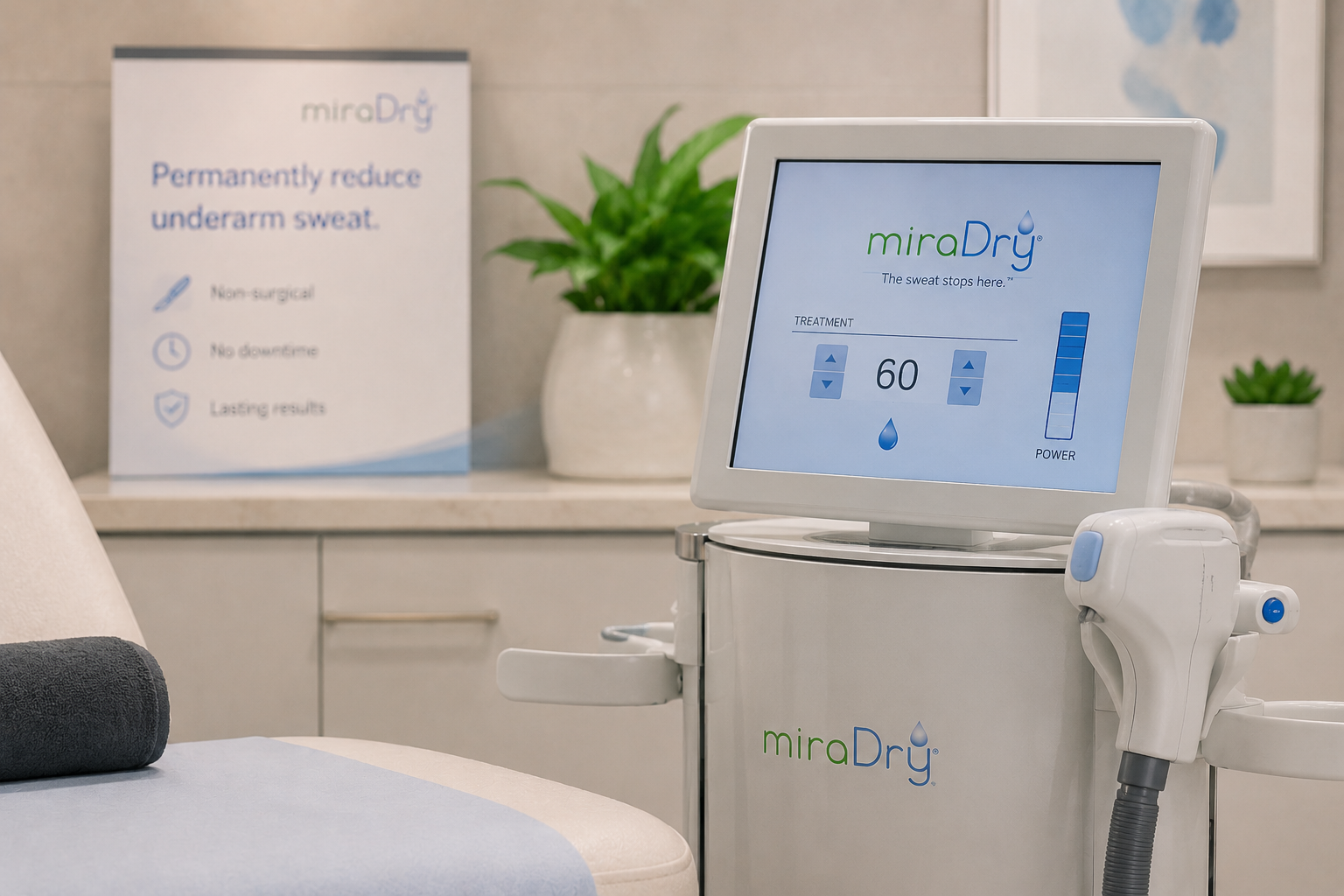
Dealing with excessive underarm sweating gets old fast, and miraDry is one of the few options that aims for long-lasting results. But the cost is a real question, and the answer depends on more than you'd expect. We'll cover what people are actually paying across the U.S., what insurance will and won't do, and how to figure out if it's the right call for you.
TLDR:
- miraDry averages about $1,983 per session in the U.S., with most people paying $1,400 to $3,000 per visit
- Insurance rarely covers miraDry, but HSA and FSA funds can generally be used with a hyperhidrosis diagnosis
- Most side effects like swelling and bruising clear within two weeks, though rare long-term nerve issues have been reported
- miraDry is only FDA-approved to treat underarms
- Twofold is a virtual sweat clinic connect patients to dermatologists who may prescribe - if appropriate - prescription alternatives to treat multi-zone sweating
What miraDry Is and How It Works
miraDry is an FDA-cleared, in-office procedure using controlled microwave energy to heat and destroy the sweat and odor glands in your underarms. The handheld device targets those glands at their exact depth, while built-in cooling protects your skin's surface.
The whole thing takes about an hour, with local anesthesia and no incisions.
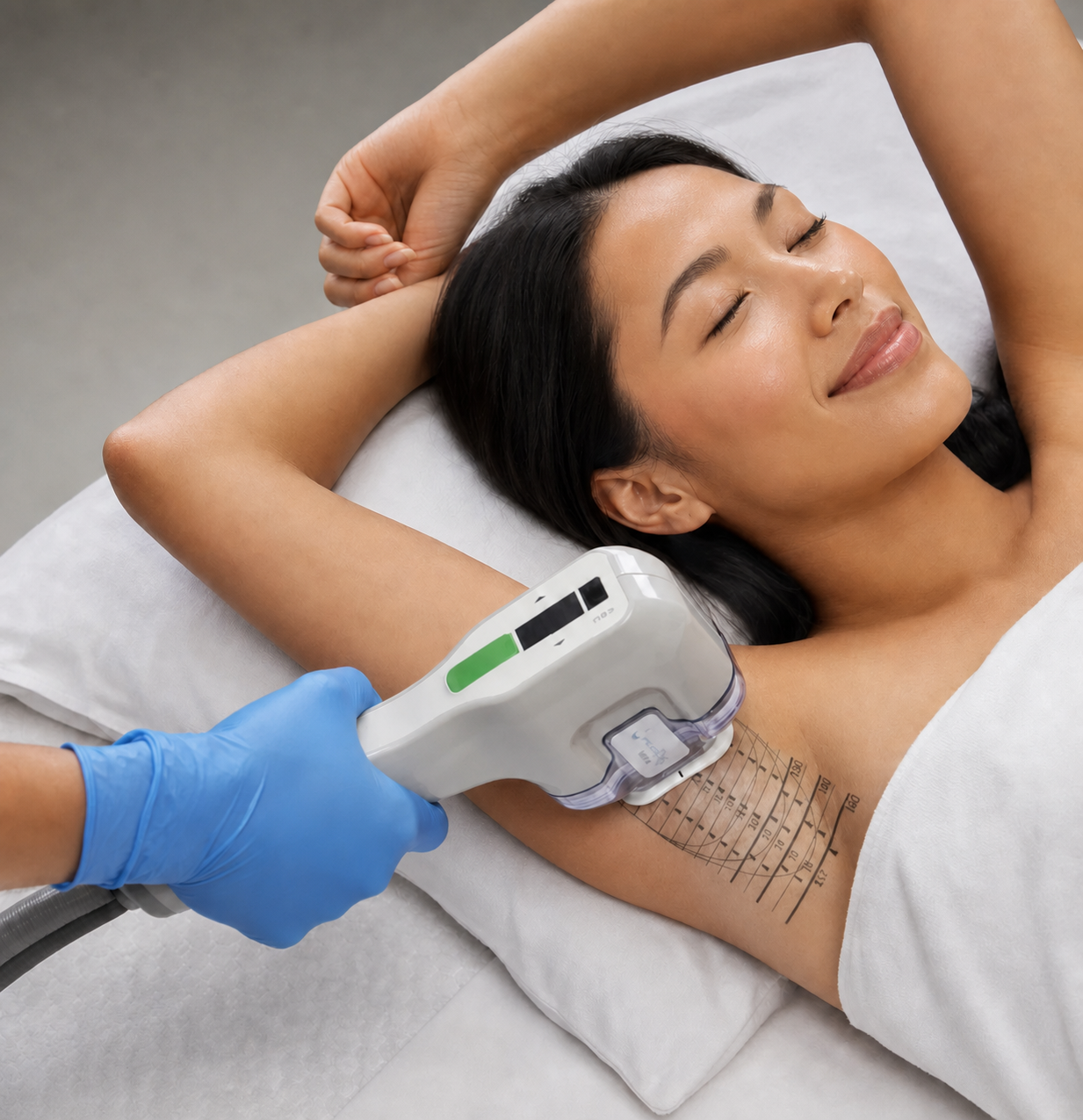
Since destroyed glands don't grow back, results are considered long-lasting, and that durability is a big part of what you're paying for. If you're new to the condition, learn about hyperhidrosis symptoms and causes before looking into procedures.
How Much Does miraDry Cost in 2026
Patient-reported data puts the average cost of miraDry in the U.S. at about $1,983 per session, with single treatments running from $1,400 to $3,000. If two sessions are needed, costs compound, making it worth asking each clinic about package rates.
Here's what trips people up: pricing is set per session, not per full course. A quoted price usually covers one visit. If you need a second session, costs can add up quickly, so it's worth asking about package pricing upfront. Most clinics won't give a firm number by phone either; they'll want you in for a consultation first.
What Affects the Price of miraDry
That $1,400 to $3,000 range isn't random. A few factors move your number up or down.
- Location: Big metros like NYC, Los Angeles, and Atlanta trend higher than smaller cities because local cost of living lifts clinic overhead.
- Provider experience: Board-certified dermatologists and high-volume providers often charge premium rates.
- Sessions needed: Severe sweating may mean a second treatment, stacking onto your total.
- What's bundled: Numbing, follow-ups, and post-care may be included or billed separately.
Always ask for an itemized quote.
miraDry Cost by City and Region
Where you live moves the number as much as anything else, which is why the searches are so city specific.
| Market | Typical range per session |
|---|---|
| New York City | $2,200 to $2,500+ |
| Denver, Houston, Dallas, Atlanta, Toronto | $1,800 to $2,500 |
| Smaller or less competitive markets | starts near $1,500 |
Higher demand and clinic overhead push big-city pricing up. Treat these as benchmarks. Every clinic sets its own rate, so the only firm number is the one on your quote.
How Many Sessions You'll Need
Because pricing is per session, your budget hinges on how many you'll need. Research suggests most people with severe axillary hyperhidrosis see meaningful sweat reduction after one or two treatments, with three-year follow-up data confirming durable HDSS improvement.
The longer-term picture holds up too. Patients tracked for a mean of 38 months averaged 61 to 70 percent sweat reduction.
Some with more severe sweating choose a second session, usually three months later. A third session is uncommon. If you expect two rounds, ask about a package rate.
miraDry Side Effects and What to Expect During Recovery
Most of what people worry about here is short-term. In one-year follow-up data, common side effects were bruising (67%), pain (56%), swelling (44%), numbness (28%), and small nodules under the skin (22%). Most clear within two weeks, nearly all within 12 weeks.
Once the anesthesia wears off, expect swelling and soreness like a bad sunburn. Ibuprofen and ice may help. Daily life resumes within a day or two, but skip strenuous exercise for about a week.
miraDry Long-Term Side Effects and Complaints
When people search for miraDry horror stories, this is usually what they mean. The serious stuff is rare, but real, and deserves a straight answer.
Case reports document uncommon complications: prolonged numbness, persistent pain, and nerve sensitivity near the brachial plexus, the nerve bundle by your armpit. Rarely, patients report lasting arm mobility issues. Risk runs higher in people with very low body fat.
Others simply feel their results fell short or faded faster than hoped. Ask any provider about their adverse event history first. For those weighing more intensive options, learn about hyperhidrosis surgery risks and results.
Is miraDry Covered by Insurance
The short answer most people don't want to hear: miraDry is rarely covered by insurance, even with a confirmed hyperhidrosis diagnosis. Insurers usually file it under elective cosmetic procedures, so the cost lands on you.
Medicare doesn't cover it either. Partial reimbursement in heavily documented cases is uncommon and should not be relied upon.
One useful workaround: because hyperhidrosis counts as a medical condition, HSA and FSA funds can generally go toward miraDry. Confirm eligibility with your plan administrator first.
How to Pay for miraDry
Since insurance usually won't help, most people cover miraDry out of pocket. A few paths make that easier.
- HSA and FSA funds: with documented hyperhidrosis, pre-tax dollars are the most common viable route.
- Medical financing: many providers accept CareCredit, which offers interest-free periods for those who qualify.
- Promotions and packages: some high-volume clinics run seasonal discounts or bundle a second session.
- Manufacturer rebates: a few clinics pass these along at treatment.
Ask each clinic what's available during your consultation.
miraDry vs. Botox for Excessive Sweating
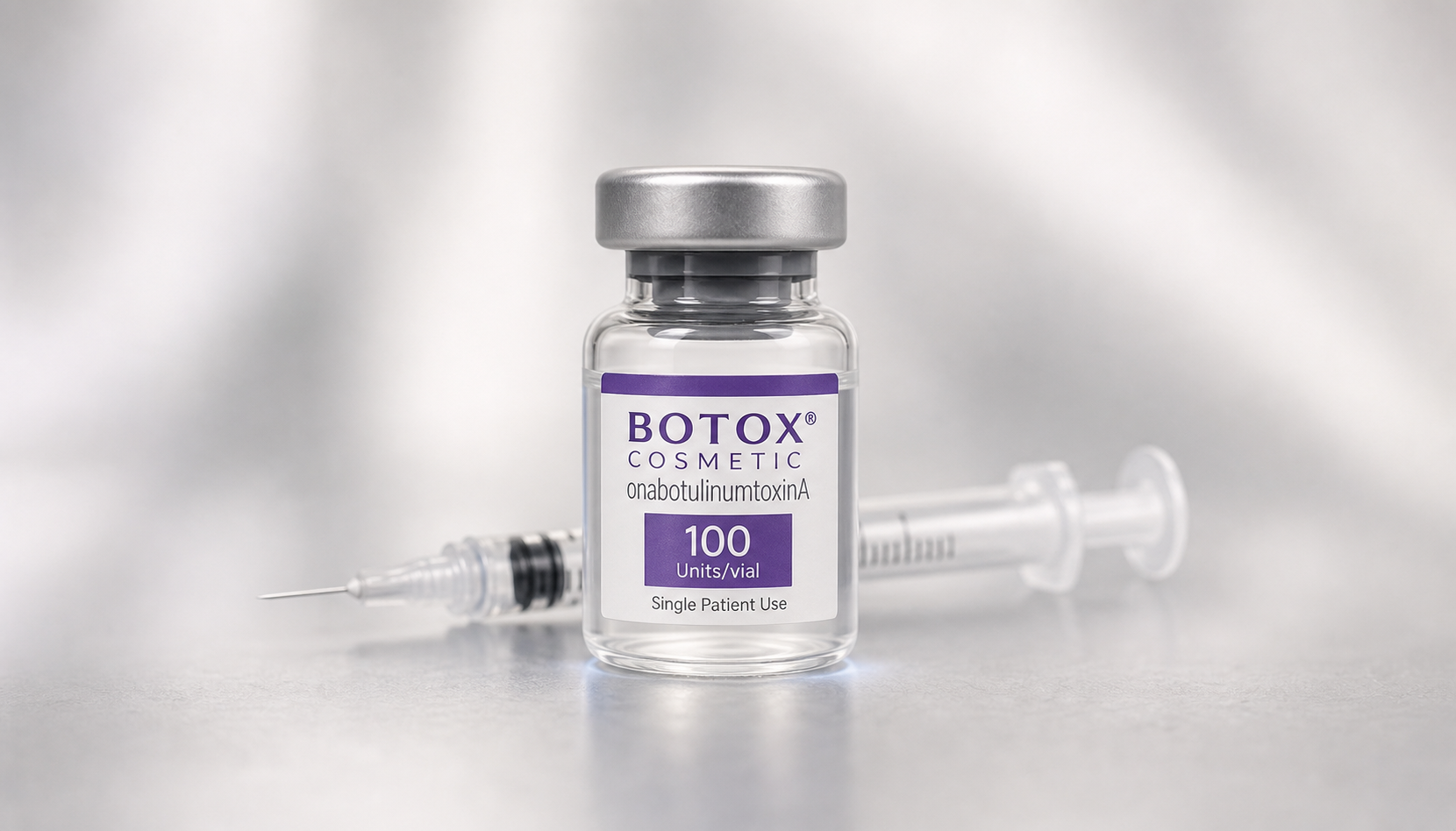
The trade-off between these two comes down to timing and permanence.
Botox injections for underarm sweating typically run about $600 to $1,500 or more per session and wear off in four to six months, so you re-treat indefinitely. The annualized cost adds up quickly with no end point. miraDry costs more upfront but aims for durable results from one or two sessions.
In a head-to-head randomized trial, 76 percent of participants preferred microwave thermolysis over botulinum toxin.
Botox still fits people who want no permanent changes, or who had miraDry and are managing leftover sweat.
Is miraDry Worth It
For underarm sweat that hasn't budged with other treatments, the math often favors miraDry over returning for Botox every few months. Patient satisfaction in clinical follow-up studies has been consistently high, with durable sweat reduction reported at the 38-month mark.
But if you experience excessive face sweating or sweat on your hands and feet, miraDry does nothing for those zones. Whether it's worth it comes down to fit.
Who Is (and Is Not) a Good Candidate for miraDry
Good candidates tend to share a profile: adults with excessive underarm sweating, diagnosed or not, who have tried antiperspirants or other conservative options and want something they don't have to reapply nightly or redo every few months.
miraDry is a weaker fit if you:
- Have an active skin condition or infection in the underarm area
- Have very low body fat, where nearby nerves raise the risk
- Sweat beyond the underarms, on hands, feet, or face
- Are pregnant
Confirm your fit with a licensed provider before booking.
Sweating Beyond the Underarms: Where miraDry Falls Short
miraDry has one hard limit worth stating plainly: it's FDA-cleared for the underarms and nowhere else. Not palms, soles, face, back, groin, or scalp.
If your sweating shows up on your hands, feet, or face, miraDry is not approved for it. Alternatives like iontophoresis for hyperhidrosis may be better suited for those areas.
That catches people off guard. It's often the first solution they find, without realizing it treats a single zone. If your sweating is limited to specific body areas, understanding focal hyperhidrosis can help you find the right treatment.
Managing Sweat in More Places: Where Twofold Fits In
If miraDry doesn't match your sweat pattern, budget, or comfort with a permanent procedure, there's a gentler place to start.
Twofold is a virtual sweat clinic connecting you with licensed, sweat-specialized dermatologists online. You can also review lifestyle tips and OTC options for sweating before committing to a procedure. A compounded topical oxybutynin 8% gel, applied nightly, blocks the signal telling your sweat glands to fire, and works across hands, feet, face, underarms, back, chest, and groin.
Sweating returns if you stop. But it's non-invasive, reversible, and $150 for three months ($50/mo), with free shipping and unlimited follow-up.
Final Thoughts on miraDry and Managing Excessive Sweating
miraDry may be worth considering if underarm sweat is your main problem and you want results that last more than a few months. Cost varies by market and provider, but a free consultation usually gets you a firm number fast. Sweat showing up elsewhere calls for a different tool, and there are good options for that too.
FAQ
How much does miraDry cost in the USA, and why does the price vary so much by city?
The average miraDry treatment cost in the U.S. runs about $1,983 per session, with most patients paying between $1,400 and $3,000 for a single visit. In high-demand markets like New York City, miraDry cost typically lands between $2,200 and $2,500 per session, while smaller markets can start near $1,500. That gap comes down to clinic overhead, provider experience, and local demand.
Is miraDry covered by insurance, and can HSA or FSA funds help with the cost?
miraDry is rarely covered by insurance or Medicare because most plans classify it as a cosmetic procedure, even with a documented hyperhidrosis diagnosis. HSA and FSA funds are generally a viable option since hyperhidrosis qualifies as a medical condition, though you should confirm eligibility with your plan administrator before booking.
miraDry vs. Botox for underarm sweating: which makes more financial sense over time?
Botox for underarm sweating costs roughly $1,000 to $1,500 per session and wears off in four to six months, meaning annual costs can reach $2,000 to $3,000 with no end point. miraDry costs more upfront but targets a long-lasting result from one or two sessions, and in a head-to-head randomized trial, 76 percent of participants preferred microwave thermolysis over botulinum toxin.
What are miraDry's long-term side effects, and how serious are the horror stories on Reddit?
The most common miraDry side effects are short-term, including bruising, swelling, and numbness, with most resolving within two weeks based on one-year follow-up data. Serious long-term complications are rare but documented, including prolonged numbness, persistent pain, and nerve sensitivity near the brachial plexus, with risk higher in people with very low body fat, so asking your provider directly about their adverse event history is a reasonable step before booking.
What should you do if miraDry doesn't fit your sweat pattern or budget?
miraDry is cleared for the underarms only, so if your sweating affects your hands, feet, face, or other areas, you'll need a treatment built for a wider range of zones. Twofold's compounded topical oxybutynin 8% gel is applied nightly and works across hands, feet, face, underarms, back, chest, and groin, with dermatologist-guided care starting at $150 for three months ($50/mo).
If you see a mistake or something you think should be updated, let us know at hello@itstwofold.com!


