

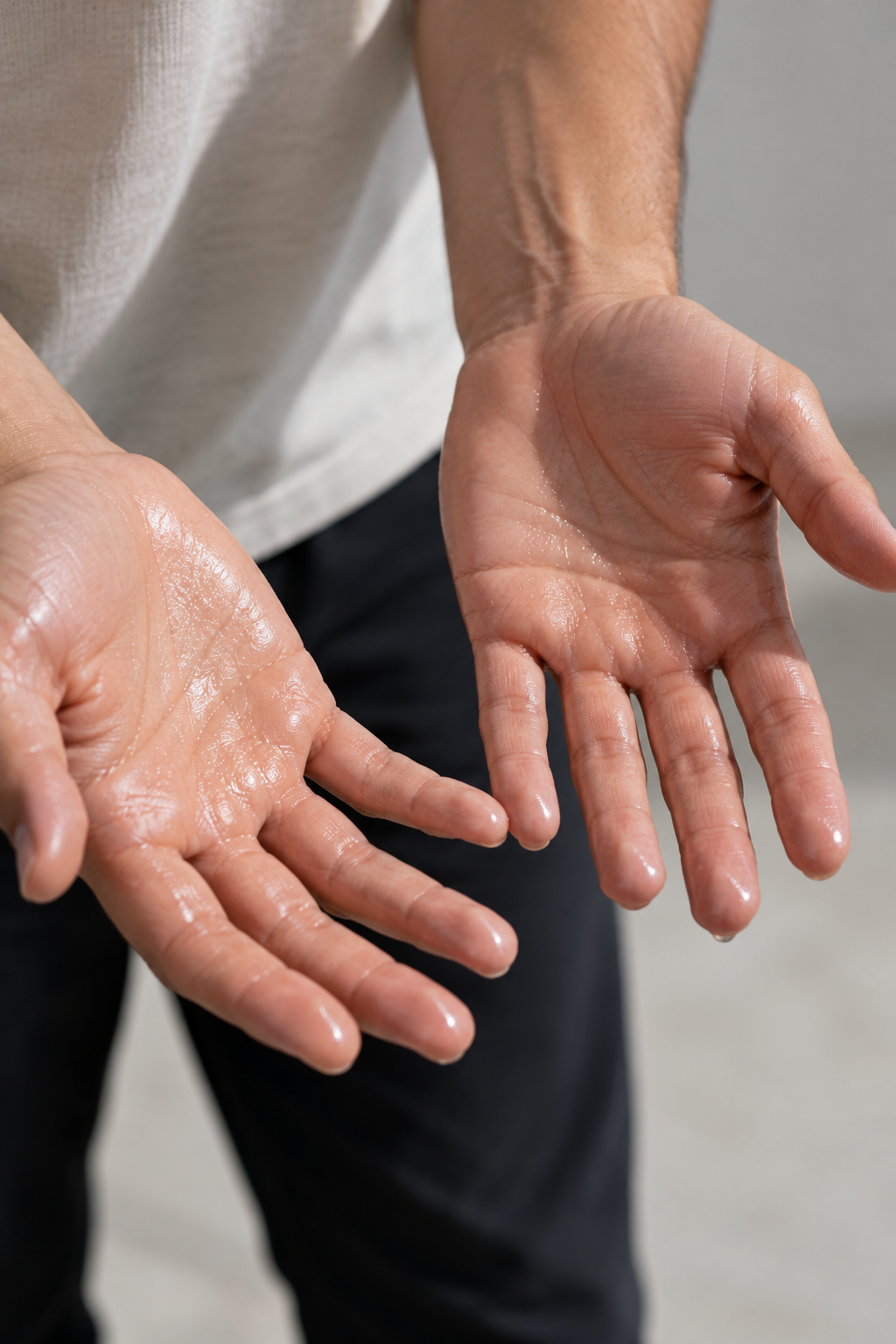
Sweating through oxybutynin questions is its own kind of frustrating. How much should you take? When should you take it? How long before it actually works? These aren't complicated questions, but the answers are scattered across clinical studies that most people will never read. So we pulled it together for you.
TLDR:
- Oxybutynin blocks the nerve signal that triggers excess sweating, starting at 2.5 mg daily and topping out around 15 mg per day.
- A 2024 systematic review found topical oxybutynin helped 73.6% of patients, compared to 42.8% on placebo.
- Most people notice initial change within one to two weeks; for Twofold's topical gel, full results typically appear around four weeks of nightly use, while oral oxybutynin clinical trials commonly measure outcomes at six weeks.
- Taking immediate-release oxybutynin at night helps you sleep through peak side effects like dry mouth and drowsiness.
- Twofold is a virtual sweat clinic where sweat-specialized dermatologists prescribe compounded topical oxybutynin or oral oxybutynin without a live appointment.
How Oxybutynin Works for Sweating
Sweat starts with a signal. Your nervous system releases a chemical messenger called acetylcholine, which tells your eccrine sweat glands (the ones across your palms, soles, underarms, and face) to switch on. For most people that system runs quietly. In hyperhidrosis, it fires far more than your body needs.
Oxybutynin is an anticholinergic, a fancy way of saying it blocks that acetylcholine signal. When the message can't reach the gland, the gland stays quiet, and less sweat comes out.

Where you take it shapes how targeted the effect is. A pill spreads through your whole body. A topical gel concentrates the block at the skin it touches.
Oral Oxybutynin Dosage for Sweating
Most protocols start low and climb slowly. A common opening dose is 2.5 mg once daily, raised in small steps every one to two weeks as your body settles. Clinical literature reports a general ceiling around 15 mg per day, often split across morning and evening, though many people with focal hyperhidrosis find control well below that.
| Step | Typical daily dose |
|---|---|
| Starting | 2.5 mg |
| Early titration | 5 mg |
| Mid-range | 7.5 to 10 mg |
| Reported maximum | up to 15 mg |
The slow build has a point. Side effects like dry mouth and blurry vision may rise with the dose, so starting high tends to backfire. Stepping up gradually lets your dermatologist find the smallest amount that quiets your sweating while keeping side effects manageable, as described in oral oxybutynin research.
Topical Oxybutynin Dosage for Sweating
With a gel, concentration matters more than milligrams per day. Studies have tested topical oxybutynin across a wide range, roughly 1% to 20%, applied directly to the sweatiest areas. Dosing is measured by how much you spread over the skin, not by a pill count.
That local focus is the point. Because the gel sits on the skin instead of moving through your bloodstream, systemic exposure runs lower than an equivalent oral dose, and the body-wide dry mouth or blurry vision that comes with pills tends to be milder. Options for reducing excessive sweating range from lifestyle changes to prescriptions like this one.
A 2024 systematic review found topical oxybutynin produced a clinically meaningful improvement in sweat severity for 73.6% of patients, compared with 42.8% on placebo.
Oxybutynin Starting Dose and Titration
A typical ramp looks less like a leap and more like a staircase. One common protocol opens with 2.5 mg once daily for the first week, moves to 2.5 mg twice daily, then climbs toward 5 mg twice daily by around week six if you need more control.
- Week one: 2.5 mg once daily
- Following weeks: 2.5 mg twice daily
- By week six: up to 5 mg twice daily
Starting low gives your body time to adjust. If side effects like dry mouth appear at a given dose, you and your dermatologist can pause the climb instead of unwinding a big jump. The goal is the lowest dose that keeps you dry. For a broader look at how to stop sweating, there are many approaches worth considering alongside medication.
How Long Does Oxybutynin Take to Work for Sweating
Give it a little patience. Many people notice their sweating easing within the first few days to two weeks, though early change is not the same as full effect. That first drop can be partial, and it often deepens as your body adjusts to a steady dose.
Clinical trials usually measure results at the six-week mark. A 2025 review of oral oxybutynin found symptom improvement in 60% to 97% of patients, a useful yardstick for judging whether your dose is doing its job.
So if two weeks pass with no change at all, that is your cue to check in with your provider about adjusting the dose, not to quietly give up.
Oxybutynin Side Effects for Sweating
Every anticholinergic comes with trade-offs, and oxybutynin is no exception. Systemic effects may show up more with pills than with a gel that stays local, but both matter.

- Dry mouth (the most commonly reported side effect)
- Constipation
- Blurred vision
- Trouble emptying the bladder, or urinary retention
One caution deserves its own note. Because oxybutynin reduces sweating, it can blunt your body's main way of cooling down. In heat or hard exercise, that raises your risk of overheating, so ease off sun and heavy exertion until you know your dose. Some people consider Botox for hyperhidrosis as an alternative when systemic side effects are a concern. Anything unusual is a reason to message your provider.
Oxybutynin Dosage in the Elderly
Age changes the calculus. Oxybutynin crosses the blood-brain barrier more readily than some other anticholinergics, and in older adults oral use has been linked to memory trouble, delirium risk, and incident dementia. The American Geriatrics Society recommends minimizing anticholinergic use in this group.
None of that puts the drug off-limits past a certain age. It means lower doses, closer monitoring, or a different agent are often safer. For example, iontophoresis for hyperhidrosis is a non-drug option sometimes considered, and a provider should weigh the cognitive risks noted in anticholinergic treatment reviews before starting or raising a dose.
Should Oxybutynin Be Taken at Night
The short answer is often yes, though it depends on the formulation.
For topical gel and immediate-release oral oxybutynin, an evening dose has practical logic. Side effects like dry mouth and drowsiness tend to peak a couple of hours after you take it, so timing that peak for when you are asleep keeps daytime life clearer while the drug still holds down sweating through the hours you care about.
Extended-release oxybutynin runs on a different clock, usually taken once in the morning on an empty stomach for a steadier daily release, as noted in a 2025 review of anticholinergic treatments.
Match timing to your formulation, a call worth making with your provider.
When Oxybutynin Stops Working or Does Not Work for Sweating
Two situations get lumped together, and they call for different responses.
If oxybutynin never helped after a full six-week trial at your therapeutic dose, that points to the setup rather than the drug. Your dermatologist may raise the dose, switch to a topical, or check whether the right zone is being treated. Some patients also try glycopyrrolate wipes as an alternative topical approach.
Oxybutynin vs. Glycopyrrolate for Sweating
Both are anticholinergics that quiet the same acetylcholine signal, so their core job is identical. The differences sit in the details.
| Oral oxybutynin | Oral glycopyrrolate | |
|---|---|---|
| Crosses blood-brain barrier | Yes | No |
| Extended-release option | Yes, once daily | Less common |
| Track record in hyperhidrosis | Longer | Growing |
Neither is the default winner. Bring this table to your provider and let your own history steer the choice.
Getting Started with Oxybutynin for Sweating Through Twofold
If another waiting room is what has kept you from treating your sweating, an online route may fit better. Twofold is a virtual sweat clinic connecting you with sweat-specialized dermatologists. You fill out an intake, a dermatologist reviews it within about 24 hours, and there is no live appointment to schedule.
An available treatment is a compounded topical oxybutynin 8% gel, applied once nightly for hands, feet, underarms, and face.
When a pill fits better, the dermatologists may also prescribe oral medication for sweating including glycopyrrolate and extended-release oxybutynin, including combination plans.
Final Thoughts on Oxybutynin as a Sweating Treatment
The research backs oxybutynin as a solid option for hyperhidrosis, and the flexible dosing makes it workable for a wide range of people. Going slow with the dose is a reliable way to keep side effects from getting in the way. A sweat-specialized dermatologist can help you land on a plan that actually fits your life.
This post is for general informational purposes only and is not a substitute for professional medical advice. Please consult a qualified healthcare provider with any questions you have about your health or treatment options.
FAQs
What's the starting dose of oxybutynin for sweating, and how fast does it ramp up?
The typical oxybutynin starting dose is 2.5 mg once daily, rising in small steps every one to two weeks toward a common range of 5 mg to 10 mg per day. Going slowly matters because side effects like dry mouth scale with dose, so a gradual climb lets your provider find the lowest amount that controls your sweating.
How long does oxybutynin take to work for hyperhidrosis?
Most people notice some reduction in sweating within the first two weeks, but full results generally take about six weeks at a steady therapeutic dose. Clinical trials measuring outcomes at the six-week mark found quality-of-life improvement in 85% of subjects, so if nothing has shifted after two weeks, that is a signal to check in with your provider about adjusting the dose instead of stopping.
Oxybutynin vs. glycopyrrolate for sweating: which should I ask my doctor about?
Both block the same acetylcholine signal, so their core effect on sweat is similar. The practical difference is that oral oxybutynin crosses the blood-brain barrier while glycopyrrolate does not, making glycopyrrolate a more common choice for older adults or anyone concerned about potential drowsiness and cognitive side effects. Your own medical history is the deciding factor, so bring both options to your provider.
What is the maximum dose of oxybutynin per day for hyperhidrosis?
Clinical literature reports a general ceiling of around 15 mg per day for oral oxybutynin, typically split between morning and evening doses. Many people find good sweat control well below that ceiling, and side effects tend to increase with higher doses, so the goal is always the lowest effective dose.
Should oxybutynin be taken at night?
For topical gel and immediate-release oral oxybutynin, an evening dose is often the practical choice. Side effects like dry mouth and mild drowsiness tend to peak a couple of hours after taking it, so timing that window for sleep keeps daytime life more comfortable while the drug still manages sweating through the hours that matter. Extended-release oxybutynin follows a different schedule and is usually taken once in the morning, so match your timing to your specific formulation with guidance from your provider.
If you see a mistake or something you think should be updated, let us know at hello@itstwofold.com!


