
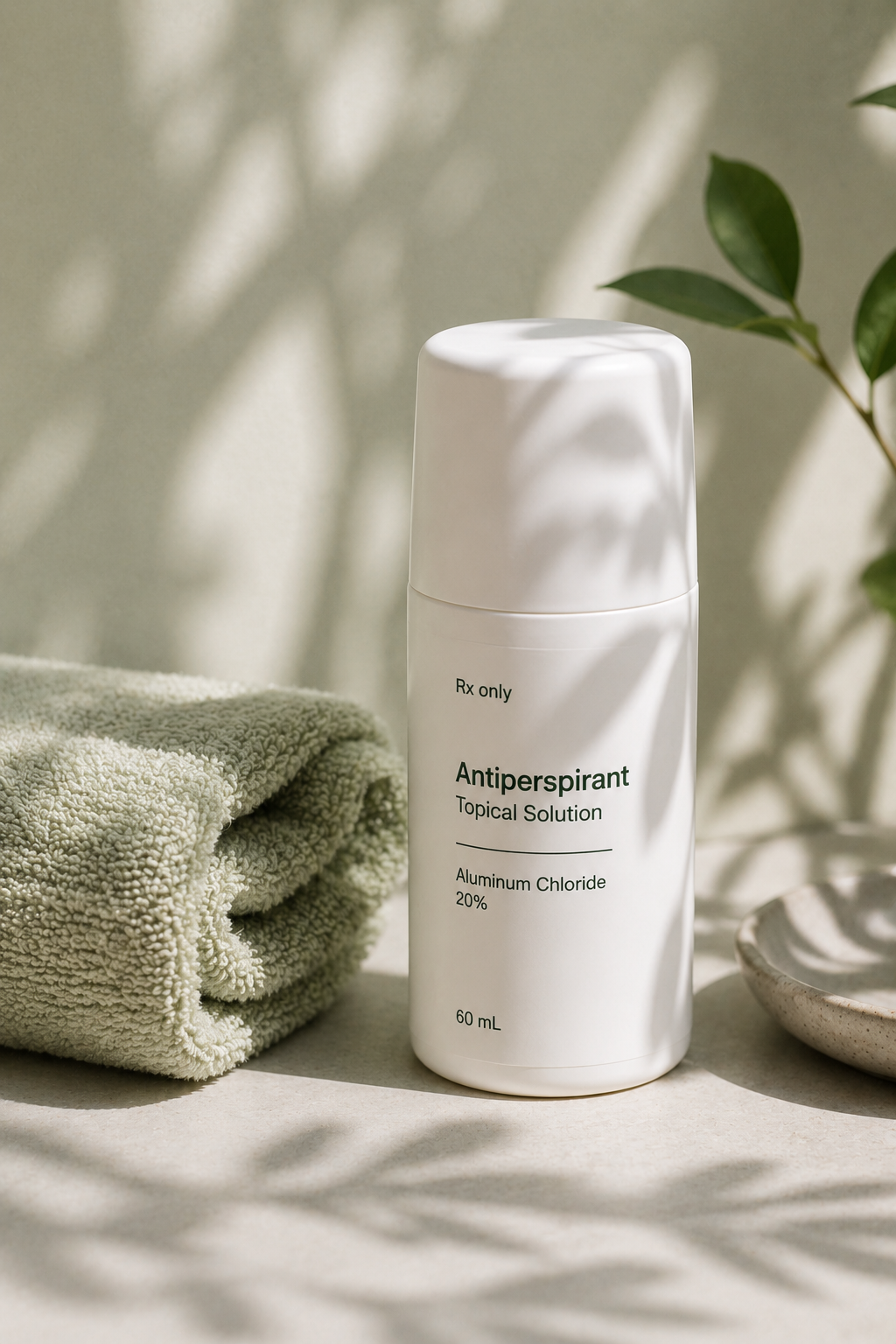
Most of us have grabbed a clinical strength or prescription strength antiperspirant off a shelf at some point and assumed stronger equals better. And sometimes it does. But if you've been cycling through options like Certain Dri prescription strength roll-on, Maxim clinical strength antiperspirant, or searching prescription strength antiperspirant reviews on Reddit just trying to find something that actually holds, you deserve a straight answer on what separates these products, how to use them correctly, and when even the best prescription strength antiperspirant might not be enough.
TLDR:
- "Prescription strength" on drugstore antiperspirants is a marketing phrase, not an FDA category; you don't need a doctor to buy them.
- OTC options like Certain Dri use 12-15% aluminum chloride, while true prescription Drysol contains 20% and requires a doctor's sign-off.
- Apply to completely dry skin at bedtime only; most people who say a product stopped working are applying it at the wrong time on damp skin.
- If sweating affects your palms, feet, or face, a roll-on was never built to reach those areas, and a dermatologist can walk you through next steps.
- Twofold is a virtual sweat clinic where board-certified dermatologists can prescribe a compounded topical oxybutynin 8% gel for multi-site sweating.
What "Prescription Strength" Actually Means on an Antiperspirant Label
The confusing part: "prescription strength" on a drugstore antiperspirant does not mean you need a prescription. Products like Certain Dri and Maxim carry that label while sitting on open shelves.
The FDA classifies antiperspirants as drugs, not cosmetics, because they change how your body works by reducing sweat. Deodorants, which only mask odor, are cosmetics. That drug classification is why you'll see active ingredients and concentrations printed on the back.
So where does "prescription strength" fit? It's a marketing phrase, not a regulatory tier. There is no FDA category by that name.
The two things people mean by the term
Search that phrase and you're usually after one of two different things:
- Over-the-counter products marketed as prescription strength. These use aluminum chloride or aluminum zirconium compounds at higher concentrations than a basic drugstore stick, but you don't need a doctor to buy them.
- A true prescription antiperspirant, classically Drysol, which contains 20 percent aluminum chloride hexahydrate and requires a doctor to write for it.
That distinction is the whole answer. One you can buy today. The other needs a sign-off.
How Prescription Strength Antiperspirant Works
Aluminum salts do the actual work. When aluminum chloride or aluminum zirconium meets the moisture inside a sweat duct, it dissolves and forms a gel-like plug that settles just below the skin's surface. That plug temporarily blocks the duct, so sweat can't reach the top of your skin.
Your glands keep making sweat underneath. The output simply gets stopped before it surfaces. That line separates an antiperspirant from a deodorant, which only covers odor.

Why nighttime application matters
Timing decides whether the plug forms. Apply to completely dry skin right before bed, because sweat gland activity drops to its lowest during sleep. With little moisture pushing back, the plug sets undisturbed over six to eight hours.
Higher aluminum chloride concentrations plug more effectively, though irritation rises alongside strength, as one review of aluminum chloride tolerability notes.
Who Actually Needs a Prescription Strength Antiperspirant
If a basic drugstore stick keeps you dry, you probably don't need anything stronger. The people who reach for clinical strength options are usually the ones for whom ordinary products stopped working, and that group is larger than it looks. Around 4.8 percent of the U.S. population, roughly 15.3 million people, live with hyperhidrosis, according to a survey-based prevalence update.
Signs you might be a candidate
- Sweat soaks through your shirt even when you aren't hot or active.
- You sweat at rest, or in cool rooms, with no obvious trigger.
- The sweating gets in the way of work, writing, or gripping things.
- It has stuck around for six months or longer.
About 3 percent of U.S. adults aged 20 to 60 meet the clinical criteria, and primary focal hyperhidrosis cases usually begin before age 25.
Prescription Strength vs. Clinical Strength vs. Extra Strength
The names blur together on purpose, which is why Certain Dri alone sells three tiers that sound almost identical. What separates them is the active ingredient and its concentration, not the word on the box.
| Tier | Typical active ingredient | Concentration | Prescription needed |
|---|---|---|---|
| True prescription (e.g. Drysol) | Aluminum chloride hexahydrate | 20% or higher | Yes |
| OTC "prescription strength" / clinical (e.g. Certain Dri) | Aluminum chloride | 12 to 15% | No |
| Extra strength OTC | Aluminum sesquichlorohydrate or zirconium complexes | Varies | No |
Here's the catch most shoppers miss: a higher percentage does not mean the same chemical. Extra strength formulas often swap aluminum chloride for zirconium or sesquichlorohydrate compounds, which form a shallower plug and tend to be gentler on skin. Aluminum chloride at higher strengths blocks more sweat but may sting more. So Certain Dri's "extra strength" versus its "prescription strength" is two different actives, not two doses of one.
How to Use Prescription Strength Antiperspirant Correctly
Most people who say a product quit on them are applying it wrong. The fixes are small.
- Apply only to completely dry skin. Any dampness dilutes the active before the plug can form.
- Put it on at bedtime, not in the morning, and leave it in place for six to eight hours before you rinse.
- Start every other night for the first week or two, then move to nightly once your skin adjusts.
- Go sparingly. A few strokes covers the area; piling it on mostly raises irritation.
- Skip application right after shaving, and never use it on nicked, raw, or already irritated skin.
Once your sweating settles, you can usually taper back. Many users drop to every other night, or twice a week, and stay dry on that lighter schedule.
Popular Prescription Strength Antiperspirant Options
Three names dominate this category, and they split cleanly by whether you need a doctor.
| Product | Active ingredient | Concentration | Formats | Access |
|---|---|---|---|---|
| Certain Dri Prescription Strength Clinical | Aluminum chloride | 15% | Roll-on, spray, wipes | OTC |
| Maxim Clinical Strength | Aluminum chloride | Roughly 15% | Roll-on, wipes | OTC |
| Drysol | Aluminum chloride hexahydrate in ethyl alcohol | 20% | Liquid, applied nightly | Prescription |
Certain Dri's roll-on is the one people search for most, and it works for underarm sweating you apply at night. For a broader look at your options, the best antiperspirants for sweat control cover more ground. Maxim sits in the same over-the-counter tier and gets reached for when Certain Dri irritates or stops holding. Drysol is the true prescription step, with the highest aluminum concentration and, correspondingly, the highest chance of stinging.
Side Effects and How to Manage Them
Irritation is the top reason people quit these products. Burning, stinging, redness, and sometimes contact dermatitis trace straight back to chemistry, aluminum chloride's tolerability profile is well documented in the literature. [1] If you're also wondering why you sweat so much, the underlying cause matters. Aluminum chloride turns acidic when it meets moisture, so dampness at application makes the reaction harsher. Dry skin keeps the acid concentrated where it belongs, and applying right after shaving stings because of tiny nicks.
A few adjustments usually help:
- Space out application nights, dropping to every second or third night so skin recovers.
- Dab white petroleum jelly around the treatment area to shield surrounding skin.
- Use a mild hydrocortisone cream short-term if a flare-up develops.
If irritation persists, see a dermatologist about gentler options.
When Prescription Strength Antiperspirant Is Not Enough
Antiperspirants are the accepted first-line treatment, and for milder sweating they work well. They fall short for a lot of people, though. If your excessive underarm sweating hits your palms, soles, or face where a roll-on was never designed to reach, even a 20 percent aluminum chloride formula can leave you damp.
Reaching that ceiling is not a failure on your part. That's where a dermatologist moves you up the treatment ladder:

- Topical anticholinergics, applied to the skin to block the nerve signal that triggers sweat
- Oral anticholinergics like glycopyrrolate for hyperhidrosis, taken as a pill for whole-body or multi-site sweating
- Iontophoresis for hyperhidrosis, using a mild current for hands and feet
- Botox for hyperhidrosis injections for targeted zones
- In-office procedures like microwave thermolysis for the underarms
The catch? Only about half of people with hyperhidrosis ever raise it with a provider, leaving many quietly managing alone. If you're looking for a full overview of how to stop sweating, the options go well beyond antiperspirants.
How Twofold Fits In When Antiperspirant Falls Short
If you have worked through every antiperspirant and the dampness keeps returning, or you'd rather have a dermatologist involved without a clinic visit, this is where we come in. Twofold is a virtual sweat clinic connecting you with board-certified, sweat-specialized dermatologists online.
The flagship treatment offered is a compounded topical oxybutynin 8% gel you apply once nightly. It skips aluminum entirely, blocking the acetylcholine signal that tells your sweat glands to fire, so production drops at the source. One gel covers underarms, hands, feet, face, back, chest, and groin, areas a roll-on was never built to reach.
Here's how the practical side works:
- A flat $150 for a three-month supply, no insurance needed
- A free, fully online intake reviewed by a dermatologist, no live appointment
- Unlimited follow-up messaging to adjust your dose or frequency
Most patients notice an initial change within one to two weeks of nightly use, with fuller, more consistent results by around four weeks, though individual results vary. [Twofold FAQ] The effect is not permanent, so sweating returns if you stop. Consult a dermatologist to determine whether this treatment is right for your situation.
Final Thoughts on Choosing the Right Prescription Strength Antiperspirant
Knowing the difference between marketing language and actual formulation saves you a lot of trial and error. Start with an OTC clinical product, apply it correctly, and if the sweating keeps winning, a dermatologist can take it from there.
FAQ
Certain Dri Prescription Strength vs. Extra Strength: what's actually different?
The gap between Certain Dri's prescription strength and extra strength tiers is the active ingredient itself, not the dose alone. Prescription strength uses aluminum chloride at 15%, while extra strength typically uses aluminum sesquichlorohydrate or zirconium compounds that form a shallower plug and tend to be gentler on skin. If one stops working or causes irritation, switching between them is not simply stepping up or down in power.
How do I use Certain Dri Prescription Strength Clinical roll-on correctly?
Apply the roll-on to completely dry skin right before bed, leaving it on for six to eight hours before rinsing. Start every other night for the first week or two so your skin can adjust, and avoid applying right after shaving or on any irritated skin. Once sweating settles, many people taper back to every other night and stay dry on that lighter schedule.
Maxim Clinical Strength antiperspirant vs. Certain Dri prescription strength: which should I try first?
Both Maxim clinical strength and Certain Dri prescription strength use aluminum chloride at roughly 15% and sit in the same OTC tier, so neither requires a prescription. Certain Dri's roll-on is the more widely searched option; Maxim tends to get reached for when Certain Dri causes irritation or stops holding. Start with whichever is easier to find, and switch if you run into consistent stinging or diminishing results.
What's the best prescription deodorant for smell and sweat when OTC clinical strength antiperspirants stop working?
When clinical strength antiperspirant deodorant options like Certain Dri or Maxim no longer keep up, a dermatologist can move you to treatments that work differently. Drysol, a true prescription antiperspirant containing 20% aluminum chloride hexahydrate, is the next OTC-adjacent step; beyond that, topical anticholinergics, oral options, or in-office procedures target sweating at the nerve-signal level instead of plugging ducts. The right direction depends on where you sweat and how much, which is exactly the kind of question worth raising with a provider.
Can I manage excessive underarm, hand, and foot sweating with one treatment instead of separate prescription strength antiperspirants for each area?
A roll-on antiperspirant, even a clinical strength one, was built for underarms and does not translate well to hands, feet, or face. Topical anticholinergic treatments like Twofold's compounded oxybutynin 8% gel work by blocking the nerve signal that tells sweat glands to fire, and can be applied across multiple zones, including underarms, hands, feet, back, chest, and groin, in a single nightly routine. That said, oxybutynin's use for sweating is off-label and the compounded gel is not separately FDA-approved, so talking through whether it fits your situation with a dermatologist is the right starting point.
If you see a mistake or something you think should be updated, let us know at hello@itstwofold.com!


