
Sweaty hands go beyond a minor annoyance. They get in the way of real moments. And if you've tried a drugstore antiperspirant and gave up after it burned your skin, that's a completely normal experience. There are actually several layers of treatment worth knowing about, starting simple and going as far as you need.
TLDR:
- Sweaty hands (palmar hyperhidrosis) stem from an overactive nervous system, not necessarily a medical emergency, but the skin infection risk rises by roughly 30% (source).
- Treatment follows a clear ladder: start with over-the-counter antiperspirants, then prescription antiperspirants, iontophoresis, then medication or Botox.
- Topical oxybutynin helped 73.6% of patients in a 2024 review, but use is off-label and sweating returns if you stop treatment.
- ETS surgery can stop hand sweating long-term, but compensatory sweating elsewhere can affect up to 36.5% to 90% of patients depending on technique.
- Twofold connects you with sweat-specialized dermatologists online who may prescribe (if appropriate) oral or topical anticholinergic medications designed to reach through thick palm skin.
What Causes Sweaty Hands
Damp palms during a handshake, a first date, or a tense meeting usually trace back to your sympathetic nervous system firing when it doesn't need to. In palmar hyperhidrosis, the nerves telling your sweat glands to switch on stay overactive, so your hands sweat when nobody else's would. Palmar hyperhidrosis is one form of focal hyperhidrosis, a condition where sweating is limited to specific body areas. Stress, heat, and strong emotion crank it up, and it tends to run in families.
This is primary hyperhidrosis, meaning no underlying medical cause. It usually starts in childhood or adolescence.
Sometimes sweaty hands point to a secondary cause. When sweating starts suddenly or spreads across your whole body, thyroid disorders, certain medications, menopause, low blood sugar, or anxiety can be behind it.
Is Palmar Hyperhidrosis Dangerous
The short answer: primary palmar hyperhidrosis won't shorten your life. It isn't a sign of something sinister lurking underneath. Still, dismissing it entirely misses the real toll.
Constantly damp hands come with a roughly 30% greater risk of skin infections (source), since trapped moisture softens skin and invites bacteria and fungus to settle in. There's also an emotional cost. People with hyperhidrosis symptoms run more anxious and depressed than other dermatology patients, per a 2020 systematic review.
When sweating shows up suddenly, soaks you at night, or spreads body-wide, that pattern can point to a secondary cause. A provider can tell the difference, so please get a personal assessment instead of guessing.
How Sweaty Hands Are Diagnosed
Most of the time, diagnosis comes from your story, not a lab. A provider asks how long it's been happening, where it shows up, and whether it disrupts your day. Criteria for primary hyperhidrosis include visible excessive sweating for six months or more, sweat on both hands equally, none while you sleep, onset before age 25, family history, and enough interference to matter. If you're wondering what's behind your symptoms, our overview of excessively sweaty hands covers the common causes in detail.
When testing helps, two options come up:
- Starch-iodine test: iodine and starch turn dark blue wherever sweat surfaces, mapping the affected area.
- Gravimetric test: absorbent paper is weighed before and after to measure how much you sweat.
| Treatment | How It Works | Evidence | Approximate Cost | Key Considerations |
|---|---|---|---|---|
| Antiperspirant (OTC / Prescription) | Aluminum salts plug sweat ducts near the skin surface | First-line standard of care; prescription-strength (20% aluminum chloride) needed for diagnosed hyperhidrosis | OTC: $10–$30; Rx: $20–$60 | Common skin irritation and burning; best as a starting point, not always a long-term standalone fix |
| Iontophoresis | Mild electrical current passed through water trays quiets sweat gland activity | Over 80% of patients improved in a 2022 systematic review | $500–$1,000 for a home device | Sessions 3–5x/week initially; sweating returns quickly if sessions are skipped; not for pacemakers or pregnancy |
| Topical Anticholinergics (e.g., oxybutynin gel) | Blocks acetylcholine to reduce sweat gland signaling at the skin level | 73.6% of patients saw meaningful improvement in a 2024 systematic review (vs. 42.8% on placebo) | Varies; Twofold compounded gel: $150 for 3 months ($50/mo) | Off-label use; applied nightly at home; sweating returns if treatment stops |
| Oral Anticholinergics (e.g., glycopyrrolate, oxybutynin pills) | Blocks acetylcholine body-wide to reduce sweat production across multiple areas | Effective for widespread sweating; less targeted than topical forms | Varies by prescription | Higher risk of body-wide side effects (dry mouth, blurred vision); not permanent |
| Botox (Botulinum Toxin) | Injected into the palm to block nerve signals to sweat glands | Well-established; results last 4–6 months | $600–$1,500+ per session | Repeat sessions needed indefinitely; a 2023 literature review found no significant effect on grip strength |
| ETS Surgery | Cuts or clips sympathetic nerve chains that signal hand sweat glands | High long-term satisfaction for hand sweating reduction | Varies; typically thousands of dollars | Permanent and irreversible; compensatory sweating elsewhere can affect up to 36.5% to 90% of patients depending on technique |
Antiperspirants for Sweaty Hands: The First-Line Option
If you have never treated sweaty hands medically, this is where most people begin, and for good reason. Aluminum salts physically plug your sweat ducts near the skin's surface, so less sweat reaches the palm.
Over-the-counter clinical-strength options like Carpe or Certain Dri handle milder cases. Diagnosed hyperhidrosis usually needs prescription strength, classically 20% aluminum chloride hexahydrate (Drysol), applied to clean, dry hands at night and washed off in the morning.
The catch is irritation. Burning, stinging, and contact sensitization are common, often severe enough to make people stop. Newer gels pairing aluminum chloride with salicylic acid tolerate better. Before committing, read what to know about antiperspirants for hands and treat them as the first rung, not the finish line.
Iontophoresis for Sweaty Hands
When antiperspirants haven't done enough, iontophoresis is usually the next step, and it was built with palms and soles in mind. You rest your hands in shallow trays of water while a device passes a mild electrical current through them, which temporarily quiets sweat gland activity. See our full guide on iontophoresis for hyperhidrosis for a deeper look at how it works.
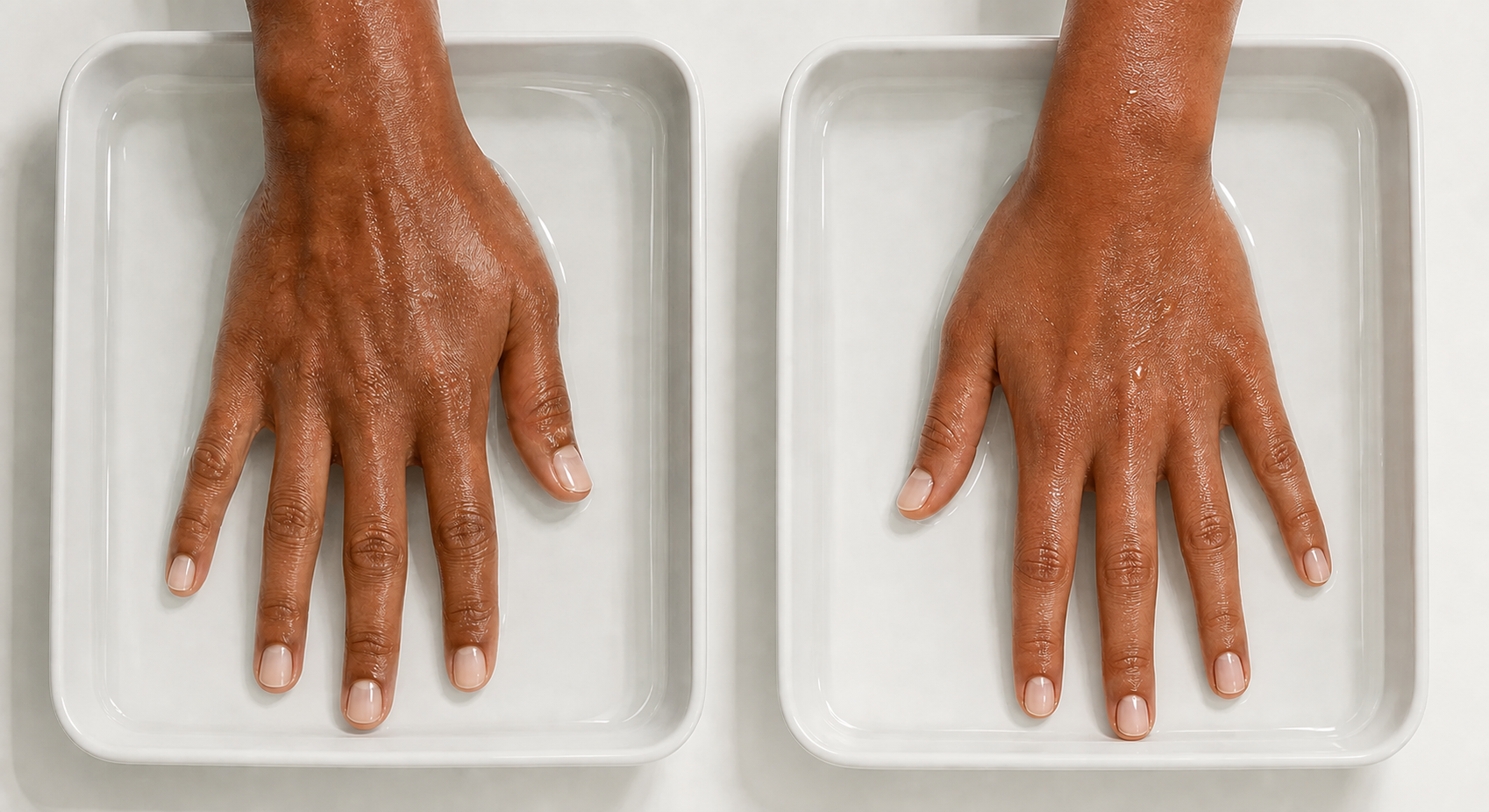
The commitment is real. Sessions run 20 to 30 minutes, 3 to 5 times a week at first, then taper to roughly weekly maintenance. Skip too many and the sweating comes back fast.
The evidence is encouraging. A systematic review found iontophoresis helped over 80% of patients with palmoplantar hyperhidrosis (Chudry, Int J Dermatol 2022).
A few practical notes:
- Home devices typically run $500 to $1,000 out of pocket.
- It isn't suitable if you have a pacemaker, metal implants, or are pregnant.
- It isn't typically travel-friendly.
Prescription Medications for Palmar Hyperhidrosis
When topicals and electrical trays both fall short, medication is the next conversation with a dermatologist. Anticholinergics block acetylcholine, the messenger that tells your sweat glands to fire, so less sweat gets produced.
They come in two forms:
- Topical anticholinergics: oxybutynin gel, glycopyrronium cloths (Qbrexza), and sofpironium bromide gel (Sofdra). A 2024 systematic review found topical oxybutynin produced meaningful improvement in 73.6% of patients versus 42.8% on placebo.
- Oral anticholinergics: glycopyrrolate for hyperhidrosis and oxybutynin, taken as pills when sweating hits several areas at once.
Applied to skin, effects stay mostly local, so body-wide side effects like dry mouth are less likely than with pills. Two important caveats: oxybutynin's hyperhidrosis use is off-label, and none of these is permanent. Stop treatment, and the sweating returns.
Botox for Sweaty Hands
For hands that haven't responded to gels or trays, botulinum toxin is a proven next step. A provider injects small amounts just under the skin of your palm, blocking the nerve signals that tell sweat glands to fire.
Results usually hold for four to six months, then fade, so you'll need repeat sessions indefinitely. Learn more about Botox for hyperhidrosis costs and side effects before deciding. Expect roughly $600 to $1,500 or more per visit.

One thing worth noting: a 2023 literature review found no significant effect on grip strength (source), which is reassuring for people who do manual work.
Surgery for Sweaty Palms: What to Know About ETS
For sweaty palms that haven't budged despite antiperspirants, iontophoresis, medication, and Botox, surgery sits at the end of the ladder. Endoscopic thoracic sympathectomy, or ETS, cuts or clips the sympathetic nerve chains that signal your hand sweat glands, done under general anesthesia. Most people see long-term reduction in hand sweating, with high reported satisfaction.
The downside is serious. When those nerves are severed, the body often reroutes, and heavy sweating shows up elsewhere, like your back, chest, or thighs. This compensatory sweating runs from roughly 36.5% to 90% depending on technique.
ETS is permanent and irreversible. Talk it through carefully with a surgeon, and exhaust gentler options first.
Home Remedies and Lifestyle Adjustments for Sweaty Hands
Let me be straight with you: no home remedy manages true hyperhidrosis the way clinical treatments do. For mild, occasional damp palms, though, a few practical tweaks can take the edge off.
Start with your triggers. Caffeine, spicy foods, and stress all nudge the sweat response, so cutting back where you can helps some people. For a broader look at reducing excessive sweating through lifestyle and OTC options, see our full guide. A few other adjustments worth trying:
- Apply antiperspirant to fully dry hands at night, then wash it off in the morning, so it has time to work.
- Dust palms with talcum or absorbent powder before events to soak up surface moisture.
- Try short astringent soaks with diluted apple cider vinegar or witch hazel for temporary dryness.
- Keep hands cool and dry, and lean on relaxation techniques like slow breathing when stress spikes.
Evidence for most of these is thin, and results tend to be short-lived. If sweaty hands are getting in the way of work, relationships, or daily comfort, our guide on how to stop sweating can help you map out the right next step.
How Twofold Approaches Palmar Hyperhidrosis
If you have made it this far and prescription treatment sounds like your path, this is where I can tell you what we do at Twofold. We're a virtual sweat clinic connecting you with sweat-specialized dermatologists entirely online, no in-person visit, with prescription treatments shipped directly to you (if appropriate).
The formulation matters for hands. Palms have thick skin that standard topicals struggle to get through, so our gel uses a penetration-enhancing base built to carry the medication deeper. Applied once nightly, aluminum-free, fast-absorbing.
Pricing is flat: $150 for a 3-month supply ($50/mo), with unlimited dermatologist messaging included.
Talk with a provider before starting any treatment to see what fits you.
Final Thoughts on Palmar Hyperhidrosis Treatment
For most people, sweaty hands are very treatable once you stop assuming it's just something you have to live with. Start simple, stay consistent, and don't rule out prescription options if over-the-counter products fall short. A quick conversation with a dermatologist goes a long way.
FAQ
What actually causes sweaty hands all of a sudden, and should I be worried?
Sweaty hands that have been present since childhood or adolescence are almost always primary palmar hyperhidrosis, where your sympathetic nervous system overactivates your sweat glands without any underlying disease driving it. If your palms started sweating heavily out of nowhere, or you're also soaking through at night or all over your body, that pattern can point to a secondary cause like a thyroid disorder, medication, or blood sugar issue, and a provider can tell the difference. Primary palmar hyperhidrosis won't shorten your life, but the infection risk and emotional toll are real, so it's worth taking seriously.
What's the most effective palmar hyperhidrosis treatment order to follow before considering surgery?
Start with a clinical-strength antiperspirant for hands like Drysol (20% aluminum chloride), then move to iontophoresis if that's not enough, then prescription anticholinergics (such as topical oxybutynin gel or glycopyrronium cloths, per your provider's recommendation), then Botox for sweaty hands, and only consider ETS surgery after all of those have fallen short. Each step carries more commitment and risk than the last, and ETS is permanent and irreversible, with compensatory sweating occurring in roughly 36.5% to 90% of patients depending on technique. Working through the ladder with a dermatologist means you don't take on more than you need to.
Botox for sweaty hands vs. topical oxybutynin gel: which should I try first?
Topical oxybutynin gel is typically the less invasive step to try before Botox, since it's applied nightly at home, costs less per treatment cycle, and carries no needle-related side effects. Botox for sweaty hands is well-proven and results last four to six months, but sessions run $600 to $1,500 or more and require repeat visits indefinitely. If you want a clinical prescription option you can manage from home before committing to in-office injections, topical anticholinergics are worth discussing with a dermatologist first.
How do I know if my sweaty hands are severe enough to need a prescription hyperhidrosis treatment?
If your palms have been visibly wet for six months or more, sweat equally on both hands, don't sweat while you sleep, and the dampness gets in the way of work, relationships, or daily tasks, that matches the clinical criteria for primary hyperhidrosis and prescription treatment is a reasonable next step. Over-the-counter antiperspirants for hands can help with milder cases, but diagnosed hyperhidrosis usually needs prescription-strength options like aluminum chloride or anticholinergics to see meaningful improvement. A dermatologist can confirm whether your symptoms meet the threshold and point you toward the right starting point.
Can you treat palmar hyperhidrosis at home without in-person visits?
Yes, with the right setup. Home iontophoresis devices let you do sessions in your own bathroom, and telehealth clinics like Twofold connect you with sweat-specialized dermatologists entirely online, so you can get a prescription without a waiting room or in-person appointment. The dermatologist reviews your intake within about 24 hours, and medication ships to your door in 2 to 5 business days, with ongoing messaging access to your care team included if you need adjustments.
If you see a mistake or something you think should be updated, let us know at hello@itstwofold.com!


