
Most people don't realize how many options exist between 'stronger antiperspirant' and 'surgery' for managing excessive sweating. If you're looking into removing sweat glands, the range of procedures, costs, and recovery times can feel like a lot to sort through. We'll break it all down so you can go into any provider conversation knowing exactly what questions to ask.
TLDR:
- Nearly 48% of people with unmanaged hyperhidrosis report poor quality of life, making removal worth understanding.
- miraDry costs $1,500 to $3,000 per session and works only on underarms, not hands, feet, or face.
- Removed sweat glands don't grow back, so every procedure carries permanent, irreversible results.
- ETS surgery carries compensatory sweating rates of 36.5% to 90%, meaning sweat can shift to other body areas.
- Twofold is a virtual sweat clinic offering dermatologist-guided prescription treatments that covers multiple body areas.
What Is Sweat Gland Removal?
Sweat glands are tiny organs that push moisture to your skin to cool you down, and you have a lot of them. The body carries between 2 and 4 million, existing so we don't overheat.
For people with hyperhidrosis, they fire constantly, which is where removal comes in. It's an umbrella term covering non-invasive energy treatments that destroy glands without cutting, through to surgery that physically excises them, usually considered when other options haven't worked.
Why People Consider Removing Sweat Glands
For most people, the decision comes down to sweat that stops responding to anything else. Axillary hyperhidrosis, the underarm form, is the usual driver, though severe sweating on hands or feet pushes people toward removal too.
The daily toll is real. Nearly 48% of people with unmanaged hyperhidrosis report poor quality of life, from soaked shirts to social avoidance.
Another group considers removal for hidradenitis suppurativa, a painful condition where apocrine glands and hair follicles become inflamed.
Worth stressing: removal is rarely a starting point.
Types of Sweat Gland Removal Procedures
Not every "sweat gland removal" means the same thing. Options split by invasiveness and body area. Excision-based surgical routes target the underarms, while nerve-interrupting surgeries like ETS and ELS target the hands and feet. People dealing with focal hyperhidrosis often find these distinctions especially relevant.
Excision surgery
Glands are cut out with a strip of skin. Effective but the most invasive, leaving scarring, reserved for underarms.
Curettage
A small incision lets the surgeon scrape glands off the dermis. Underarms only.
Suction curettage
Scraping plus suction through tiny incisions. Popular for armpits, gentler on skin.
Laser ablation
A laser fiber heats and destroys underarm glands.
Microwave thermolysis (miraDry)
Non-invasive energy destroys underarm glands. More shortly.
ETS
Endoscopic thoracic sympathectomy interrupts sweat nerves, targeting hands.
miraDry: How It Works, Results, and What to Expect
miraDry is among the most commonly discussed non-surgical routes. A handheld device sends microwave energy to the depth where underarm sweat glands sit, destroying them through thermolysis while a cooling system protects your skin.
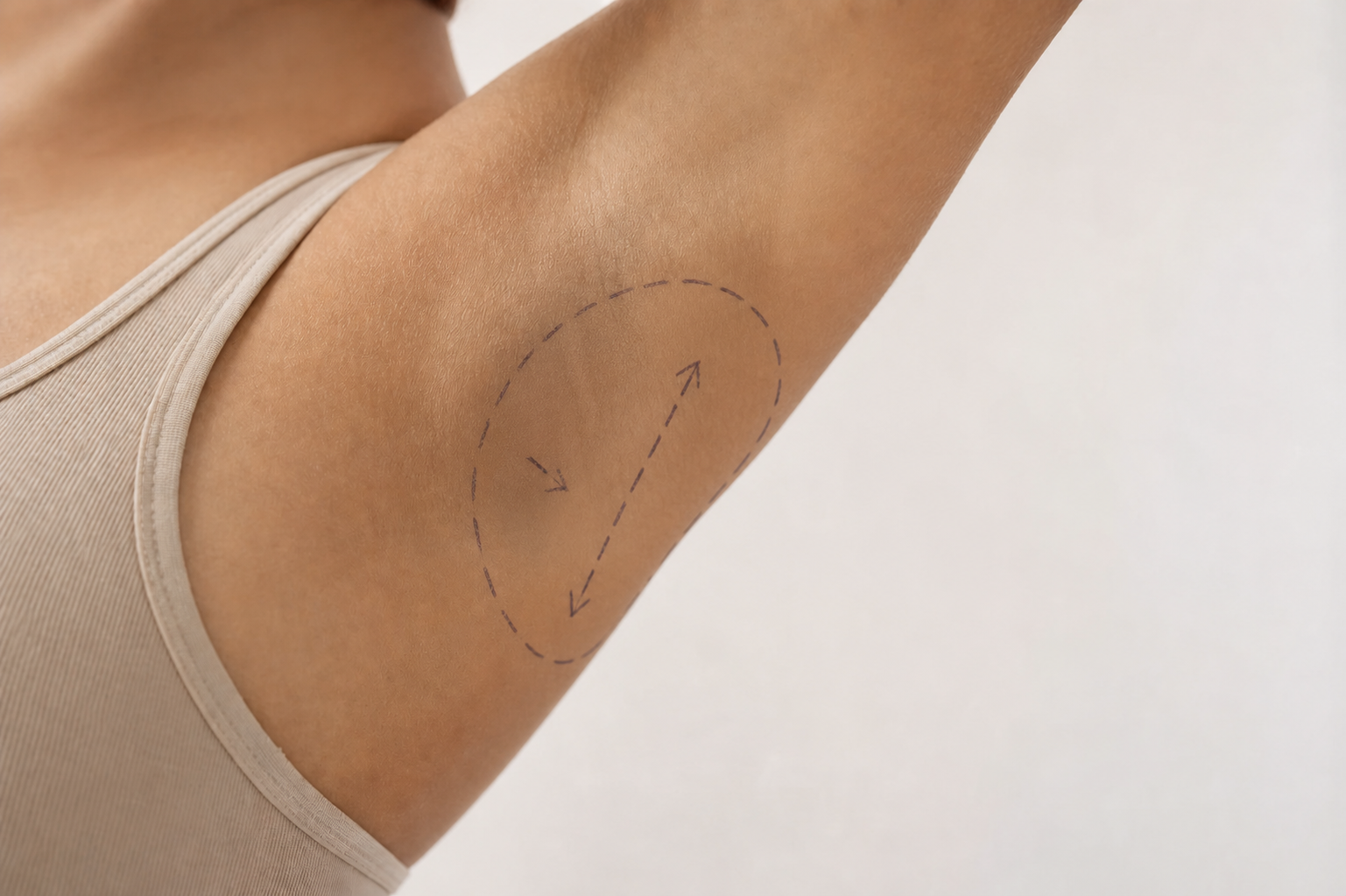
The appointment is done in-office, typically under local anesthesia. Most people need one or two sessions. A three-year follow-up of 103 patients showed durable improvement, and in a randomized trial, 76% preferred it over botulinum toxin.
One limit: miraDry is cleared for underarms only. Not hands, feet, or face.
miraDry Side Effects and Risks
Most miraDry side effects are short-lived. In one year-long study, patients reported common side effects including bruising and swelling, most fading within two weeks and all within twelve.
Less common effects include prolonged numbness and nerve discomfort, which show up in some patients. Serious adverse events can occur, which is why provider training and experience matter.
Provider experience matters a lot here. And keep one thing in mind: destroyed glands don't grow back, so the result, good or bad, is permanent.
Cost of Sweat Gland Removal
Costs swing by procedure, geography, and session count. Insurance rarely covers these procedures, since most plans classify them as elective cosmetic care, though a physician's documentation of medical necessity can occasionally open a pathway worth pursuing with your insurer.
| Procedure | Approximate U.S. cost range |
|---|---|
| miraDry | $1,500 to $3,000 per session |
| Surgical excision or curettage | $2,000 to $5,000 (approximate; varies by provider) |
| ETS surgery | $10,000+ (approximate; varies by provider) |
Major metro areas hit the top of these ranges, and since miraDry often takes two sessions, plan for the total to climb.
Recovery Timeline for Sweat Gland Removal
Downtime often decides the choice, and it varies by how invasive the procedure is.
miraDry
The gentlest recovery of the group. Most people return to work the same day, though swelling and soreness may last a few days. Talk with your provider about when to resume strenuous exercise.
Surgical excision or curettage
Expect a recovery period with activity restrictions and wound care while incisions heal. Your surgeon will give you a specific timeline based on the procedure and your health.
ETS
The longest road, given general anesthesia. Recovery time varies; your surgical team will outline what to expect for your specific case.
Sweat Gland Removal Pros and Cons
What a well-informed patient weighs comes down to a straight trade between permanence and its price.
| Benefits | Drawbacks |
|---|---|
| Long-lasting or near-permanent sweat reduction at the treated site | Irreversible once glands are destroyed |
| Less reliance on daily products or repeat treatments | Meaningful cost, rarely covered by insurance |
| Real quality-of-life gains after other options fail | Procedure-specific risks and downtime |
| Surgical removal is underarm-only | |
| Compensatory sweating, most common with ETS |
Is Sweat Gland Removal Safe?
Safety depends heavily on which approach you pick, and they don't share a risk profile.
miraDry
The most benign of the group. Its side effects are well-documented, mostly short-lived, and self-resolving when a trained provider runs the device.
Surgical excision
Standard minor-surgery risks apply, chiefly infection and scarring at the incision site.
ETS
The heaviest risk profile. Compensatory sweating is common, and rare complications include Horner's syndrome, a drooping eyelid and constricted pupil from nerve damage.
A frequent worry: does clearing underarm glands wreck your ability to cool down? It doesn't. The underarms account for under 2% of total sweat glands, so thermoregulation stays intact overall. Always discuss with your provider how that applies to your specific situation.
What Happens When Sweat Glands Are Removed?
Once a gland is destroyed, it stays gone. Sweat glands don't regenerate, so whatever site was treated stays drier for good.
The bigger question is how the rest of your body responds. With nerve-cutting surgery especially, some people develop compensatory sweating, where output ramps up elsewhere, often the back, abdomen, or thighs. After ETS, rates ranging from 36.5% to 90% have been reported in systematic reviews, depending on technique.
Localized treatments like miraDry are different. Since so few glands are involved, compensatory sweating isn't a meaningful concern.
Can You Remove Sweat Glands from Hands or Face?
Removal options thin out fast once you move away from the underarms.
miraDry is not cleared for hands, feet, or the face. Surgical excision isn't practical there either, given the anatomy.
For severe excessively sweaty hands that haven't responded to anything else, ETS is the main surgical route considered.
The face has no widely practiced removal procedure. Botulinum toxin, done by an experienced provider, is a commonly used option there. Always talk with a provider about what fits your situation.
Non-Surgical Alternatives to Sweat Gland Removal
Before anyone reaches for a scalpel, there's a ladder of reversible options, most tried first. Treatment usually escalates by severity.
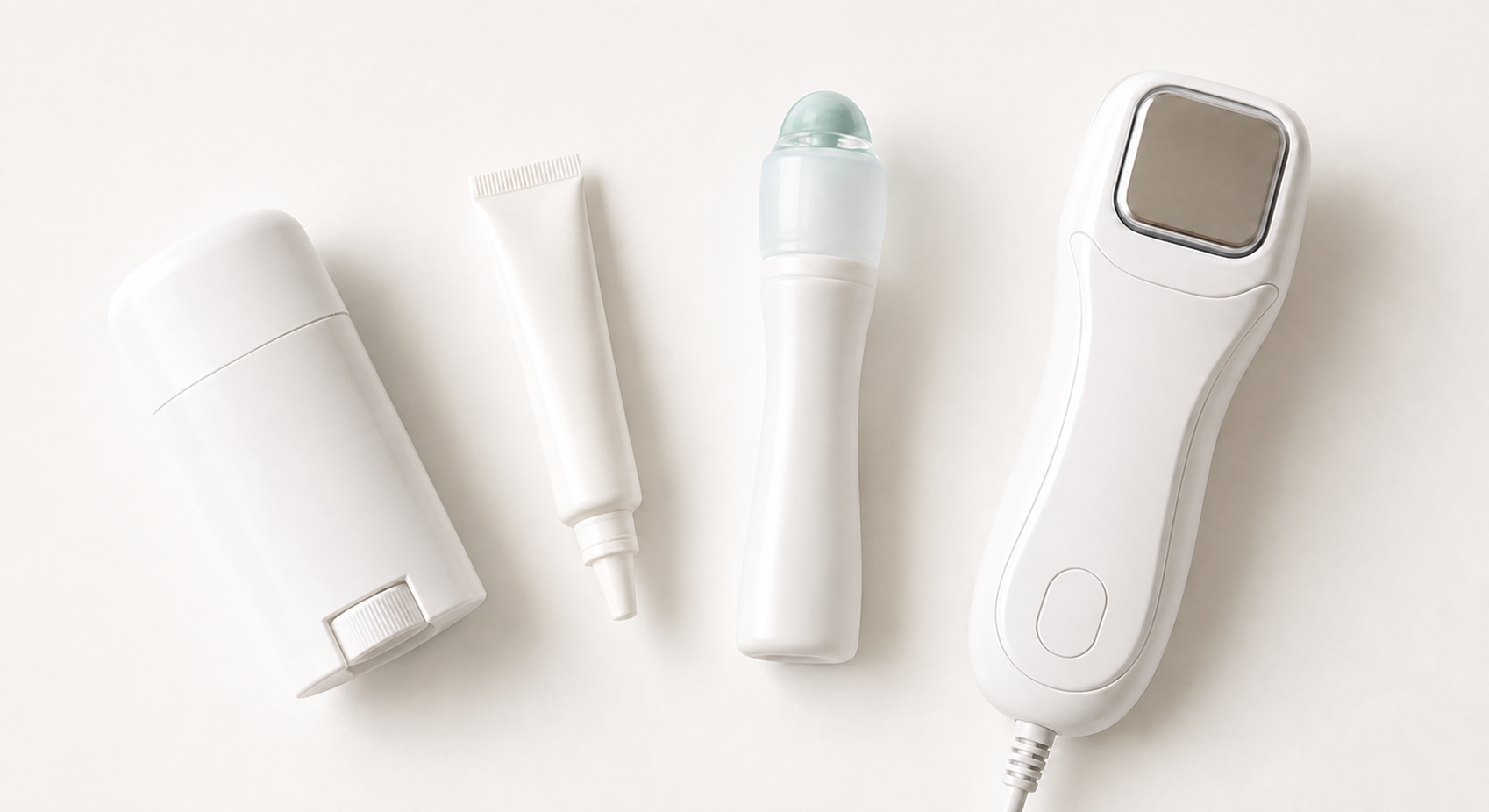
- Reducing excessive sweating often starts with clinical-strength antiperspirants: aluminum salts that plug ducts, the over-the-counter first line for mild cases.
- Prescription antiperspirants: stronger aluminum chloride formulas.
- Topical anticholinergics: glycopyrrolate for hyperhidrosis, sofpironium, and compounded oxybutynin gel, which block the nerve signal.
- Oral anticholinergics: for widespread sweating.
- Iontophoresis for hyperhidrosis: a mild electrical current, mainly for palms and soles.
- Botulinum toxin injections: in-office shots pausing sweat signals for months.
These are reversible but ask for ongoing upkeep.
Managing Excessive Sweating Without Surgery: Where Twofold Fits
If you've read this far weighing a permanent procedure, it helps to know where most people start. Removal sits at the far end of the ladder, and how to stop sweating with reversible, dermatologist-guided treatment usually comes first.
That's the gap we built Twofold to fill. We're a virtual sweat clinic connecting you with sweat-specialized dermatologists entirely online. Our flagship offering is a compounded topical oxybutynin gel, applied nightly, along with oral treatments.
Being topical, it covers spots removal can't reach at once: hands, feet, underarms, face, back.
Final Thoughts on Sweat Gland Removal Options
The right answer depends on where you sweat, how severe it is, and what you've already tried. Removal delivers lasting results for the right candidate, but there's a lot of ground to cover before you get there. A dermatologist who knows hyperhidrosis well can help you map out what makes sense for your situation.
FAQ
Is miraDry worth it compared to surgical sweat gland removal for underarm hyperhidrosis?
miraDry is worth considering first for most people because it skips incisions, carries a gentler recovery (most return to work the same day), and has strong durability data: a three-year follow-up of 103 patients showed lasting results. Surgical excision or curettage costs more, requires one to two weeks of downtime, and carries infection and scarring risks. The trade-off is that both approaches are permanent, so provider experience and realistic expectations matter before you commit to either.
Can you remove sweat glands from your hands or face, or is sweat gland removal only for armpits?
Sweat gland removal is largely limited to the underarms. miraDry is cleared for underarms only, and surgical excision is not practical on hands or the face due to anatomy. For severe palmar hyperhidrosis that hasn't responded to other treatments, ETS (endoscopic thoracic sympathectomy) is the main surgical option considered, though it carries the heaviest risk profile of any approach, including compensatory sweating rates that systematic reviews place between roughly 36.5% and 90%.
What are the side effects of sweat gland removal, and is it dangerous?
One safety point worth knowing: removing underarm glands does not impair your body's ability to maintain temperature control, since the underarms hold under 2% of your total sweat glands.
What's the best way to treat hyperhidrosis before considering sweat gland removal?
Most dermatologists work through a ladder of reversible options before removal comes up: clinical-strength antiperspirants, prescription-strength aluminum chloride formulas, topical anticholinergics like compounded oxybutynin gel, oral anticholinergics, iontophoresis for palms and soles, and botulinum toxin injections. Compounded topical oxybutynin 8% gel is one option here; it works by blocking the nerve signal that triggers sweat production and can be applied to hands, feet, underarms, and face, covering areas where sweat gland removal simply isn't an option.
How much does sweat gland removal cost, and does insurance cover it?
Costs in the U.S. typically run $1,500 to $3,000 per miraDry session, $2,000 to $5,000 for surgical excision or curettage, and $10,000+ or more for ETS. Since miraDry often takes two sessions, total costs can climb well above the per-session figure. Insurance rarely covers these procedures because most plans classify them as elective cosmetic care, though it is worth discussing coverage options directly with your provider and insurer.
If you see a mistake or something you think should be updated, let us know at hello@itstwofold.com!


