

Most antiperspirants are built for average sweaters, which doesn't help much if you're not one. If you've been managing your sweat with products that weren't really made for your situation, it's worth knowing what else is out there. We compared seven options side by side so you can see what's actually different and what might work for you.
TLDR:
- Most antiperspirants plug sweat ducts with aluminum salts, which one stepwise treatment study found helped only 15.3% of patients when used alone.
- Prescription anticholinergic treatments work differently, blocking the nerve signal before sweat is produced at all.
- OTC options like Carpe, SweatBlock, Duradry, Certain Dri, and SweatGuard vary by zone coverage, with no dermatologist oversight.
- Drysol uses 20% aluminum chloride hexahydrate but requires an in-person visit and carries irritation risks.
- Twofold is a virtual sweat clinic offering compounded oxybutynin gel with dermatologist review, covering multiple body zones beyond underarms.
What Is an Antiperspirant for Excessive Sweating?
Deodorants and antiperspirants get lumped together, but they do different jobs. The antiperspirant vs deodorant distinction matters: a deodorant masks or neutralizes odor, while an antiperspirant reduces how much you sweat, and that distinction matters a lot if your problem is wetness and not odor.
Your body carries somewhere between 2 and 4 million sweat glands, and in people with hyperhidrosis those glands fire far more than needed to cool the body. The gland count comes from clinical reference material.
The category spans a few tiers:
- Drugstore antiperspirants using aluminum salts to plug sweat ducts near the skin's surface.
- Clinical-strength versions with higher aluminum concentrations for heavier sweating.
- Prescription strength antiperspirant treatments that interrupt the nerve signal telling glands to sweat.
How We Ranked These Antiperspirants
We built this list from publicly available information: manufacturer details, ingredient labels, and published research. We haven't personally tested these products, so treat the rankings as an editorial read, not a lab verdict. Six factors shaped where each option landed:
- Mechanism of action: whether it blocks sweat ducts at the skin's surface or interrupts the nerve signal that tells glands to fire.
- Treatment zones: how many areas it covers, and whether it reaches beyond underarms to hands, feet, or face.
- Medical oversight: whether a licensed provider is part of the plan, or you're self-directing.
- Access and convenience: how easy it is to get, and how well it fits a nightly routine.
- Price and value: what ongoing use costs over months, beyond the sticker price.
- Side effect profile: known irritation risk and how often it pushes people to quit.
Top Pick for Excessive Sweating: Twofold
Most products here sit on your skin and plug sweat ducts with aluminum salts. Twofold works further upstream. The compounded prescription oxybutynin gel for sweating blocks acetylcholine, the nerve signal that tells your sweat glands to switch on. In a 2024 systematic review, topical oxybutynin improved sweating severity in 73.6% of patients versus 42.8% on placebo.
Twofold is a virtual sweat clinic. You finish an online intake, a board-certified dermatologist reviews it, and medication ships to your door, if appropriate.
Here's what sets it apart:
- A prescription anticholinergic gel that treats hands, feet, underarms, face, back, chest, and groin.
- Sweat-specialized dermatologists review every case, usually within about 24 hours, no in-person visit.
- Medication compounded fresh per patient at a 503A pharmacy and shipped in 2 to 5 business days.
- A flat $150 for a 3-month supply ($50/mo), no insurance needed, with unlimited follow-up messaging.
- Oral options like glycopyrrolate for hyperhidrosis and extended-release oxybutynin when multi-zone or generalized sweating calls for them.
- A money-back guarantee for subscription customers who complete the full regimen.
Bottom line: Twofold fits people who have worked through drugstore options and want dermatologist-guided prescription treatment sent to their door.
Carpe
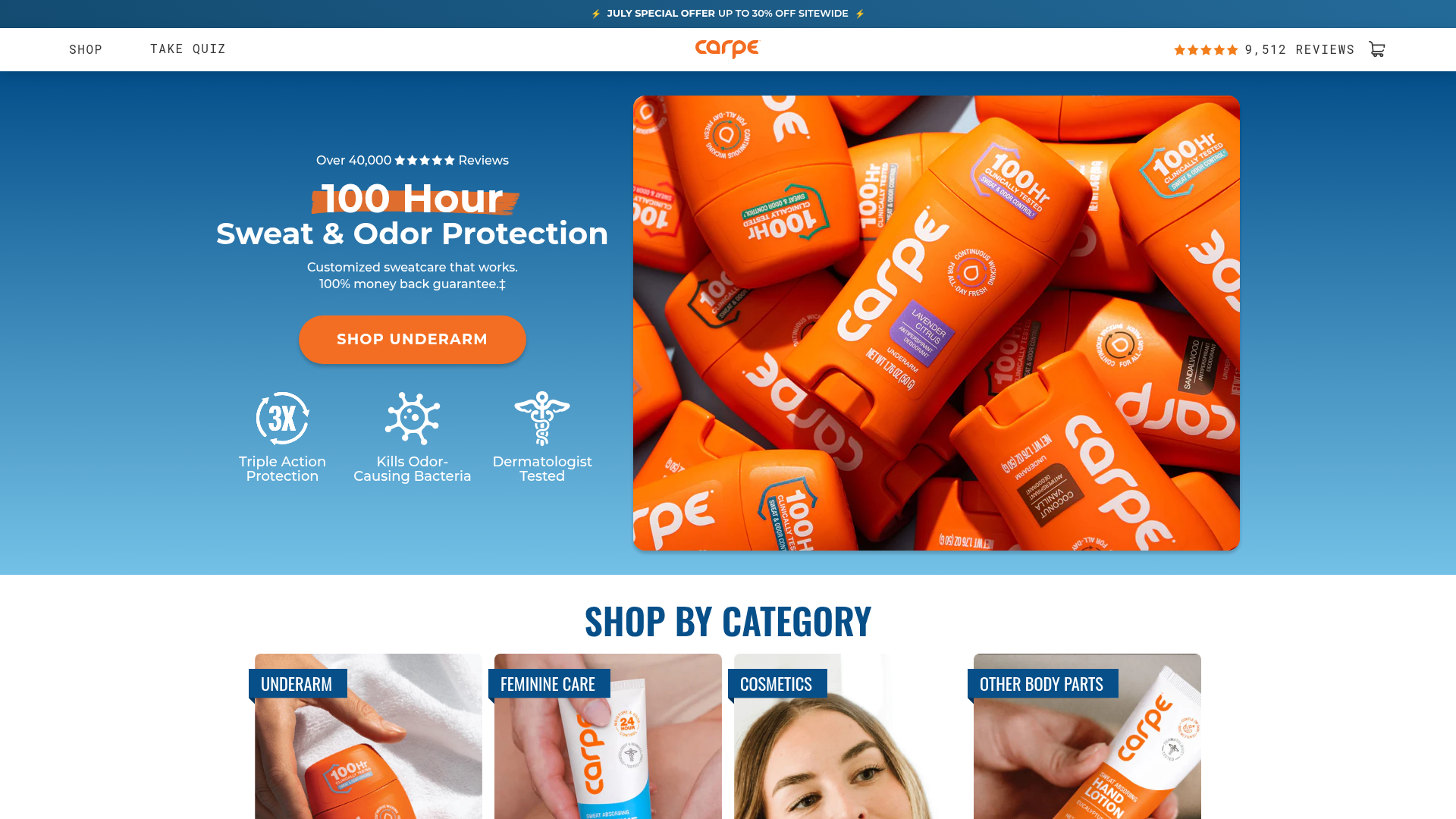
Carpe leans wide. Its lineup covers underarms, hands, feet, face, groin, and even the scalp, all built on aluminum salts that plug sweat ducts at the skin's surface. You buy it over the counter, no prescription required.
What They Offer
- OTC aluminum-based lotions and sticks spanning multiple body zones.
- A subscription model with tiered bundle discounts, roughly 15 to 30% off.
- A Chief Medical Advisor on staff, but no prescribing relationship or clinical follow-up.
- No telehealth, no compounding, no prescription pathway.
Good for people with mild sweating who want a self-directed OTC product for several areas.
The limitation is the mechanism. Every product plugs ducts, with no dose adjustment or escalation route. In one stepwise treatment study, aluminum chloride alone helped 15.3% of patients, suggesting many with true hyperhidrosis need a different approach.
SweatBlock

SweatBlock takes a wipe-first approach. Its Max Clinical Antiperspirant Wipes are marketed for up to 7 days of sweat control per application, with separate products tuned to underarms, hands, feet, and face.
What They Offer
- Max Clinical wipes claiming up to a week of control per wipe.
- Distinct products for underarms, hands, feet, and face.
- A 100-day money-back guarantee, generous by OTC standards.
- No physician involvement and no ongoing medical oversight.
The catch is structural. You buy a separate product per area, with no clinical evaluation, no dose adjustment, and no prescription route if aluminum-based duct-plugging stops working. It reads as a consumer sweat product, not a treatment for focal hyperhidrosis or other diagnosed forms of the condition.
Duradry

Duradry sells a three-step underarm system, and its clean ingredient story is the draw. Everything is silicone-free, talc-free, alcohol-free, vegan, and cruelty-free.
What They Offer
- Clinical Sweat Control Stick at $15.99 and an Intensive Sweat Minimizing Gel at $18 as the core products.
- Subscribe-and-save pricing at 15% off, with international shipping.
- No telehealth, prescribing relationship, or clinical follow-up included.
Good for people new to clinical-strength antiperspirants who want a clean, vegan-friendly profile at a low per-product price.
The gap is scope. Duradry is built for underarms and body odor, so it doesn't treat palmar, plantar, or facial sweating, and there's no prescription route or physician oversight if it falls short.
Bottom line: a fine first step for mild, ingredient-conscious sweaters, but not a substitute for dermatologist-guided care in diagnosed hyperhidrosis.
SweatGuard
SweatGuard sits firmly in the OTC aluminum chloride camp. Public details are thin, so this read leans on its confirmed category: a topical antiperspirant built on aluminum chloride or aluminum chloride hexahydrate, sold without a prescription.
What They Offer
- An OTC topical using aluminum chloride or aluminum chloride hexahydrate.
- No prescription needed, available in-store and online.
- Designed mainly for underarm application.
- No dermatologist or physician involvement of any kind.
Good for people who want a readily available, no-Rx antiperspirant for first-line underarm care.
The limitation is familiar. SweatGuard plugs ducts at the surface, with no multi-zone formulation, no dose adjustment, and no clinical route to escalate if it falls short.
Bottom line: a straightforward entry-level option, though people with diagnosed hyperhidrosis or sweating across several zones usually need a different mechanism and dermatologist guidance.
Certain Dri
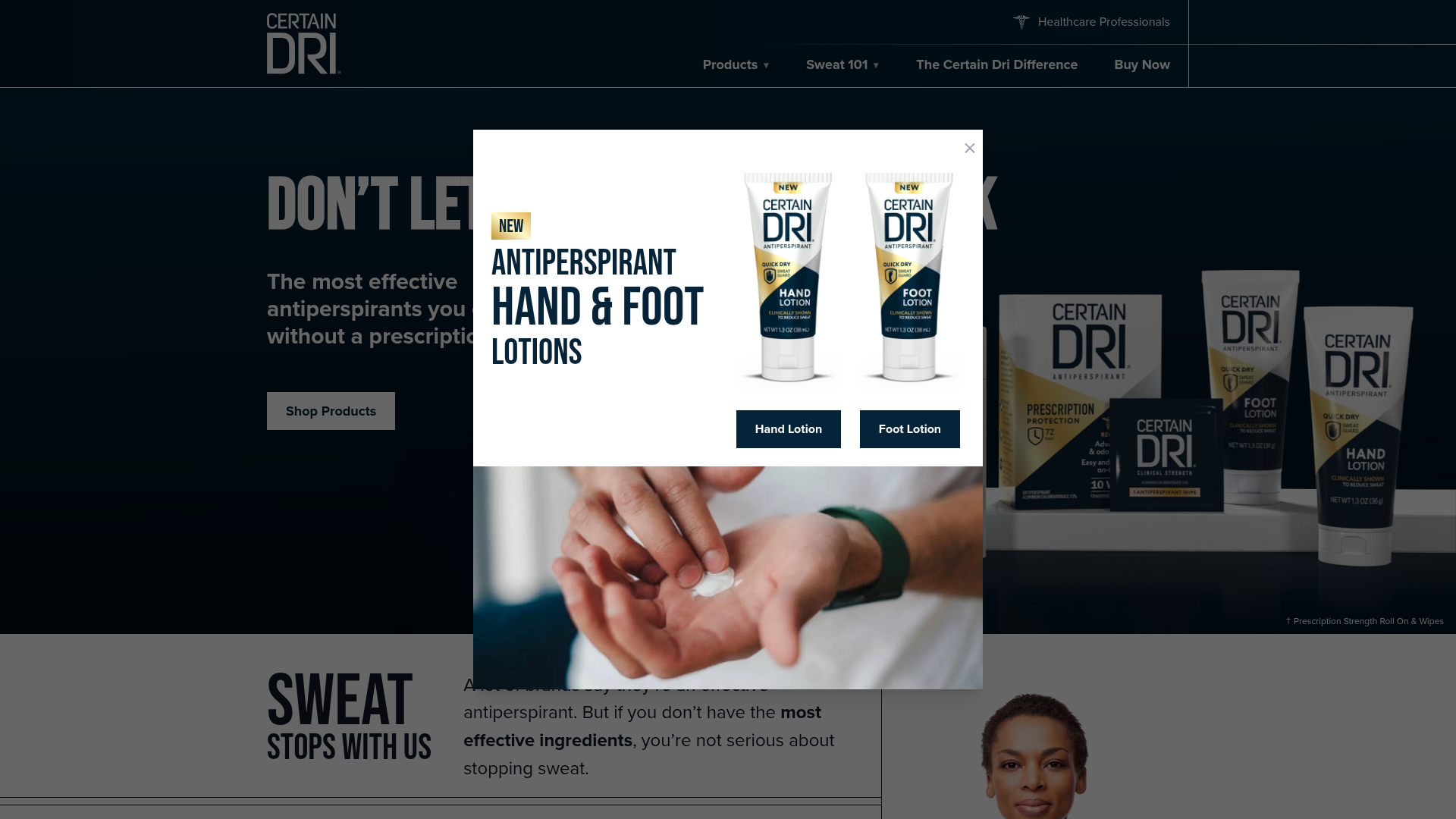
Certain Dri is one of the easiest clinical-strength antiperspirants to find. Its Prescription Strength Roll-On carries 15% aluminum chloride, among the highest concentrations available without a prescription, sold at major chains and online. ("Prescription Strength" is Certain Dri's brand name for this OTC product, not a regulatory classification.)
What They Offer
- Prescription Strength Roll-On at 15% aluminum chloride, no Rx required.
- Multiple formats: roll-on, solid stick, dry spray, wipes, and foot lotion.
- Fragrance-free options built for sensitive skin.
It suits underarm sweating without a doctor visit, but the scope is narrow. For a broader look, see our review of antiperspirants for excessive sweating. There's no clinical evaluation or escalation route, and this strength carries a documented risk of irritant dermatitis, burning, and stinging that pushes some users to quit.
Drysol

Drysol is the classic prescription-strength option, and it does step up from anything on a drugstore shelf. It uses 20% aluminum chloride hexahydrate, a concentration you can't buy over the counter.
What They Offer
- A prescription-only topical solution applied nightly to underarms, palms, or soles, then rinsed off in the morning.
- Stocked at retail pharmacies with a valid prescription.
The limitation is mechanism and process. Drysol plugs ducts at the surface like OTC products, carrying a documented risk of irritation, burning, and stinging common to high-concentration aluminum chloride products. Getting it means a traditional Rx visit, with no dose guidance or follow-up if it needs adjusting.
Feature Comparison Table of Antiperspirants for Excessive Sweating
Here's how the seven stack up on the attributes that decide whether a product fits diagnosed hyperhidrosis or milder sweating.
| Product | Prescription Required | Aluminum-Free | Zones Beyond Underarms | Dermatologist Oversight Included | Telehealth Access | Ongoing Care Included | Price Range |
|---|---|---|---|---|---|---|---|
| Twofold | Yes | Yes | Yes | Yes | Yes | Yes | $150 / 3-month supply ($50/mo) |
| Carpe | No | No | Yes | No | No | No | OTC |
| SweatBlock | No | No | Yes | No | No | No | OTC |
| Duradry | No | No | Yes | No | No | No | $16 to $18 per product |
| SweatGuard | No | No | Yes | No | No | No | OTC |
| Certain Dri | No | No | Yes | No | No | No | OTC |
| Drysol | Yes | No | Yes | No | No | No | Prescription, varies |
Why Twofold Stands Out for Excessive Sweating
Every aluminum product on this list, from drugstore sticks to prescription-strength Drysol, leans on the same trick: plugging sweat ducts at the skin's surface. Compounded oxybutynin gel through Twofold works a step earlier, interrupting the nerve signal before sweat is produced at all.
That approach, paired with coverage across hands, feet, face, and underarms, dermatologist oversight in every plan, and flat transparent pricing, makes it a complete choice once your sweating has outgrown OTC options. For a broader overview, the guide on how to stop sweating covers the full range of available treatments.
For personal medical questions, talk with a healthcare provider.
Final Thoughts on Treating Excessive Sweating With the Right Antiperspirant
Your sweating situation is specific to you, and so is the solution. Some people do well with a clinical-strength stick from the drugstore, while others need a prescription approach that works before sweat even starts. A conversation with a dermatologist can help you figure out which direction makes the most sense.
FAQ
How do I choose between Twofold, Carpe, SweatBlock, and the other antiperspirants on this list?
Start by matching the product to your sweating severity and the areas affected. If you sweat in multiple zones like hands, feet, and face, or if OTC products have already fallen short, a prescription option like Twofold offers a different mechanism and dermatologist oversight. If your sweating is mild and limited to underarms, OTC options like Carpe, Duradry, or Certain Dri are reasonable first steps.
Is Twofold better than Drysol for people who sweat on their hands and feet?
Drysol uses 20% aluminum chloride hexahydrate, which plugs sweat ducts at the surface and requires a traditional in-person prescription visit with no built-in follow-up. Twofold's compounded oxybutynin 8% gel works by blocking the nerve signal before sweat is produced, covers hands, feet, face, and underarms in one product, and includes dermatologist oversight through an online intake process.
When should I move past Certain Dri or Carpe and consider a prescription antiperspirant treatment?
If you've used a clinical-strength OTC product consistently and still see sweating that affects your daily life, confidence, or comfort, that pattern is a reasonable signal to speak with a dermatologist. Products like Certain Dri and Carpe rely on aluminum salts to block ducts, and one study found aluminum chloride alone helped only 15.3% of patients with true hyperhidrosis.
What is the difference between how oxybutynin gel through Twofold works versus how aluminum-based antiperspirants like SweatBlock and Duradry work?
Aluminum-based products like SweatBlock and Duradry plug sweat ducts near the skin's surface to reduce wetness temporarily. Twofold's compounded oxybutynin gel is an anticholinergic that blocks the acetylcholine signal telling sweat glands to activate in the first place, which is a different point of intervention entirely.
Can Carpe, SweatBlock, or Duradry treat excessive sweating on the face and scalp?
Carpe is the broadest OTC option and includes products for the face and scalp. SweatBlock offers separate products for the face, hands, and feet alongside its underarm wipes. Duradry is built mainly around underarms and body odor, though it also sells additional body products.
If you see a mistake or something you think should be updated, let us know at hello@itstwofold.com!


