

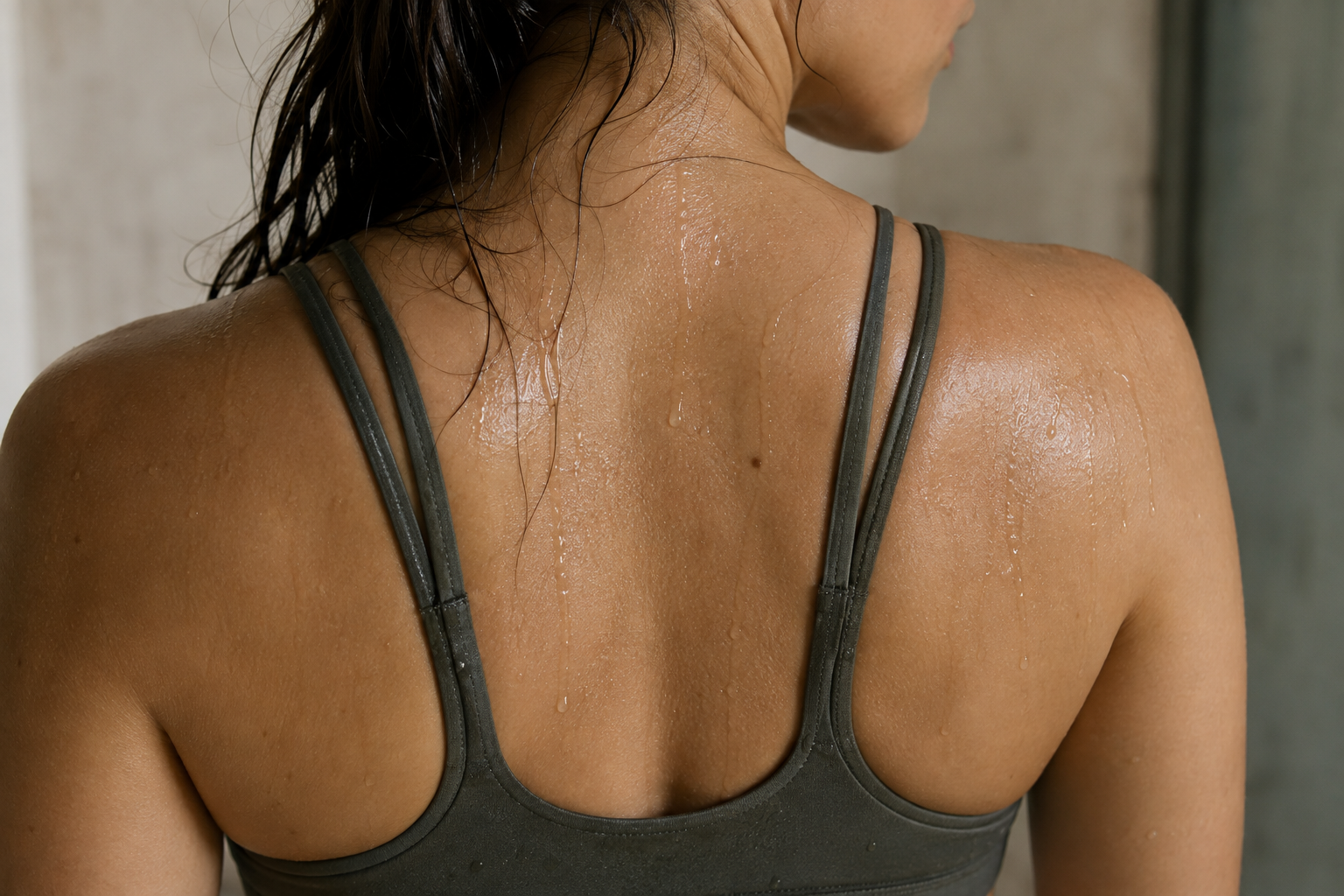
Why does my back sweat so much? It's a question more people are asking than you'd think, and the answer isn't always as simple as "you're hot." From the way your back traps heat against chairs and backpacks to hormonal changes and overactive glands, there's usually a specific reason, and usually a way to fix it.
TLDR:
- Your back sweats more because surface area, not gland density, drives roughly 40% of whole-body heat loss.
- Hyperhidrosis affects over 15.3 million Americans, and 75% report it negatively impacts their social lives.
- Applying antiperspirant to your back at night works better than morning application, since glands are quieter during sleep.
- Sweat paired with unexplained weight loss, fever, or fatigue warrants a doctor visit sooner instead of waiting.
- Twofold is a virtual sweat clinic where board-certified dermatologists prescribe topical and oral treatments for back and whole-body sweating, entirely online.
Why Your Back Sweats So Much
Your back holds a lot of skin, and that surface area is the whole reason it sweats the way it does. It has fewer sweat glands per inch than your palms, but it makes up for that with size. Research on regional sweating found that torso sites account for roughly 40% of whole-body evaporative heat loss.
When your core temperature rises, the hypothalamus, your brain's internal thermostat, fires a signal through your sympathetic nervous system. That switches on the glands, and the moisture that beads up evaporates to pull heat off your skin.
The catch is airflow. A car seat, office chair, or couch cushion pressed flat against your back traps heat with nowhere to escape, pushing those glands to work harder.
Common Causes of Back Sweating
Back sweat rarely has a single explanation. Here are the usual suspects.
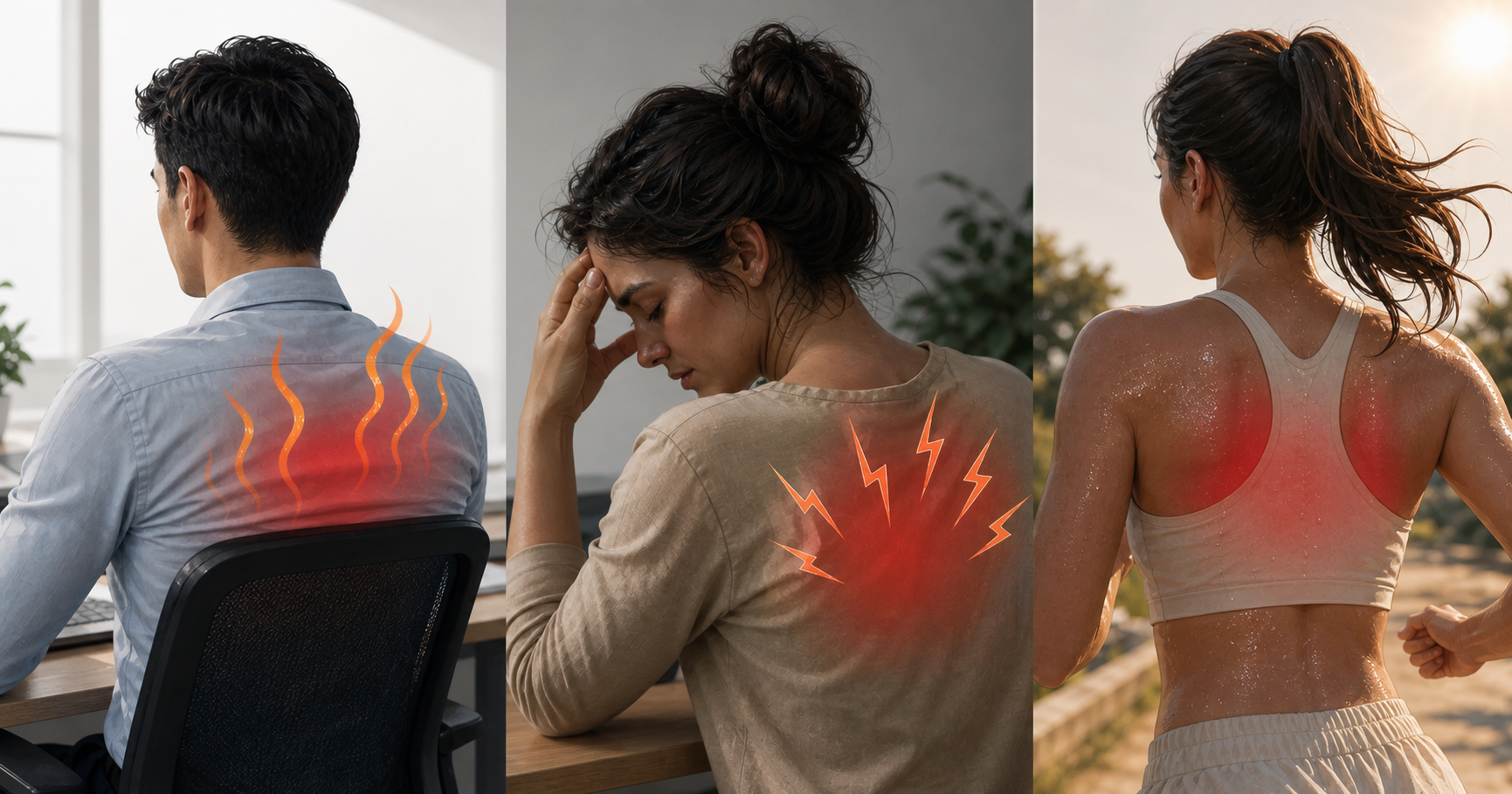
Exercise and heat
When you move or sit in a warm room, your core warms up and your glands respond. Nothing unusual here.
Stress and anxiety
Nerves flip on your sympathetic nervous system, the same fight-or-flight wiring behind a racing heart. Stress sweat comes from different glands than heat sweat, which is part of why it smells stronger.
Hormonal changes
Menopause and perimenopause change how your body manages temperature, bringing sudden heat and drenching sweat unrelated to the weather.
Primary hyperhidrosis
Sometimes the glands are simply overactive for no clear reason.
Secondary causes and medications
Sweating can trace back to an underlying condition or a medication. SSRIs, corticosteroids, and thyroid drugs are common triggers worth mentioning to your provider.
Body weight
More body mass holds more heat, so the glands work harder to release it.
Is Back Sweat Normal or Excessive?
Everyone's back sweats. That's the whole point of the system. Sweat that shows up when you're moving, overheated, or stressed and then fades once you cool down sits well inside the normal range.
The picture changes when sweat comes without a trigger, soaks through your shirt while you're sitting still, or starts shaping how you dress and where you sit. That pattern can point to hyperhidrosis, a condition where the glands stay switched on far beyond what your body needs.
It's more common than most people assume. Roughly 4.8% of the U.S. population, about 15.3 million people, has hyperhidrosis, and around 75% report negative effects on social relationships and well-being.
Hyperhidrosis comes in two forms worth knowing apart:
- Focal hyperhidrosis is often genetic, shows up in specific areas, and usually starts before age 25.
- Secondary (generalized) hyperhidrosis is tied to an underlying condition or medication, and can appear at any age across the whole body.
Back Sweating at Night
Waking up with your back, neck, and chest soaked is unsettling, and it sends people searching why do I sweat so much at 3am. Start with your environment. A warm room, thick comforter, or flannel sheets make anyone sweat, and cutting those out usually solves it.
True night sweats persist even when your room is cool, a clue that something internal is driving them.
The usual causes:
- Menopause and perimenopause, a common driver of night sweats in women.
- Low testosterone in men.
- Anxiety, hyperhidrosis, and certain medications.
- Less often, infections, GERD, hyperthyroidism, or another condition.
Serious causes like infections or some cancers exist, and a provider can help determine what's driving them.
Situation-Specific Back Sweating
Certain situations set your back off more than others, and the keyword data shows people asking about the same handful. Here's what's happening in each.
Wearing a backpack
A loaded pack presses flat against your spine, kills airflow, and traps heat between fabric and skin. Even a gentle walk turns into a sweat patch. A ventilated pack with a mesh back panel helps, as does loosening the straps.
After a shower or bath
Hot water raises your core temperature, and humid bathroom air slows evaporation, so your glands keep firing before you've cooled down. Finish with a cooler rinse, run the fan, and dry fully before dressing.
Walking and driving
Both pair low-level effort with a posture that flattens your back against a seat or shirt. The fix is airflow: breathable fabrics, a ventilated seat cover, or cracking a window.
When to See a Doctor About Back Sweating
Most back sweat is manageable and nothing to worry about. Still, only about half of people with hyperhidrosis ever bring it up with a provider, which means a lot of treatable sweating goes unmentioned. Talking to someone is worth it, even if the sweat feels minor.
A few patterns are worth a prompt visit:
- Sweating that shows up with no clear trigger, or comes on suddenly after years of normal.
- Night sweats that soak your sheets and disrupt sleep regularly.
- Sweating paired with unexplained weight loss, a persistent fever, unusual fatigue, or pain.
Sweat that arrives alongside those other symptoms is the version worth checking, since it can point to something underlying. A provider can sort out which camp you're in.
Lifestyle Changes and Clothing Choices to Reduce Back Sweat
Small changes to what you wear, eat, and do can take the edge off ordinary back sweat. None of these replace medical care when sweating is heavy, but they're a solid place to start learning about reducing excessive sweating.
Dress for airflow
- Choose breathable natural fabrics like cotton, linen, and merino wool for everyday wear.
- Reach for moisture-wicking synthetics during workouts to pull sweat off your skin fast.
- Skip tight clothing and heavy backpacks that press against your back and trap heat.
Adjust habits
- Cut back on caffeine, alcohol, and spicy foods, which all nudge body temperature up.
- Drink water through the day so your body cools itself more easily.
- Manage stress with a walk, breathing exercises, or a few minutes of meditation.
- Keep your bedroom cool with lighter bedding and a fan.
Time your antiperspirant
Many dermatologists recommend applying antiperspirant to your back at night, since glands tend to be quieter during sleep and the aluminum has more time to settle into the ducts.
Medical Treatment Options for Excessive Back Sweating
When lifestyle tweaks aren't enough, dermatologists work up a ladder, starting mild and escalating only if needed. Here's the rough order.

| Option | How it works | Trade-offs |
|---|---|---|
| OTC clinical-strength antiperspirant | Aluminum salts plug sweat ducts near the surface | First-line, no prescription; irritation is the main complaint |
| Prescription strength antiperspirant | Stronger aluminum chloride, applied nightly | Same plugging action; stinging can force some to stop |
| Topical anticholinergics | compounded oxybutynin gel or glycopyrrolate wipes block the nerve signal to the gland | Aluminum-free; mild dry mouth or application-site reactions possible |
| Oral anticholinergics | Oral glycopyrrolate for hyperhidrosis or oxybutynin reduce sweat body-wide | Useful for generalized sweating; systemic effects like dry mouth |
| Botox for hyperhidrosis | Blocks nerve signals in a targeted zone | Lasts 4 to 12 months; needles, repeat sessions, cost; works best on smaller defined areas like the underarms, not practical for the back's larger surface area |
| Microwave thermolysis (miraDry) | Destroys underarm glands with energy | Underarms only, short-term swelling and bruising |
| Surgery (ETS) | Cuts the sympathetic nerves | Last resort; irreversible, and compensatory sweating is common |
For back sweat across a wide area, topical and oral anticholinergics tend to fit better than zone-specific procedures. None of these cures sweating, and it returns if you stop. A dermatologist can match the option to your severity.
How Twofold Approaches Back and Whole-Body Sweating
Back sweat that spreads across a wide area is exactly the kind of case we built Twofold around. We're a virtual sweat clinic connecting you with board-certified, sweat-specialized dermatologists entirely online, so there are no waiting rooms, referrals, or in-person visits.
The flagship treatment is a compounded topical oxybutynin for sweating in an 8% gel, applied once nightly. It blocks acetylcholine signals to sweat glands right where you put it: back, underarms, hands, feet, face, chest, or groin. The gel is aluminum-free and fast-absorbing. Oxybutynin is FDA-approved for other conditions, so its use for sweating is off-label, a common dermatology practice, and because the gel is compounded, the product is not separately FDA-approved.
When a pill fits better, the dermatologists may also prescribe oral glycopyrrolate and extended-release oxybutynin. It manages symptoms, so sweating returns if you stop.
Final Thoughts on Back Sweating and What You Can Do About It
Back sweat is one of the most common complaints people never actually talk to a doctor about, and that's a shame because most of it is treatable. Start with the simple fixes, and if those don't move the needle, a dermatologist can walk you through what's next. You have more options than you might think.
FAQ
Why does my back sweat so much more than the rest of my body?
Your back has a large surface area that accounts for a substantial share of your body's total heat loss, which means the glands there do heavy lifting compared to smaller regions. On top of that, your back spends most of the day pressed against chairs, car seats, and clothing, which traps heat and pushes the glands to work harder than they would with open airflow. If sweating happens without a clear trigger or soaks through your shirt while you're sitting still, that pattern can point to hyperhidrosis and not an ordinary heat response.
Is back sweating while sleeping something to worry about, or is it normal?
Back sweating during sleep is often explained by a warm room, thick bedding, or heavy pajamas, and cooling your environment usually resolves it. True night sweats persist even in a cool room and can trace back to hormonal changes like menopause or low testosterone, anxiety, hyperhidrosis, or certain medications. If night sweats regularly soak your sheets and come paired with unexplained weight loss, fever, or fatigue, that combination is worth discussing with a provider sooner instead of putting it off.
What's the best way to stop back sweating when lifestyle changes aren't enough?
Start with a clinical-strength antiperspirant applied to your back at night, when the glands are quieter and the aluminum has more time to work. If that doesn't move the needle, topical anticholinergics like oxybutynin gel block the nerve signal to sweat glands directly at the site and tend to fit back sweat better than zone-specific procedures like Botox or miraDry, which work best on smaller, more defined areas. A dermatologist, including through a telehealth option like Twofold, can match the right treatment to your severity without an in-person visit.
Hyperhidrosis telehealth vs. in-person dermatology for back sweat: what are the practical differences?
In-person dermatology offers hands-on examination, which can matter when a diagnosis is still unclear or when you're being assessed for secondary hyperhidrosis tied to an underlying condition. Telehealth options like Twofold work well when the symptom picture is clear, you want prescription treatment without waiting weeks for an appointment, and the sweating is the main thing you need managed. The trade-off is convenience and speed on the telehealth side versus the full clinical workup you'd get in a physical office.
How do I know if my back sweating is hyperhidrosis or just normal sweating?
Normal back sweat shows up in response to heat, exercise, or stress and fades once you cool down. Hyperhidrosis follows a different pattern: sweating that appears without a trigger, continues while you're sitting still, or shapes decisions about what you wear and where you sit. Around 4.8% of the U.S. population has hyperhidrosis, and roughly 75% report it affecting their social life, so if back sweat is regularly disrupting your day, that's worth raising with a provider instead of dismissing it as normal.
If you see a mistake or something you think should be updated, let us know at hello@itstwofold.com!


