

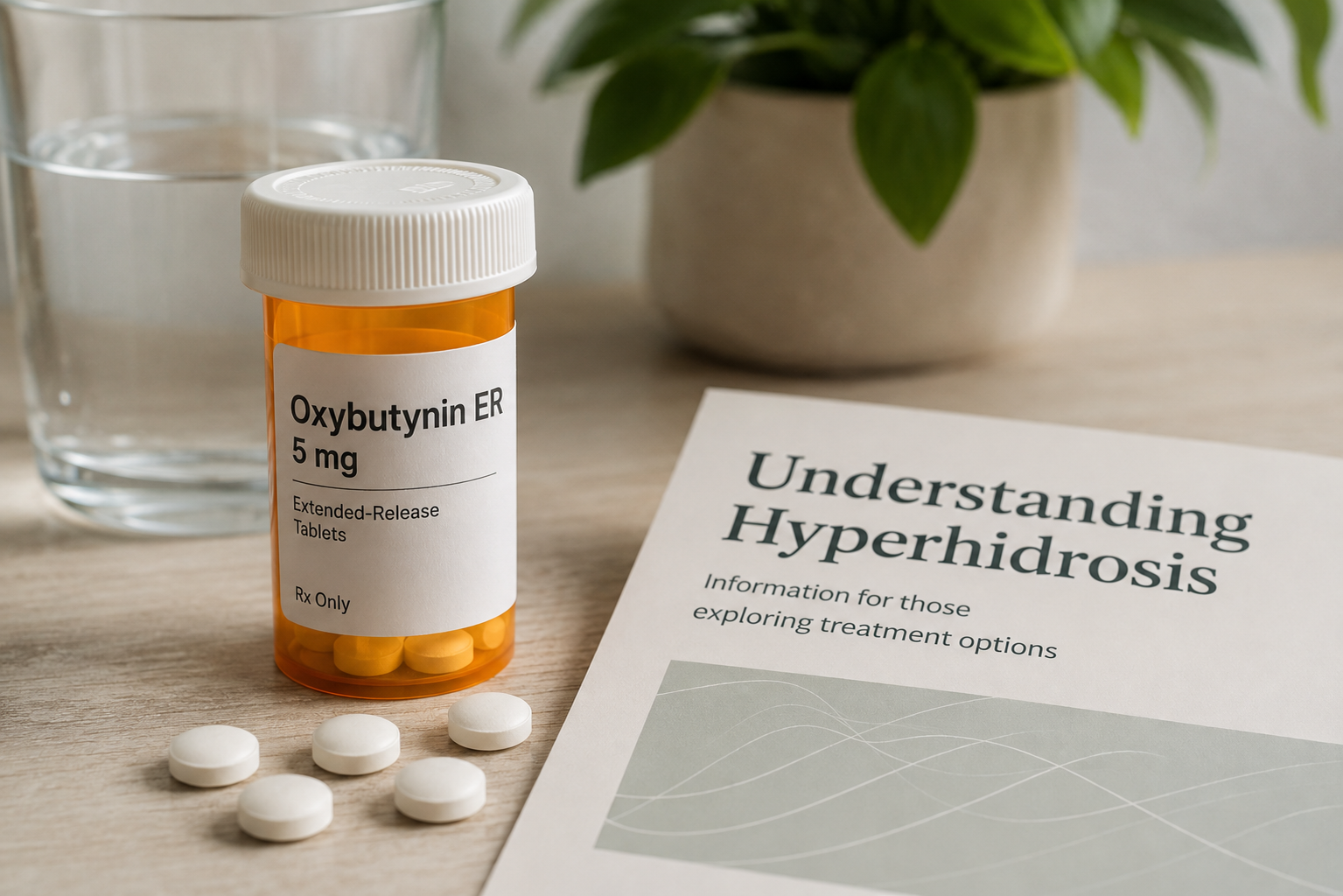
If you've tried the standard stuff and your sweating still wins most days, oxybutynin extended release is probably a name you've come across. It's an oral medication that's been around a long time, and doctors prescribe it off-label for hyperhidrosis more often than you might think. Here's what you should know before deciding if it belongs in your treatment plan.
TLDR:
- Oxybutynin ER is prescribed off-label for hyperhidrosis, blocking the nerve signal that tells sweat glands to fire
- The extended release form causes less dry mouth than immediate release, a common side effect of the IR formulation
- In a randomized placebo-controlled trial, 60% of patients improved their sweating severity score at 6 weeks versus 27% on placebo
- Oxybutynin ER works body-wide, making it a stronger fit when sweating hits multiple areas at once
- Twofold operates a virtual sweat clinic where a dermatologist reviews your intake and can prescribe oxybutynin ER if it fits your situation
What Is Oxybutynin Extended Release?
Oxybutynin is an anticholinergic, a medication that blocks a chemical messenger called acetylcholine. It has been around for decades, mostly prescribed for overactive bladder. If you have looked into pills for excessive sweating, you have probably met it wearing a different hat, because doctors also prescribe it off-label for hyperhidrosis.
The "extended release" part refers to how the pill hands over its dose. Instead of releasing everything at once like an immediate release tablet, an ER tablet feeds the medication into your system slowly across the day. A steadier bloodstream level smooths out the peaks and valleys of a fast-acting dose, changing how the drug feels day to day.
How Oxybutynin Targets Sweat Production
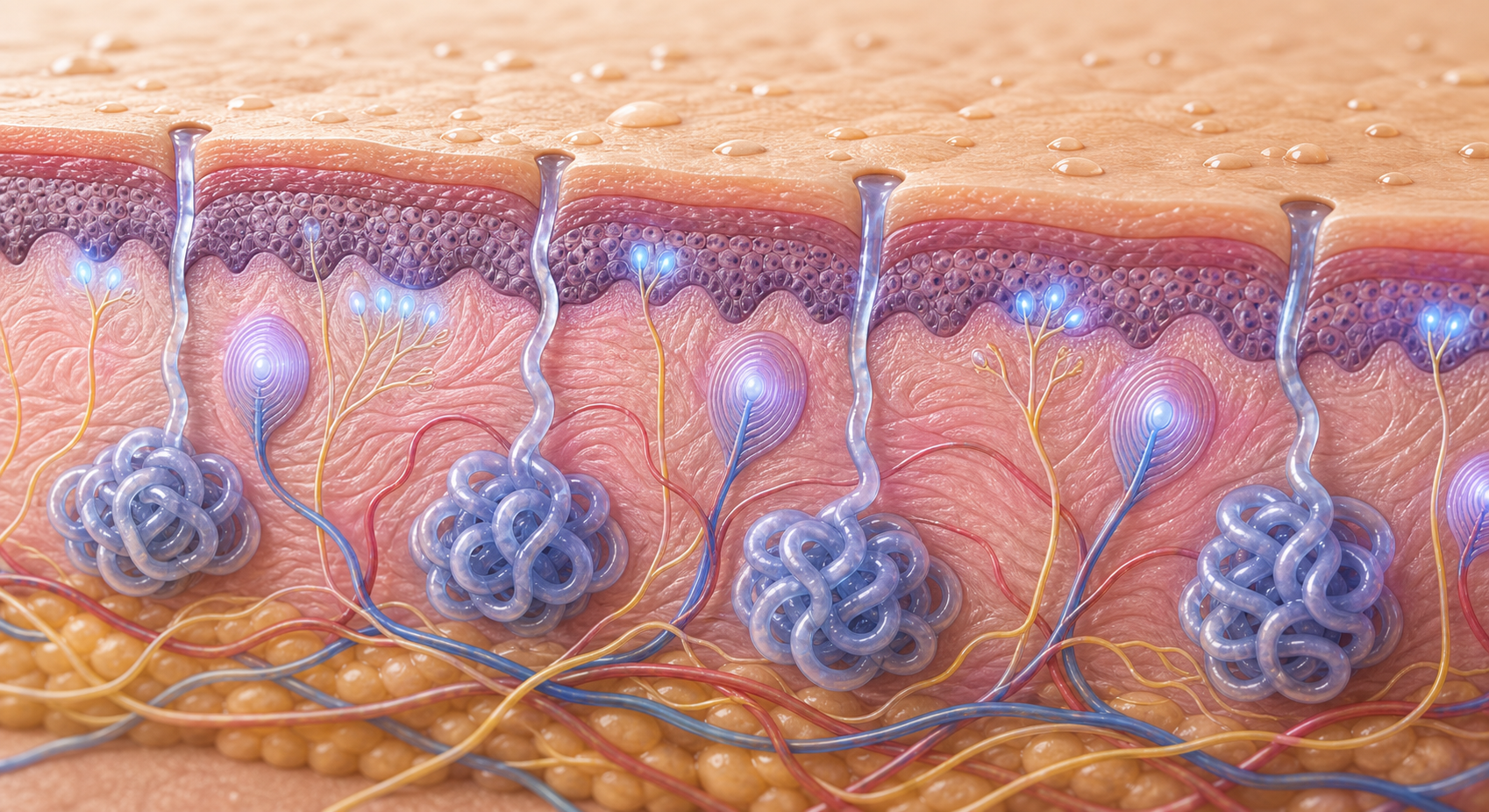
Here is the part that trips people up. Your eccrine sweat glands, scattered across your palms, feet, and underarms, fire when a nerve sends them acetylcholine. That chemical lands on a muscarinic receptor, and the gland pushes out sweat. If you want a broader look at oxybutynin for sweating, that overview covers the full picture.
Oxybutynin sits on those same receptors and blocks them. With the docking site occupied, the nerve signal cannot get through, so the gland stays quiet.
The bladder connection makes sense once you know this. Bladder muscles rely on the same acetylcholine signaling to contract, which is why one drug touches two very different systems.
Extended Release vs. Immediate Release for Hyperhidrosis
Dry mouth is the deciding factor for most people weighing these two versions. On the immediate release tablet, it can hit hard: one clinical review found it in 87% of IR patients versus 68% on ER, and switching to the extended release form eases it. The reason comes back to how the dose moves through you.
ER keeps plasma levels steadier all day, so you avoid that sharp rise, a pharmacokinetic difference documented in clinical review.
| Factor | Immediate release | Extended release |
|---|---|---|
| Dosing | Multiple times daily | Usually once daily |
| Plasma levels | Peaks and troughs | Steadier all day |
| Dry mouth | Up to 60% of patients | Lower than IR (68% vs. 87%) |
For hyperhidrosis, where treatment stretches on for months, tolerability keeps you taking the pill.
Clinical Evidence for Oxybutynin Extended Release in Hyperhidrosis
First, a quick term. HDSS stands for the Hyperhidrosis Disease Severity Scale, a four-point rating of how badly sweating disrupts your day.
In clinical studies, oral oxybutynin has improved symptoms in 60% to 97% of patients, depending on study design and dosage: lower-dose randomized controlled trials trended toward 60%, while retrospective open-label studies reached 97%. A separate analysis found a statistically significant risk ratio for HDSS improvement, supporting its use as an effective systemic option for hyperhidrosis.
The benefit shows up across palmar, axillary, and plantar sweating, which are the areas most associated with focal hyperhidrosis. Longer-term use tends to sustain those gains, with a 2025 review finding symptom improvement across a broad range of patients on oral oxybutynin.
One caveat: most studies used immediate release oxybutynin. Dedicated ER trials are still thin.
Dosing: How Oxybutynin Extended Release Is Typically Prescribed
Most doctors start you low and climb slowly. A common opening dose is 5 mg once daily, held there for a week or two while your body adjusts, then nudged higher if sweating is still winning and side effects stay manageable.
That climb is called titration. The dose that quiets your palms might leave someone else's mouth bone dry, so there is no universal number.
A few things worth knowing:
- Timing matters, since ER works best taken consistently, and some people take it on an empty stomach.
- Effect and tolerability get weighed together at each step.
- Do not adjust the dose yourself. Raising it too fast usually means more dry mouth for no extra benefit.
Finding your tolerated effective dose is a back-and-forth with your prescriber.
Side Effects and Safety of Oxybutynin Extended Release
Every anticholinergic comes with trade-offs, and knowing them ahead of time makes the conversation with your prescriber easier. Glycopyrrolate for hyperhidrosis is another anticholinergic option worth comparing.
The everyday effects are ones you have likely read about: dry mouth, constipation, and blurred vision. They tend to be mild and often ease as your body settles in.
Less common, but worth flagging, are the effects on your head. Oxybutynin can cause anxiety, confusion, irritability, drowsiness, or hallucinations, usually when you first start. If any show up, tell your provider.
One point matters most. Because the drug quiets sweating body-wide, it dulls how you cool yourself, raising heat stroke risk during hard exercise or hot weather. Go easy in the heat while your dose settles.
This is not a complete list of possible side effects. Talk to your prescriber or pharmacist for more information.
Who Should Not Take Oxybutynin Extended Release
Oxybutynin is not right for everyone. A few conditions make it risky enough that your prescriber will likely steer you elsewhere (this is not a complete list):
- Urinary retention, since anticholinergics can worsen trouble emptying your bladder.
- Gastric retention or slowed stomach emptying.
- Uncontrolled narrow-angle glaucoma, where the drug can raise eye pressure.
- Myasthenia gravis, a condition affecting muscle signaling.
Older adults warrant extra caution too. Sensitivity to anticholinergic effects climbs with age, so confusion, drowsiness, and falls become bigger concerns. Flag your full history during intake.
Drug Interactions to Know Before Starting
Before you start, make a list of everything else you take. Oxybutynin plays badly with a few common categories.
- Other anticholinergics. Some allergy pills, motion sickness meds, tricyclic antidepressants, and certain bladder or Parkinson's drugs carry anticholinergic activity. Stacking them with oxybutynin adds up, a pileup called anticholinergic burden. More dry mouth, constipation, and mental fog.
- CNS depressants. Sleep aids, opioids, some anxiety medications, and alcohol can deepen the drowsiness oxybutynin already brings. That nightly glass of wine counts.
None of this rules out oxybutynin. Your prescriber just needs the full picture, so hand over the whole list during intake, supplements included.
Oxybutynin Extended Release and Quality of Life
HDSS scores capture how much sweating disrupts your life, and when that number drops, the ripple reaches places a lab report cannot measure. Fewer soaked shirts before a meeting. A handshake you do not have to apologize for. The numbers back this up: in a Wolosker long-term follow-up study of patients on oral oxybutynin, more than 94% rated their pre-treatment quality of life as poor or very poor, and 77% reported meaningful QoL improvement after treatment. If you are still weighing your full range of options, a complete guide on how to stop sweating walks through every available approach.
The split-area gel study tracked this directly, reporting improved DLQI, the Dermatology Life Quality Index, on treated skin versus placebo. [Acta Dermato-Venereologica] That scale asks about the stuff that actually stings: avoided social plans, ruined clothes, dodged activities.
For a lot of people, the real win is subtraction. Less mental math about where to sit. Room to stop planning around your sweat.
Where Oxybutynin Extended Release Fits Among Hyperhidrosis Treatments
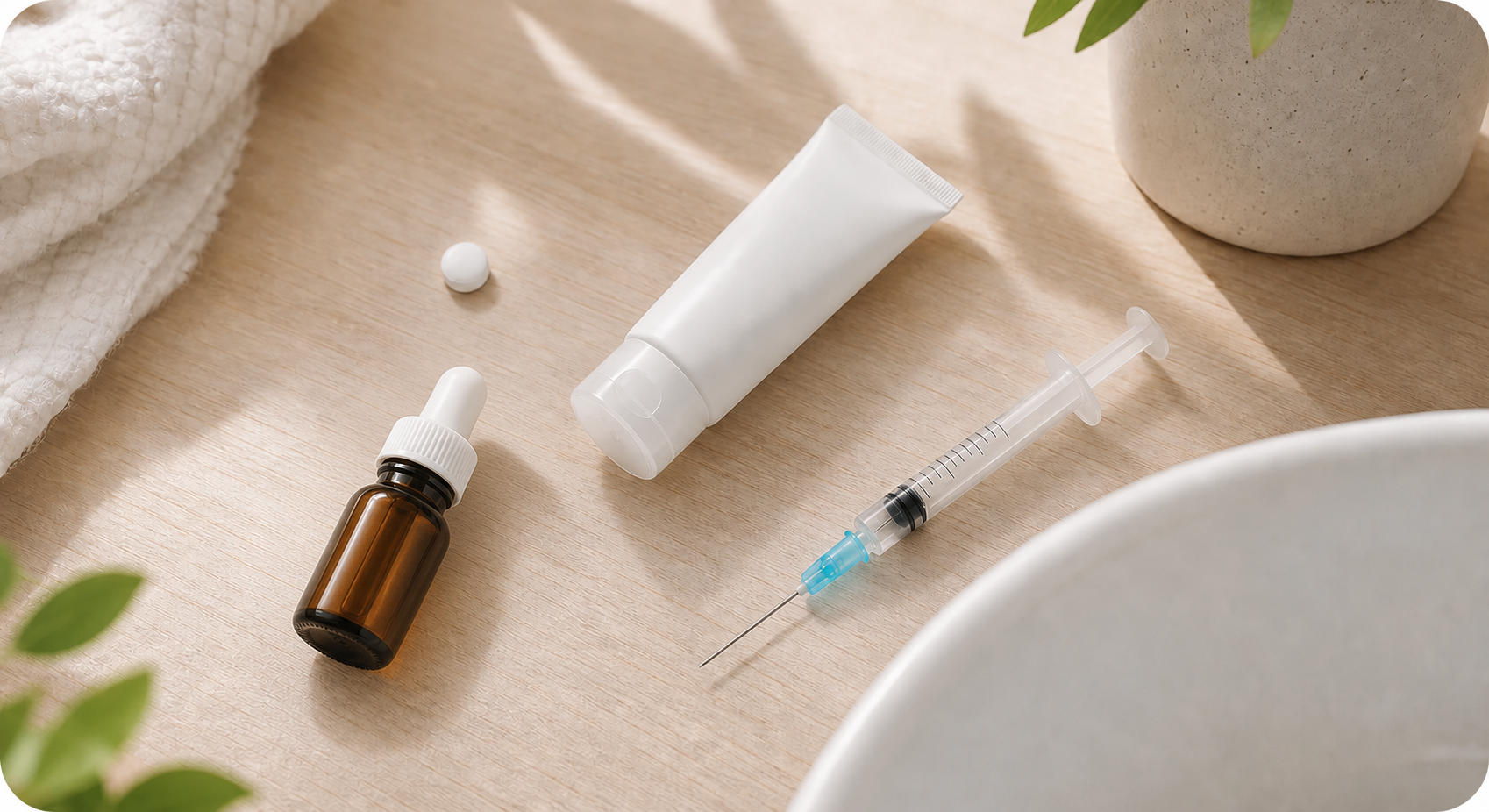
Oral oxybutynin ER is one rung on a longer ladder, and where it sits depends on how widespread your sweating is and what you have already tried.
| Option | Coverage | Trade-off |
|---|---|---|
| Prescription antiperspirants | Localized | Irritation is common; single fixed strength |
| Iontophoresis for hyperhidrosis | Palms, underarms, soles | Repeat sessions indefinitely; device cost |
| Botox for hyperhidrosis | Targeted zones | Needles, in-office, wears off in months |
| Microwave thermolysis | Underarms only | Near-permanent, but pricey and cannot reach hands or feet |
| Hyperhidrosis surgery (ETS) | Palms, underarms | Irreversible, and compensatory sweating is a real risk |
Because oral oxybutynin ER works body-wide, it earns its place when sweating hits several areas at once, or when targeted options have not moved the needle. A broader look at reducing excessive sweating covers lifestyle tips and OTC steps to try alongside prescription treatment. For one or two zones, though, a systemic pill delivers far more exposure than the problem requires.
How Twofold Approaches Oxybutynin for Hyperhidrosis
At Twofold, we run a virtual sweat clinic, so you can find out whether prescription oxybutynin fits your situation without a waiting room. You complete a short online intake, and a sweat-specialized dermatologist reviews it.
When oral extended-release oxybutynin is the right clinical call, a board-certified dermatologist prescribes it, sometimes paired with topical treatment on areas that need extra help. If a different option suits you better, they will say so.
The practical part matters too:
- Asynchronous dermatologist review within about 24 hours, no live appointment.
- Discreet shipping within 2 to 5 business days.
- Unlimited follow-up messaging with the care team, included.
Final Thoughts on Managing Hyperhidrosis With Oxybutynin Extended Release
The evidence behind oxybutynin ER is solid, and for many people it quietly changes daily life in ways that matter. Side effects can be felt but can be manageable with careful titration guided by your dermatologist. If you want to know whether it suits your situation, a dermatologist review is the place to start.
FAQ
What's the difference between oxybutynin extended release and immediate release for hyperhidrosis?
Oxybutynin extended release feeds the medication into your system slowly throughout the day, keeping blood levels steadier, while immediate release delivers the full dose at once, creating sharper peaks and troughs. That difference matters practically: dry mouth affects up to 60% of patients on immediate release, and the extended release form is associated with lower rates (68% vs. 87% in one clinical review). For hyperhidrosis, where you may be taking medication for months, tolerability is what keeps the treatment working long-term.
Can I use oxybutynin extended release for hyperhidrosis if I sweat in multiple areas?
Yes, and that is actually where oral oxybutynin extended release tends to make the most clinical sense. Because it works body-wide through the bloodstream instead of targeting one spot, it suits people whose sweating hits the palms, feet, underarms, and other areas at the same time. For sweating limited to one or two zones, a targeted option like topical oxybutynin may deliver better results with less systemic exposure.
How does Twofold decide whether to prescribe oral oxybutynin extended release or topical oxybutynin gel?
Twofold's sweat-specialized dermatologists review your intake and match the treatment to your specific sweating pattern, history, and needs. Topical oxybutynin 8% gel is an available option, with oral extended-release oxybutynin is available when it is the better clinical fit, including combination approaches that pair a lower oral dose with topical gel on areas that need extra help. The decision is made by the dermatologist, not a formula.
How long does oxybutynin extended release take to work for hyperhidrosis?
Most people notice initial changes within one to two weeks, with full, consistent results typically appearing around four weeks of regular use. Results are not permanent, so sweating returns if you stop treatment. Dose is also titrated gradually, meaning your prescriber may start you low and adjust over time, so patience during that early period matters.
What drug interactions should I know about before starting oxybutynin extended release for hyperhidrosis?
The two categories to watch are other anticholinergics and CNS depressants. Common allergy pills, some antidepressants, motion sickness medications, and certain bladder drugs carry anticholinergic activity, and stacking them with oxybutynin can amplify side effects like dry mouth and mental fog. Sleep aids, opioids, some anxiety medications, and alcohol can deepen the drowsiness oxybutynin already causes, so bring your full medication and supplement list to your intake before starting. This is not a complete list of drug interactions.
If you see a mistake or something you think should be updated, let us know at hello@itstwofold.com!


