

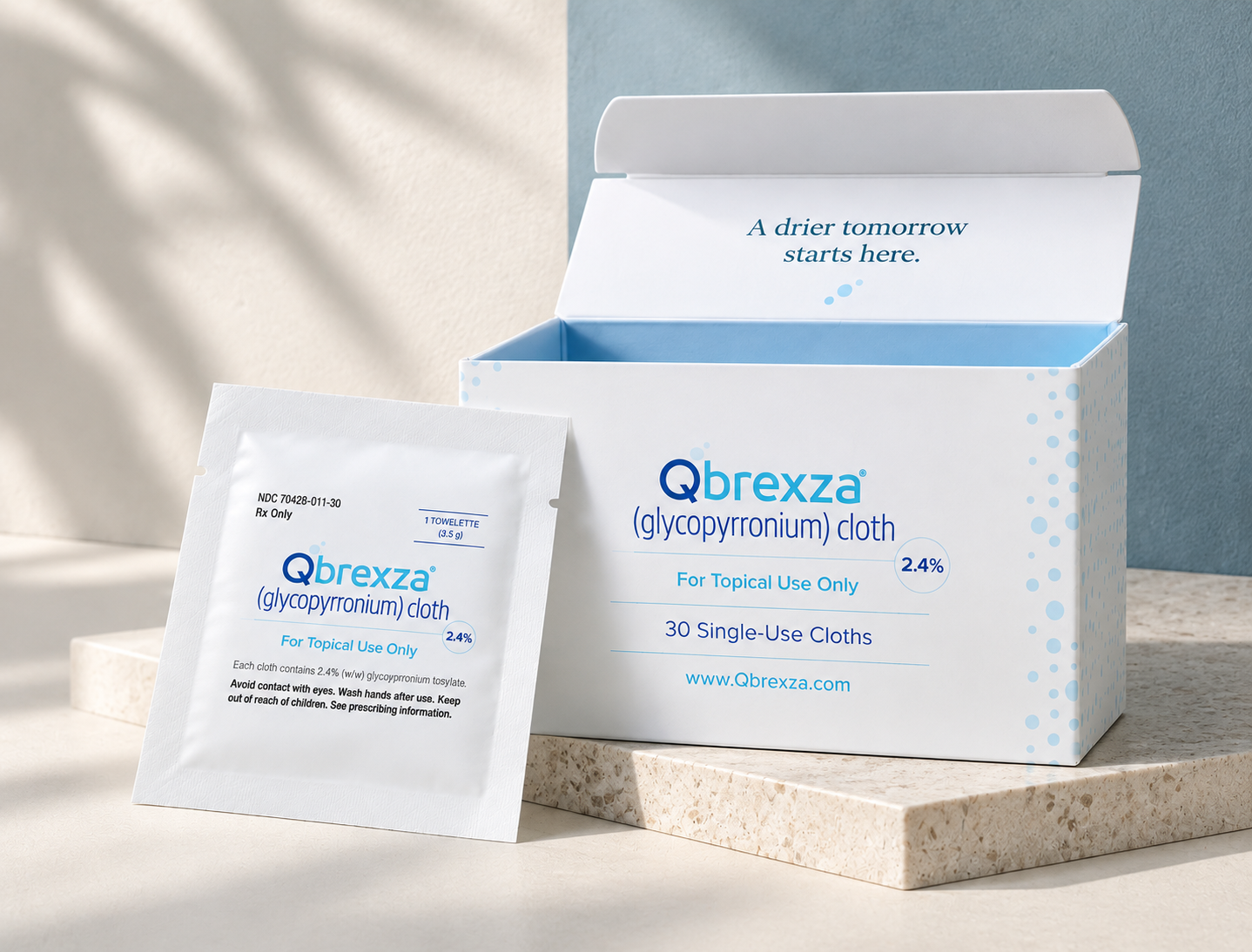
Qbrexza side effects tend to surprise people, mostly because they show up in unexpected places like your mouth, your eyes, or your bladder, beyond where you applied the cloth. That's because the drug works by quieting a chemical messenger your body uses for more than sweating alone. Once you understand that, the whole side effect picture starts to make a lot more sense.
TLDR:
- Qbrexza blocks sweat signals in your underarms, which is why side effects show up both on your skin and elsewhere in your body.
- Commonly reported side effects include skin redness (17%), dry mouth (16.9%), and blurred vision (6.7%), per clinical trial data.
- Serious warning signs like urinary retention, overheating, or allergic reactions mean you should stop and call your provider right away.
- Stacking Qbrexza with other anticholinergic medications can worsen side effects, so share your full medication list with your provider first.
- Twofold makes online dermatologist-guided care accessible using prescription topical and oral medications for those weighing other options.
How Qbrexza Works
Qbrexza is a medicated cloth you swipe across your underarms once a day. Each cloth carries glycopyrronium, an anticholinergic, which is the part worth understanding before we get to side effects.
Here is the short version of the biology. Your sweat glands fire when a chemical messenger called acetylcholine tells them to. (If you want background on hyperhidrosis symptoms and causes, that page covers the condition in full.) Anticholinergics like glycopyrronium block that signal, so the glands get less instruction to produce sweat. You can read more about glycopyrrolate for hyperhidrosis to understand how this class works broadly.
That blocking action is aimed at the underarms, where you apply it. It is also why side effects tend to show up the way they do. Acetylcholine does other jobs around the body, and dialing it down can ripple outward.
Common Side Effects of Qbrexza
Qbrexza's most common reactions fall into two buckets: what happens on the skin where you apply it, and what happens elsewhere in the body once the drug quiets acetylcholine.
Skin reactions at the application site were the most frequent. In two vehicle-controlled trials of 459 subjects, redness occurred in 17% of users, and burning or stinging in 14.1%.
Anticholinergic effects showed up too. In the 44-week safety trial, patients reported:
- Dry mouth in 16.9%
- Blurred vision in 6.7%
- Dilated pupils in 5.3%
- Urinary hesitation in 4.2%
| Side Effect | Category | Frequency (Clinical Trials) |
|---|---|---|
| Skin redness | Application site | 17% |
| Dry mouth | Anticholinergic | 16.9% |
| Burning or stinging | Application site | 14.1% |
| Blurred vision | Anticholinergic | 6.7% |
| Dilated pupils | Anticholinergic | 5.3% |
| Urinary hesitation | Anticholinergic | 4.2% |
Nasal dryness and dry eye also turn up. This is not a complete list of possible side effects.
Serious Side Effects of Qbrexza
Most people tolerate Qbrexza with nothing worse than the reactions above. A smaller group runs into effects serious enough to stop and call a provider.
Watch for these in particular:
- Urinary retention: new or worsening trouble passing urine, or a sense that your bladder is not emptying fully.
- Heat illness: because Qbrexza cuts sweating, your body can struggle to cool itself in hot settings. Overheating, dizziness, or a flushed feeling that will not pass are warning signs.
- Serious allergic reaction: rash, swelling of the face or throat, or trouble breathing.
If any of these show up, stop using Qbrexza and contact your provider promptly. This is not a complete list of possible side effects.
Who Should Not Use Qbrexza
Qbrexza is not right for everyone. Its prescribing information lists conditions that can be worsened by anticholinergic effects, and if any apply to you, this medication may be off the table.
Medical conditions that can be worsened include, but are not limited to:
- Glaucoma
- Myasthenia gravis
- Paralytic ileus (a blockage in the intestines)
- Severe ulcerative colitis
- Sjogren's syndrome
Use extra caution if you have a history of urinary retention or an enlarged prostate, since anticholinergics can make it harder to empty your bladder. Qbrexza is indicated for focal hyperhidrosis, so understanding that condition can help you assess whether it applies to you.
Share your full medical history with your provider before starting, so they can decide whether Qbrexza fits your situation.
Qbrexza Drug Interactions
The main interaction to know about is stacking. When Qbrexza combines with other medications that carry anticholinergic effects, those effects add up, and side effects like dry mouth, blurred vision, or urinary hesitation can get worse.
Plenty of common prescriptions fall into this category. Worth flagging to your provider:
- Medications for depression, anxiety, mood disorders, or other mental illness
- Certain drugs for bladder control
- Allergy medications
- Stomach and gastrointestinal treatments
Bring your full medication list to the conversation before you start, so your provider can spot any overlap. If you are also considering a prescription strength antiperspirant, the same anticholinergic stacking concern applies. This is not a complete list of drug interactions.
Safe Handling and Accidental Exposure
Glycopyrronium travels easily from your fingers to your eyes, and that is where accidental exposure tends to cause trouble. Postmarketing reports describe dilated pupils, uneven pupil size, and blurred vision after the medication reached the eyes, including cases where children got hold of used cloths from the trash.
A few habits keep this from happening:
- Wash your hands with soap and water right after applying and after tossing the cloth.
- Throw the used cloth away immediately, out of reach of children and anyone else in the household.
- Avoid touching your eyes until your hands are clean.
If Qbrexza does reach your eyes, rinse thoroughly with water and call your provider if vision changes linger. For a broader look at how to stop sweating, including non-prescription options, that guide covers the full range.
Qbrexza During Pregnancy and While Breastfeeding
If you are pregnant, planning to be, or breastfeeding, this is a decision to make with your provider, not independently.
The truthful answer is that the data is thin. There are no available clinical studies on Qbrexza use in pregnant women, so its effects on a developing baby are not known. It is also unknown whether glycopyrronium passes into breast milk or how it might affect a nursing infant.
Because so much sits in the unknown column, loop in your provider so you can weigh the sweating you are managing against those open questions together.
Managing Qbrexza Side Effects Day to Day
Most of Qbrexza's everyday annoyances can be managed with small adjustments.
For dry mouth, keep water nearby, sip through the day, and try sugar-free gum or lozenges to keep saliva moving.
For your skin, a couple of habits help:
- Apply only to clean, intact underarm skin, never to cuts or broken areas.
- Skip occlusive dressings or tight wraps over the treated area, which can worsen irritation.
Take it easy in hot weather, since reduced sweating makes overheating easier to miss. And hold off on driving or operating machinery until you know whether the medication blurs your vision.
How Qbrexza's Side Effect Profile Compares to Other Topical Anticholinergics
Qbrexza sits inside a small family of topical anticholinergics that share the same basic tolerability picture. Sofpironium bromide (Sofdra), the other approved topical, works the same way and tends to produce similar application-site and dry-mouth reactions based on its prescribing information. If you are weighing cloth format against other delivery options, a glycopyrrolate wipes review covers the format differences in detail.
The format itself is the main advantage. Topical glycopyrronium has limited systemic absorption compared with oral anticholinergics, which is the basis for its gentler body-wide profile.
That said, effects still add up over time. In the 44-week open-label study, 59% of patients reported adverse effects and 8% stopped treatment, which is worth keeping in mind for the long haul.
Considering Other Options: Where Twofold Fits In
If Qbrexza's side effect trade-offs have you weighing alternatives, another route is dermatologist-guided topical care through a service like ours at Twofold.
The flagship product available a compounded oxybutynin topical gel for sweating. It works through the same anticholinergic mechanism as Qbrexza, but it is aluminum-free and built on a proprietary EverdryRx base designed to penetrate thicker-skinned areas like hands, feet, and underarms. Where Qbrexza is FDA-labeled for underarms only, this gel may be applied across multiple zones.
The care happens online. Sweat-specialized dermatologists review your intake and write prescriptions asynchronously, and for those asking about oxybutynin ER for hyperhidrosis, that topic is covered separately, and dosing gets adjusted over time through unlimited messaging, so tolerability concerns can be worked through without an in-person visit.
Different people respond differently to different agents, and there is a full breakdown of Qbrexza alternatives for hyperhidrosis if you want to compare options side by side. A dermatologist is the right person to help sort out which fits your situation.
Final Thoughts on Qbrexza Side Effects
For most people, Qbrexza's everyday side effects are manageable with small adjustments to your routine. The bigger considerations, like heat exposure and drug interactions, are worth a real conversation with your provider before you start. Knowing what to watch for puts you in a much better position to use it safely.
FAQ
What are Qbrexza's most common side effects?
Dry mouth and application-site reactions are the most frequently reported Qbrexza side effects. In clinical trials, redness occurred in 17% of users, burning or stinging in 14.1%, and dry mouth in 16.9%. These are common but not the only possible side effects. Talk to your provider if anything feels unmanageable.
Can Qbrexza cause serious problems beyond dry mouth and skin irritation?
Yes, a smaller group of users runs into effects that warrant stopping the medication and calling a provider. The main ones to watch for are urinary retention, heat illness from reduced sweating in hot environments, and serious allergic reactions like facial or throat swelling. If any of these occur, contact your provider promptly. Do not wait it out.
Qbrexza vs. Twofold topical oxybutynin gel: what's the difference for someone managing hyperhidrosis beyond the underarms?
Qbrexza is FDA-labeled for underarms only, while compounded topical oxybutynin 8% gel can be applied across multiple zones including hands, feet, face, and back. Both work through anticholinergic mechanisms, so the tolerability profile is similar, but coverage area is a real practical difference if your sweating is not limited to one spot.
What are the best telehealth options for managing hyperhidrosis from home in 2026?
The options worth knowing about are services that pair a licensed dermatologist with prescription treatment and ongoing follow-up, as opposed to one-time consult services. Twofold is a virtual sweat clinic that does exactly this: dermatologist review within about 24 hours, prescription treatment shipped to your door (if appropriate), and unlimited messaging for adjustments, all without an in-person visit or insurance requirement.
How do I reduce dry mouth from Qbrexza without stopping treatment?
Keep water nearby throughout the day, sip regularly, and try sugar-free gum or lozenges to keep saliva moving. If dry mouth stays bothersome after a few weeks, loop in your provider. Dosing adjustments or a switch to a different anticholinergic agent may be worth discussing depending on your full picture.
If you see a mistake or something you think should be updated, let us know at hello@itstwofold.com!


