

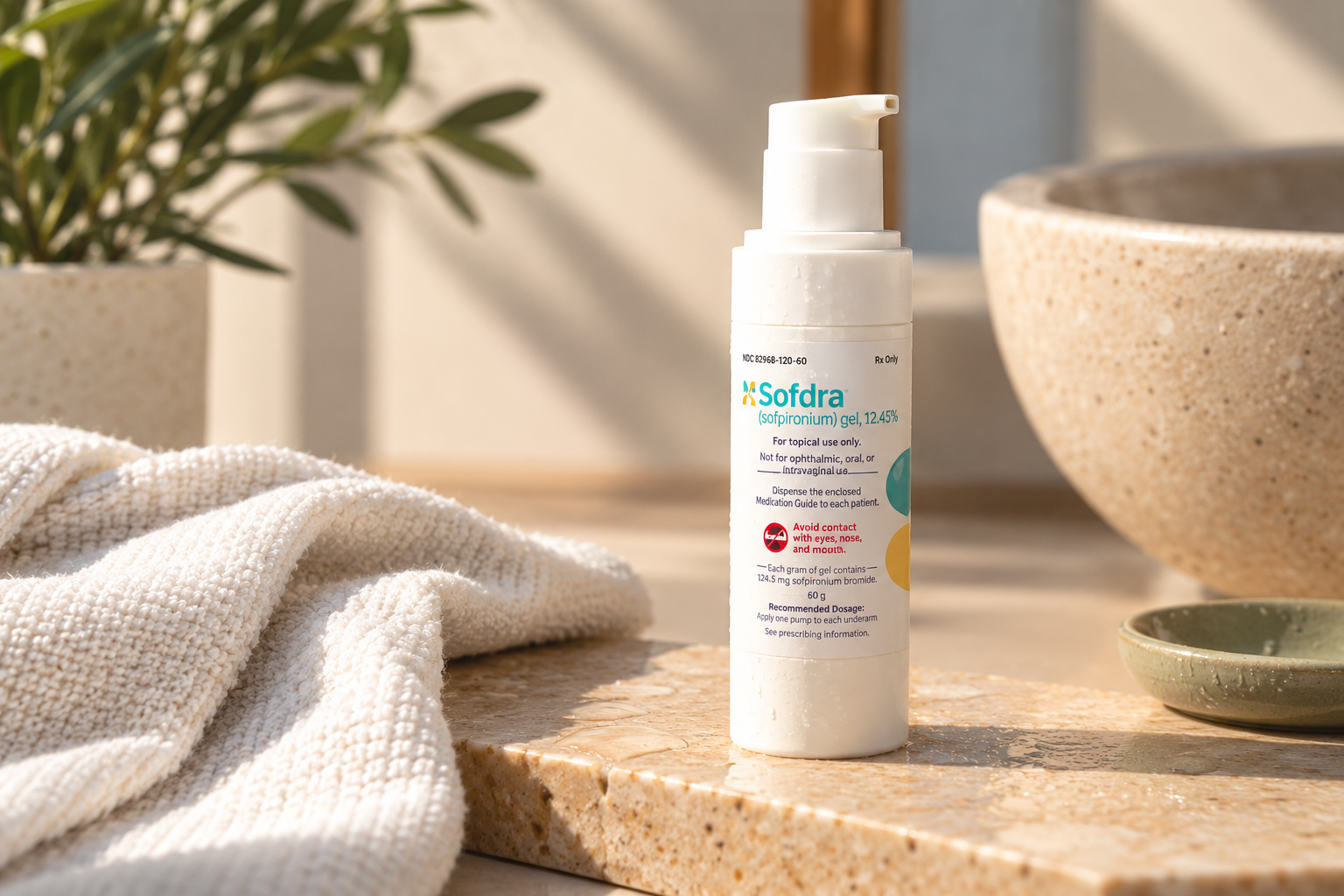
When was the last time a sweat treatment covered every spot that actually sweats? Sofdra treats underarms, and only if your insurance cooperates on the price. If your sweating spreads wider or you want costs you can count on, you deserve the full picture first. Let's break down Sofdra's reviews, pricing, and how the alternatives compare.
TLDR:
- Sofdra treats only the underarms and sits behind an insurance gate, so its out-of-pocket cost is unpredictable and other sweat zones go unaddressed.
- Qbrexza offers once-daily underarm wipes but runs about $580 per month at cash price.
- Dermadry is a drug-free device for hands, feet, and underarms, needing a session schedule and roughly $329 - $500 upfront.
- SweatBlock gives a no-prescription first step for mild sweating, without any ongoing medical oversight.
- Twofold connects you with dermatologists online for a nightly oxybutynin gel covering multiple zones.
Twofold: A Strong All-Around Alternative
We build Twofold as a virtual sweat clinic, connecting you with sweat-specialized dermatologists entirely online. The core treatment is a compounded topical oxybutynin 8% gel, applied once nightly, that blocks acetylcholine signals to your sweat glands and reduces sweat right where you put it on. Where Sofdra sits at a single labeled site behind an insurance gate, Twofold was built for the two places that leave people stuck: coverage across the body, and pricing you can actually predict.
What that looks like in practice:
- One gel treats hands, feet, underarms, face, back, chest, and groin, well beyond the axillae.
- Flat pricing with no insurance required, at $150 for a 3-month supply ($50/mo).
- A dermatologist reviews your intake within about 24 hours, with no live appointment to schedule.
- Unlimited follow-up messaging, so you can titrate your dose or add an oral anticholinergic if that becomes the better fit.
Twofold tends to make the most sense if your sweating reaches beyond the underarms, or if you don't have qualifying commercial insurance and want steady costs paired with a dermatologist who stays reachable.
For someone weighing Sofdra, this is the gap-filler. Twofold answers the coverage and access questions Sofdra's structure leaves open, which is what puts it at the top of this list.
Qbrexza

Qbrexza (glycopyrronium) is another FDA-approved topical anticholinergic, used to treat primary axillary hyperhidrosis in people 9 years and older. It comes as a premoistened cloth you wipe across both underarms once a day. Like Sofdra, it works by blocking acetylcholine's signal to your sweat glands, and like Sofdra, it stays put at a single labeled site.
What Qbrexza offers:
- A once-daily premoistened cloth for underarm application
- Glycopyrronium wipes reduce symptoms more than control wipes, per a review in American Family Physician
- FDA approval for ages 9 and older
If your sweating is confined to your underarms, you prefer a wipe over a gel, and you have insurance coverage, Qbrexza is a reasonable fit, though Qbrexza side effects are worth reviewing before you start.
The constraint is the same one Sofdra carries. Qbrexza is for underarm use only, so hands, feet, and face are off the table. Cost is the other sticking point: a one-month supply of 30 Qbrexza glycopyrronium wipes runs approximately $580 at cash price.
So Qbrexza works well for underarm-only cases with coverage behind it. If your sweating shows up in more than one place, or you'd rather pay a flat, predictable amount without insurance, look into Qbrexza alternatives for hyperhidrosis that treat multiple zones under a single plan.
Dermadry

The Dermadry machine takes a different route entirely. It's a home-use tap water iontophoresis device, cleared by the FDA for treating mild to severe palmar, plantar, and axillary hyperhidrosis. Instead of a drug, it sends a mild electrical current through water to temporarily reduce sweat gland activity, which makes it a non-surgical, non-invasive, drug-free option that can deliver long-lasting results with maintained use.
What Dermadry offers:
- Drug-free treatment for hands, feet, and underarms
- Three purchasing options: hands and feet, underarms, or all three
- A one-time device purchase, roughly $329 to $500 depending on model
It's a strong pick if you want to steer clear of medication, your sweating sits in your palms or soles, and you'll stick to a session schedule.
The trade-off is that schedule. Iontophoresis is course-based: daily sessions, then weekly maintenance, not permanent. The device also can't reach the face or torso, and in the US it needs a medical professional's prescription to purchase.
So Dermadry is a genuinely good drug-free choice for palms and soles, and for some people avoiding medication altogether is the whole point. If you'd rather skip the hardware and the recurring session calendar, or you sweat in places iontophoresis can't reach, oxybutynin gel for sweating covers those zones with nothing to plug in.
SweatBlock
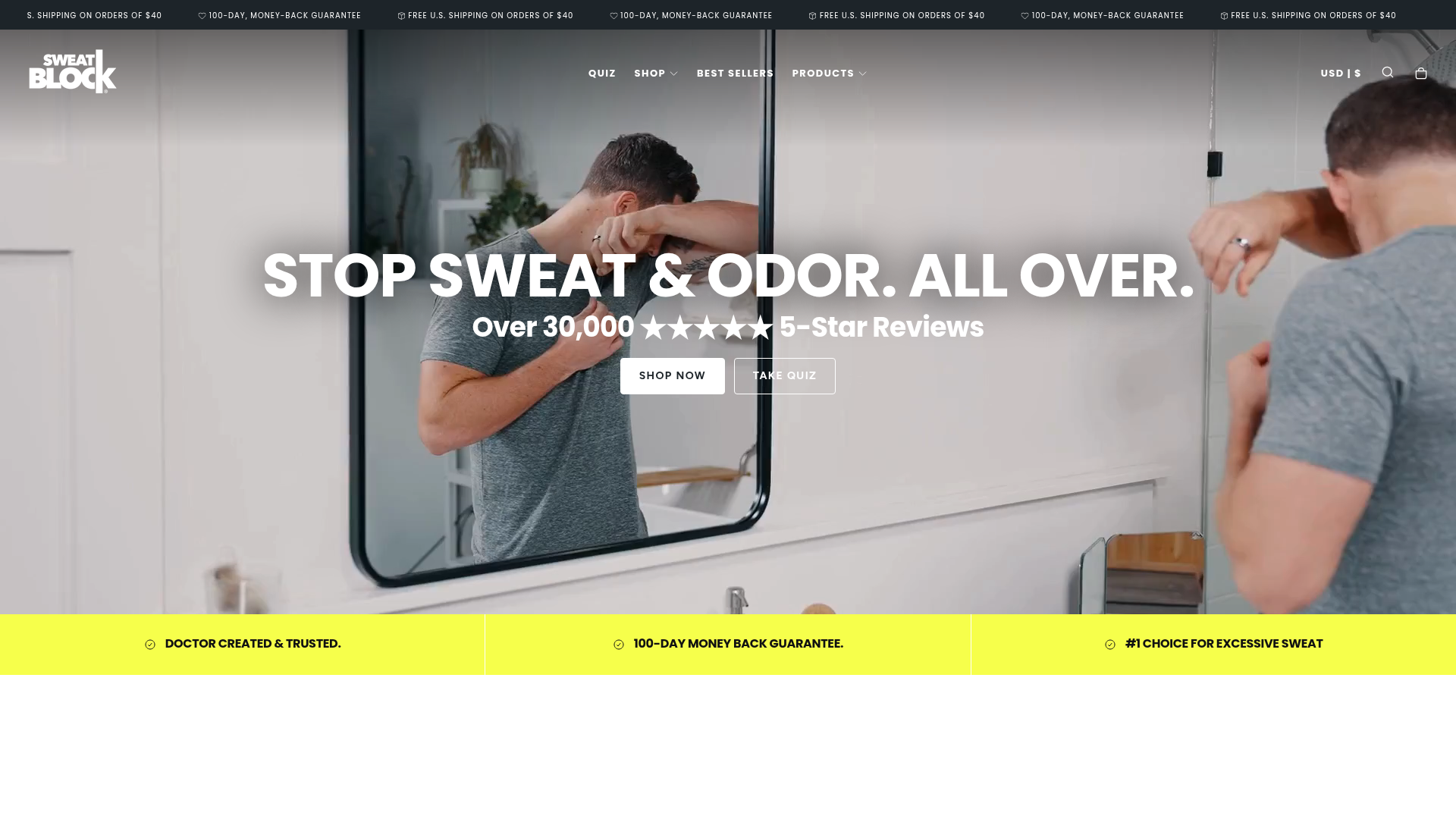
SweatBlock sits at the other end of the ladder. It's a direct-to-consumer over-the-counter antiperspirant brand that sells aluminum-based wipes, roll-ons, and lotions for underarms, hands, feet, and the face. No prescription, no physician involvement, and no intake to fill out. You buy it and use it.
What it offers:
- No prescription needed and a low upfront cost per product
- Separate products made for different body areas
- A 100-day money-back guarantee
If your sweating is mild or shows up only in certain situations, SweatBlock is a low-friction way to test a first-line option before going further.
The limits come from how it works. Aluminum-based formulas plug your sweat ducts at the skin's surface, and that surface mechanism carries a known risk of irritant dermatitis. Commonly reported side effects include burning, stinging, and sensitization. This is not a complete list of possible side effects. There's no ongoing medical oversight, so nobody adjusts your regimen if it stops working or starts irritating your skin. And because each area needs its own product, treating hands, underarms, and feet means buying and managing separate items.
So SweatBlock is a fair first step for mild cases, and for some people a drugstore antiperspirant is genuinely enough. For diagnosed hyperhidrosis, or sweating that a surface plug can't keep up with, Twofold works at the nerve level instead, blocking the acetylcholine signal that tells your glands to fire, with a dermatologist guiding your dose along the way. That's a different profile from the Sofdra gel side effects patients commonly report.
| Option | Areas treated | Format | Cost | Prescription / oversight |
|---|---|---|---|---|
| Twofold | Hands, feet, underarms, face, back, chest, groin | Nightly topical oxybutynin 8% gel | $150 per 3-month supply ($50/mo), no insurance required | Online dermatologist review, unlimited follow-up messaging |
| Qbrexza | Underarms only | Once-daily premoistened wipe | ~$580 per month at cash price | Prescription (FDA-approved, ages 9+) |
| Dermadry | Hands, feet, underarms | Home iontophoresis device | ~$329-$500 one-time purchase | Requires prescription; recurring session schedule |
| SweatBlock | Underarms, hands, feet, face | OTC aluminum-based wipes, roll-ons, lotions | Low upfront cost per product | No prescription; no medical oversight |
Final Thoughts on Finding Your Best Sofdra Alternative
There's no single winner here, just the option that matches your body and your budget. Some people do fine with a wipe or a device, while others want broader coverage and a dermatologist they can message. Think about your own sweat pattern and what you're comfortable managing, and your next step gets a lot clearer. This article is for general information only and isn't medical advice; talk with a licensed provider about your personal health questions, since serious causes of excessive sweating exist and a provider can help determine what's driving your symptoms.
FAQ
When should you consider Twofold over Sofdra for hyperhidrosis?
See the Twofold section above for the full breakdown of when it fits better than Sofdra.
Is Qbrexza a good alternative if your sweating goes beyond the underarms?
Qbrexza (glycopyrronium) is approved for underarm use only. If your sweating shows up in more than one place, oxybutynin gel treats hands, feet, underarms, face, back, chest, and groin under a single plan.
How does Dermadry differ from Twofold and Sofdra?
Dermadry is a drug-free home iontophoresis device that sends a mild electrical current through water to reduce sweat gland activity in hands, feet, and underarms. It's a solid pick if you want to avoid medication, but it can't reach the face or torso and requires a recurring session schedule, whereas oxybutynin gel through Twofold covers those zones with nothing to plug in.
Is SweatBlock strong enough for diagnosed hyperhidrosis?
SweatBlock is an over-the-counter aluminum-based antiperspirant that plugs sweat ducts at the skin's surface, making it a fair first step for mild or situational sweating. For diagnosed hyperhidrosis, topical oxybutynin gel works at the nerve level by blocking the acetylcholine signal, with a dermatologist guiding your dose.
What should you look for when comparing Sofdra alternatives?
Focus on coverage (whether one treatment reaches all your sweat zones), predictable cost, and ongoing clinical oversight so someone can adjust your regimen if it stops working.
If you see a mistake or something you think should be updated, let us know at hello@itstwofold.com!


