


When your scalp and forehead sweat more than the rest of you combined, it feels like your head has a mind of its own. Heat, hair, and delicate facial skin make this area tricky to treat too. We'll go through what's behind it and the real options for getting it under control.
TLDR:
- Heavy head and face sweating is called craniofacial hyperhidrosis, often with no heat or stress behind it.
- See a provider if sweating is sudden, one-sided, or paired with night sweats, weight loss, or fever.
- Hair blocks topical treatments on the scalp, so oral anticholinergics like glycopyrrolate often fit better there.
- Oral oxybutynin improved symptoms in 60% to 97% of patients, per a 2025 review in JAAD Reviews.
- Dermatologists through Twofold may prescribe a compounded topical oxybutynin 8% gel for the face online; use is off-label and results aren't permanent.
What Head and Face Sweating Actually Is
If your forehead drips, your scalp stays damp, or sweat runs down your face when it isn't hot and you aren't moving, that pattern has a name: craniofacial hyperhidrosis. It simply means excessive sweating of the face, head, or scalp.
All of us sweat to cool down. That is thermoregulation working as it should. Craniofacial hyperhidrosis is different. The sweat glands here overreact, producing far more than your body needs, often with no heat, exercise, or stress to explain it. It is a recognized form of focal sweating, and you are not imagining it.
Why the Head and Face Sweat More Than Other Areas
Your face and scalp are packed with eccrine glands, the ones that release watery sweat straight to the skin. That density runs higher here than in most other areas, so there is simply more equipment ready to fire.
This region is also closely tied to your sympathetic nervous system. When it signals, it releases acetylcholine, the chemical messenger that tells glands to switch on, so your head can start pouring before the rest of you reacts.
Hair traps heat and holds moisture against the scalp, keeping glands active and making excessive face sweating feel heavier and harder to ignore.
Primary vs. Secondary Causes of Head Sweating
Head sweating usually falls into one of two camps, and telling them apart matters.
Primary craniofacial hyperhidrosis has no identifiable cause and may run in families. A provider can assess your specific pattern.
Secondary sweating comes from something else: an underlying condition or a medication. It can begin at any age and often brings other symptoms along.
Serious causes do exist, and only a provider can pin down what is driving your sweating. If it is new, one-sided, or paired with other changes, get it checked.
Common Triggers That Make Head and Face Sweating Worse
Even when sweating has a medical basis, certain everyday things reliably turn the tap up. See what sounds familiar:
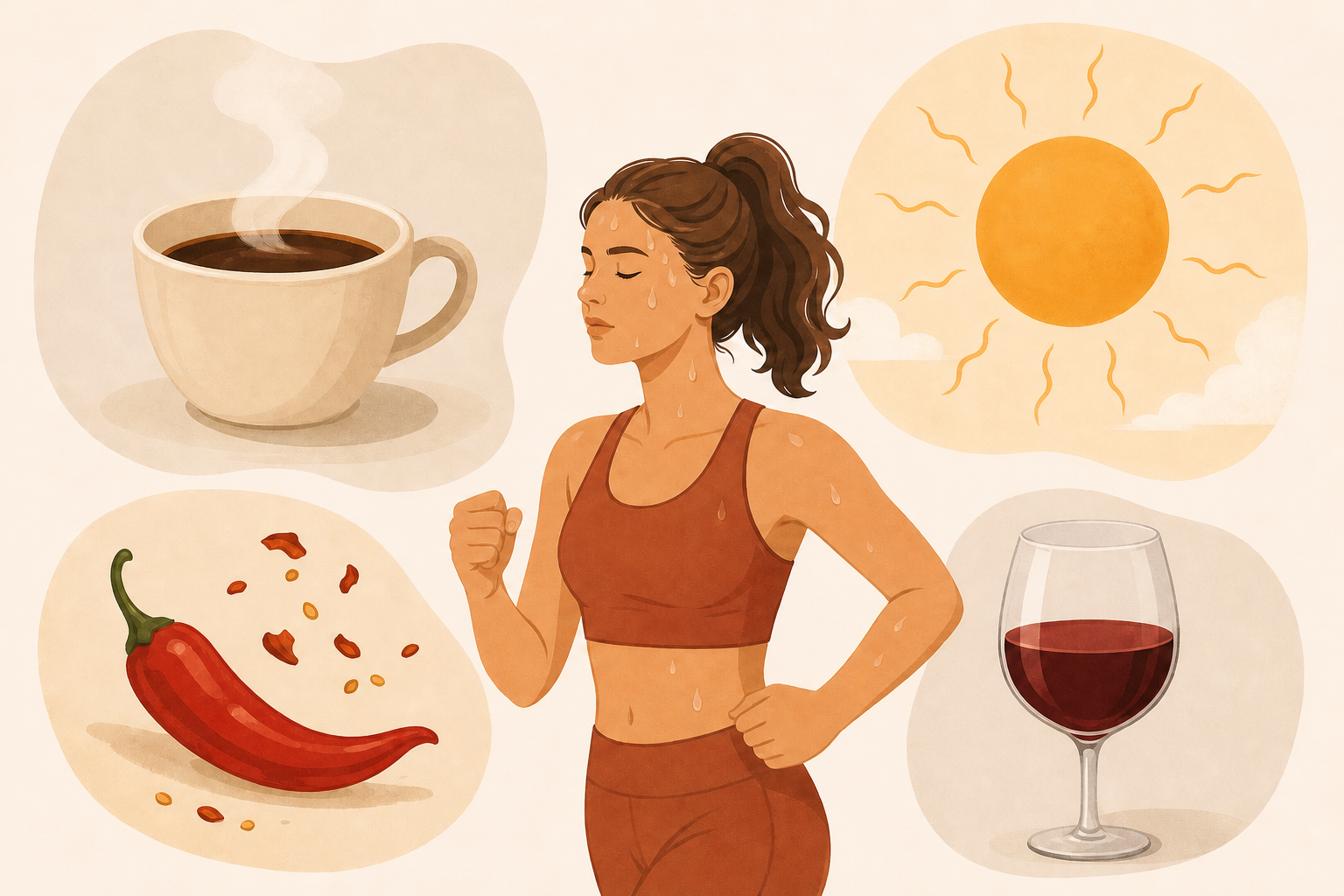
- Heat and humidity, which push already overactive glands harder
- Physical activity, from a workout to hauling groceries up stairs
- Stress and anxiety, which fire the same nerve signals that trigger sweat
- Spicy food and hot drinks like coffee or tea
- Alcohol, which widens blood vessels and warms you up
- Thick or long hair trapping heat against the scalp
Spotting your personal triggers won't stop the sweating, but it gives you something concrete to manage around. If you prefer to start with treating hyperhidrosis naturally, there are options worth reviewing.
Medical Conditions and Medications Linked to Head Sweating
When head sweating traces back to something else, these are the usual suspects worth knowing about:
- Thyroid disorders, especially an overactive thyroid
- Diabetes and episodes of low blood sugar
- Menopause and other hormonal changes, including pregnancy
- Infections that run with fevers or night sweats
- Certain medications, including some antidepressants and beta-blockers like propranolol
Seeing your situation here is a reason to ask questions, not to self-diagnose. Only a clinician can run the right tests, rule these causes in or out, and tell you what is actually behind your sweating.
When Head Sweating Signals Something to See a Doctor About
Some head sweating is just an overactive pattern. Other times it is worth a closer look. Reach out to a provider if you notice:
- Sweating that came on suddenly or recently changed
- Night sweats that soak your pillow or sheets
- Sweating on only one side of your head or face
- Sweating alongside unexplained weight loss, fever, or chest symptoms
There is no shame in bringing it up. Only about half of people with hyperhidrosis seek a medical consultation for their symptoms, per a 2023 disease burden review that found 51% of the US general population with hyperhidrosis had sought one. Getting checked out is how you find answers.
How Head and Face Sweating Is Diagnosed
Diagnosis starts with a conversation, not a machine. Your provider will ask how long the sweating has lasted, whether it hits both sides evenly, if it stops while you sleep, and whether relatives deal with the same thing. Those questions map to the standard criteria for primary hyperhidrosis.
From there, a few simple tests may follow:
- Starch-iodine test: iodine and starch turn dark where sweat appears, mapping affected areas
- Gravimetric test: absorbent paper is weighed before and after to measure output
- Blood work: checks thyroid function or blood sugar to rule out a secondary cause
None of it is painful, and it gives you a clear starting point.
At-Home and Lifestyle Ways to Manage Head Sweat
None of this stops the underlying overactivity, but small changes can take the edge off day to day:
- Wear lightweight, breathable headwear and moisture-wicking bands that pull sweat away, and see more tips on how to stop face sweating
- Keep hair shorter or tied up so less heat gets trapped against the scalp
- Blot with a soft cloth instead of rubbing, which irritates skin
- Track your triggers and adjust around them where you can
- Stay hydrated to replace what you lose
- Try a face-safe antiperspirant carefully, since skin here is delicate
Think of these as first steps. When they aren't enough, medical options go deeper.
Medical and Prescription Treatments for Head Sweating
When lifestyle steps fall short, prescription options move in. They manage symptoms, and sweating returns if you stop.
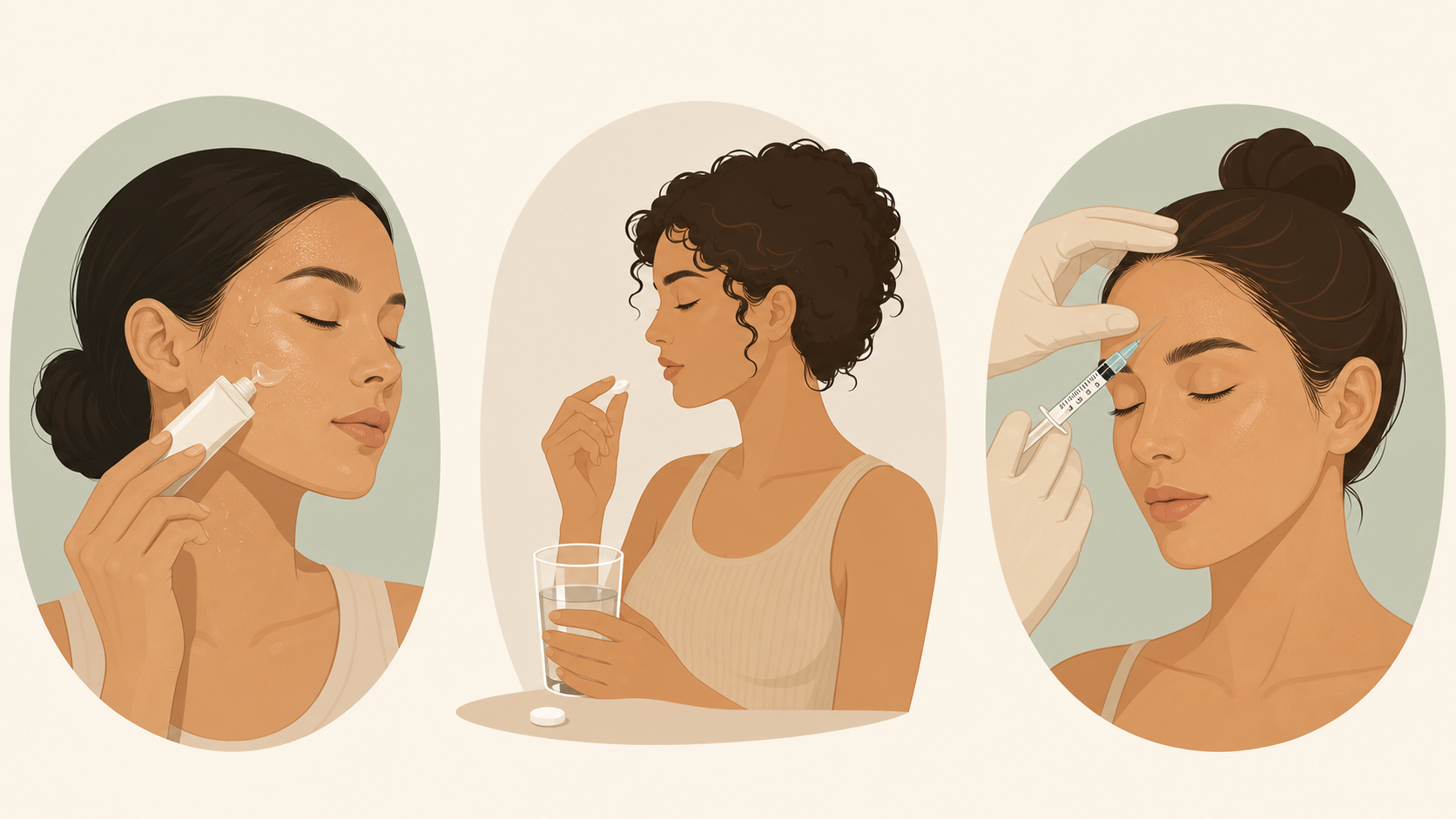
- Prescription antiperspirants and topical anticholinergics work on the face, but hair makes the scalp tough to treat this way.
- Oral anticholinergics like glycopyrrolate for hyperhidrosis and oxybutynin work body-wide, which makes them practical for the scalp. A 2025 review found oxybutynin for hyperhidrosis improved symptoms in 60% to 97% of patients.
- Botox for hyperhidrosis injections can calm forehead and scalp sweating, though the forehead needs a provider with real facial experience to avoid brow drooping.
- Surgery is a last resort for severe, treatment-resistant cases.
Weighing Your Treatment Options for the Scalp and Face
The scalp and face bring their own puzzle: hair blocks topical delivery, and injections here take real technique. Weigh the tradeoffs against your situation.
| Option | Coverage | Invasiveness | Convenience |
|---|---|---|---|
| Topical anticholinergics | Face, less so scalp | None | At-home |
| Oral anticholinergics | Whole body, scalp-friendly | Pills | Daily |
| Botulinum toxin | Forehead, scalp | Injections | In-office |
Topical anticholinergics carry lower systemic absorption than oral forms, the general basis for fewer body-wide side effects. No single answer fits everyone; reviewing glycopyrrolate vs oxybutynin can help you talk with a provider about what suits your skin, hair, and daily routine.
How Twofold Approaches Head and Face Sweating
We're a virtual sweat clinic, so you connect with a sweat-specialized dermatologist entirely online. When it fits, they prescribe a compounded oxybutynin gel that penetrates skin and reduces sweat at the source. Applied once nightly, it works on the face but not the scalp, since it doesn't mix well with hair.
Many patients notice change in 1 to 2 weeks, with full results by about 4 weeks, per the Twofold FAQ. Oxybutynin's hyperhidrosis use is off-label, the compounded oxybutynin gel isn't separately FDA-approved, and results aren't permanent. For anything specific to your health, talk with a provider.
Final Thoughts on Excessive Head and Face Sweating
If sweat keeps running down your face or soaking your scalp, you now have a clearer picture of why and what you can do about it. Simple day-to-day changes ease things for a lot of people, and a provider can check for underlying causes and walk through treatments that suit you. You have room to take this one step at a time and find what fits your life.
FAQ
Why do you sweat so much from your head but not the rest of your body?
Your face and scalp pack in more eccrine glands, the ones that release watery sweat, than most other areas, and this region is closely tied to the nerves that trigger sweating. When only your head and face sweat heavily with no clear heat or exercise, that focal pattern is called craniofacial hyperhidrosis and is worth getting checked by a provider.
What telehealth options are available for treating head and face sweating in 2026?
Look for a service that connects you with sweat-specialized dermatologists and offers prescription treatments matched to where you sweat. Twofold is a virtual sweat clinic built around this: dermatologists review your intake online and prescribe a compounded topical oxybutynin 8% (if appropriate) gel for the face, or oral glycopyrrolate or extended-release oxybutynin for the scalp and whole-body sweating.
Can you treat scalp sweating with a topical gel, or do you need something else?
Topical treatments struggle on the scalp because hair blocks delivery and the gel doesn't mix well with hair, so oral anticholinergics like glycopyrrolate or oxybutynin tend to be more practical there. A 2025 review found oral oxybutynin improved symptoms in 60% to 97% of patients, though results aren't permanent and sweating returns if you stop.
How is head and face sweating diagnosed?
See the diagnosis section above for details: a provider will ask about your history and may run a starch-iodine, gravimetric, or blood test.
When should you see a doctor about sweating from your head?
Reach out to a provider if your sweating came on suddenly, soaks your sheets at night, shows up on only one side, or comes with weight loss, fever, or chest symptoms. Serious causes exist and only a clinician can run the right tests to find what's actually driving it, so getting checked out is how you find answers.
If you see a mistake or something you think should be updated, let us know at hello@itstwofold.com!


