


Most people dealing with hyperhidrosis have tried every antiperspirant on the shelf before they hear about oxybutynin. It's a prescription medicine that works at the source by quieting the nerve signal that triggers sweating, and studies show it helps a meaningful chunk of people who try it. If you're weighing your options, here's what the research and your provider would want you to know.
TLDR:
- Oxybutynin blocks the nerve signal that tells your sweat glands to fire, and it's used off-label for excessive sweating
- Studies report topical oxybutynin helped 73.6% of patients vs. 42.8% on placebo; oral forms showed improvement in 60-97% of patients
- Most people notice early changes within 1-2 weeks, with full results settling in around 4 weeks of consistent use
- Topical forms tend to carry fewer body-wide side effects than oral, since less medicine reaches the bloodstream
- Twofold connects people with dermatologists who review your intake and, when appropriate, prescribe oxybutynin, or other prescription treatments, for hyperhidrosis
What Is Oxybutynin and Why Is It Used for Sweating?
Oxybutynin is an anticholinergic medicine, first approved to calm an overactive bladder. Dermatologists also reach for it to treat hyperhidrosis, the medical term for sweating well beyond what your body needs to cool itself. That use is off-label, meaning it treats something outside its original approval. Off-label prescribing is common, legal, and routine across dermatology.
How Oxybutynin Works for Excessive Sweating
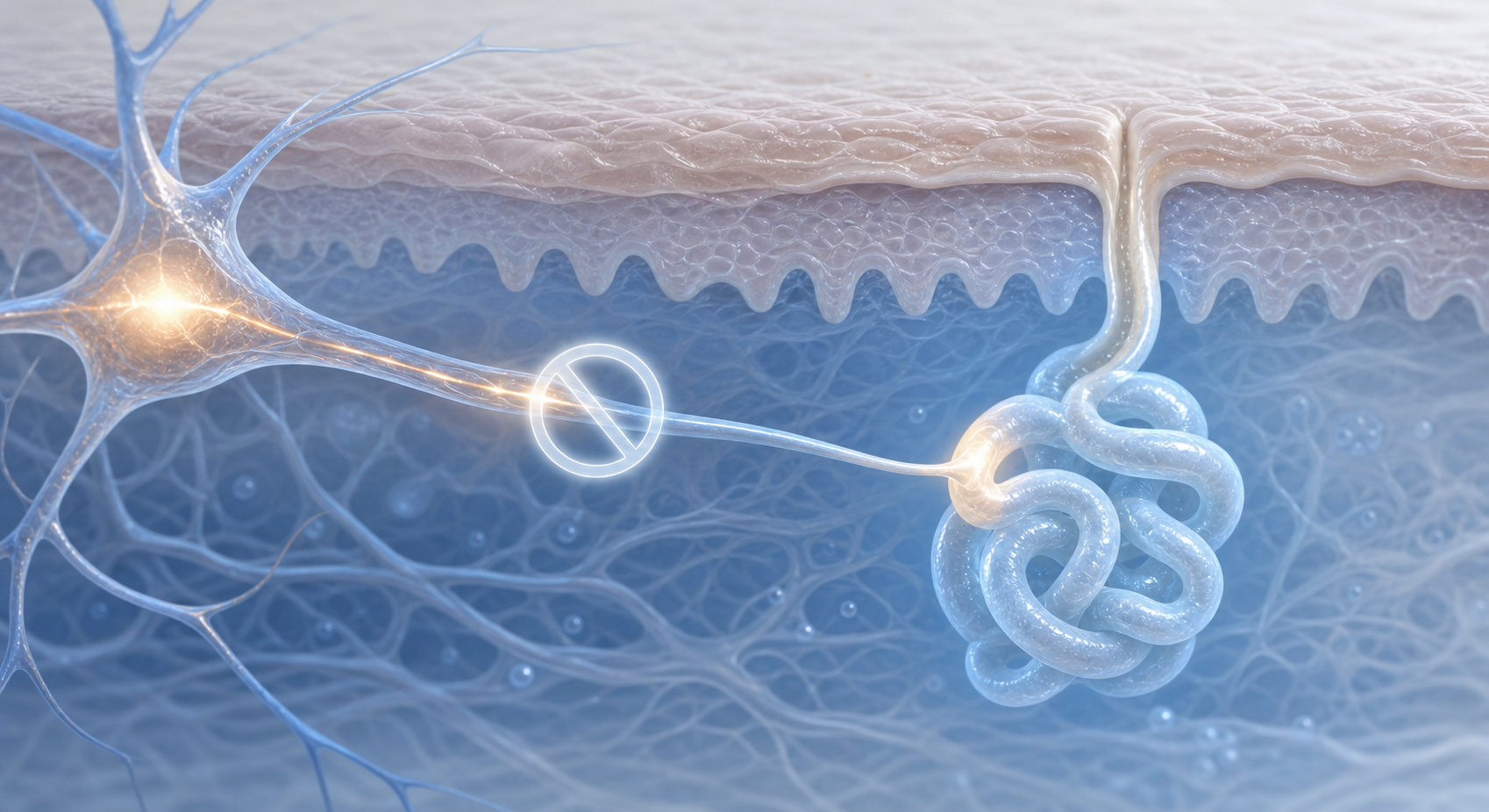
Your sweat glands don't fire on their own. A nerve chemical called acetylcholine tells them to switch on, and oxybutynin blocks that signal.[1] Once it reaches the glands, whether absorbed into the bloodstream from a pill or through the skin from a gel, the message to sweat gets muted. Fewer signals reaching the glands means less sweat produced at the source.
Oral vs. Topical Oxybutynin: How the Forms Differ
Oxybutynin comes in a few forms, and the delivery route changes how it behaves.
| Form | Dosing | Absorption | Notes |
|---|---|---|---|
| Immediate-release tablet | More than once daily | Systemic, whole-body | Acts fast, wears off sooner |
| Extended-release tablet | Once daily | Systemic, steadier | Best on an empty stomach |
| Topical gel | Applied to skin | More localized | Targets the treated zone |
Oral oxybutynin travels through the bloodstream and crosses the blood-brain barrier, bringing central effects like drowsiness. Oxybutynin topical gel keeps more medicine where you put it, often meaning the potential for fewer body-wide side effects.
Oxybutynin Dosage for Hyperhidrosis
No single dose fits everyone. Providers often start low and titrate up based on how your sweating responds and how well you tolerate it. For oral oxybutynin, that often means starting around 2.5 or 5 mg, with studies running doses up to 7.5 mg per day.[2] Topical gel dosing is set by the number of pumps you apply.
Any change should go through your provider.
How Effective Is Oxybutynin for Hyperhidrosis?
The evidence lands well. A 2024 systematic review found topical oxybutynin produced meaningful improvement on the Hyperhidrosis Disease Severity Scale in 73.6% of patients versus 42.8% on placebo (p<0.00001). A 2025 review reported oral oxybutynin improved symptoms in 60% to 97% of patients, with the strongest results in foot sweating.
Results still vary by formulation, body site, and severity.
How Long Does Oxybutynin Take to Work for Sweating?
Oxybutynin is no overnight fix. Most people notice some early change within the first one to two weeks of steady use, with full, stable results generally settling in around four weeks of nightly or daily application. Consistency in those early weeks matters most, so try not to skip days. The effect is not permanent, and sweating tends to return once treatment stops.
Oxybutynin Side Effects: What to Expect
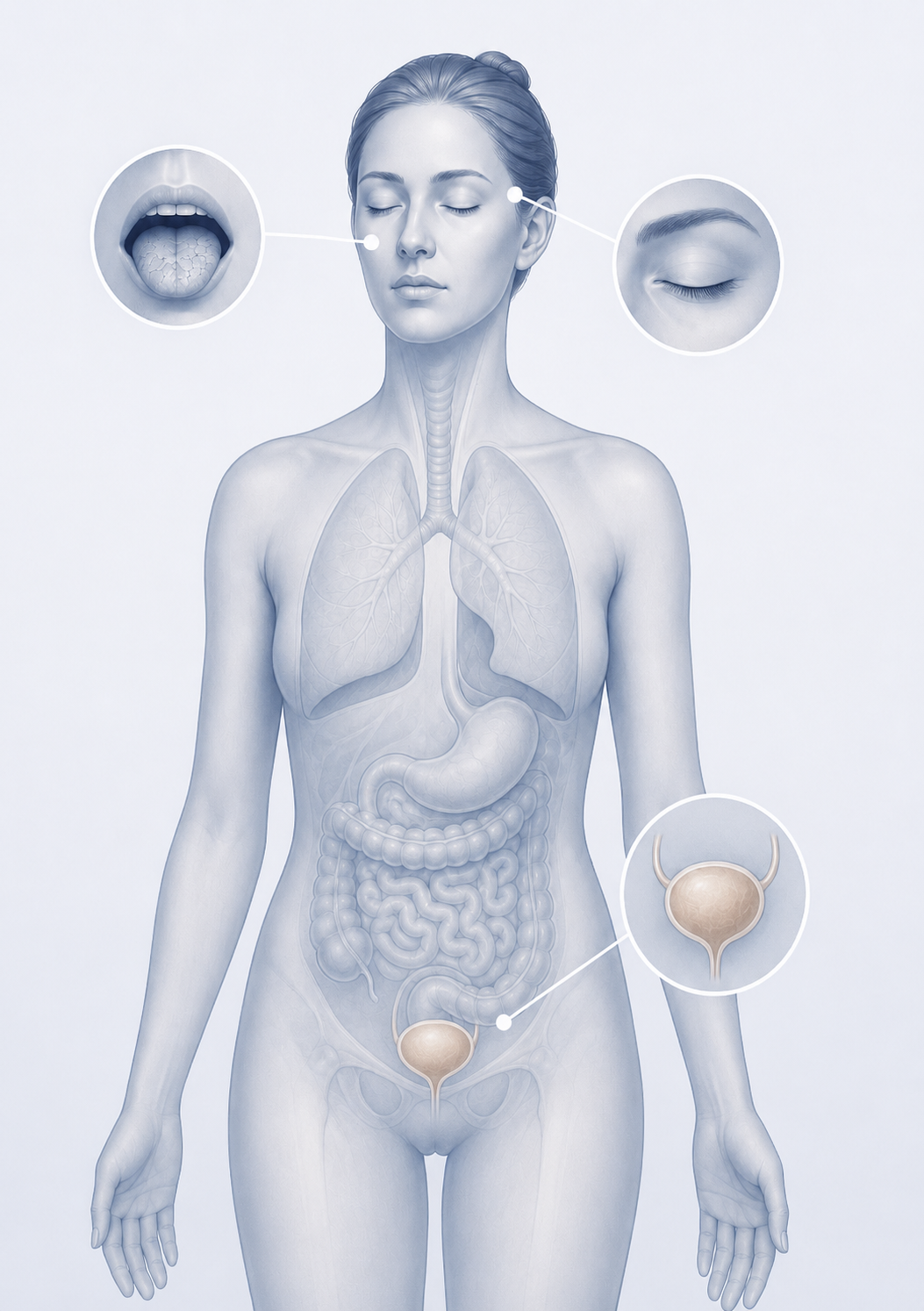
Commonly reported side effects of oral oxybutynin include dry mouth, constipation, dry eyes, urinary retention, dizziness, and drowsiness. Topical forms generally carry fewer body-wide effects, since less medicine reaches the bloodstream.[4] Across 416 patients on topical oxybutynin, the most common were mild application-site reactions, dry mouth, and thirst. This is not a complete list of possible side effects, so check with your provider.
Oxybutynin Warnings and Who Should Use Caution
Before starting oxybutynin, some conditions warrant caution or a provider's assessment, including but not limited to glaucoma, urinary obstruction, myasthenia gravis, and certain heart conditions. This is not a complete list of conditions requiring caution; consult your provider. Since it reduces sweating, it can raise your risk of overheating in hot weather.
Older adults may be more sensitive to effects like confusion and drowsiness, so provider supervision matters. Tell your provider about every medication you take, since drug interactions exist. This is not a complete list of drug interactions. Talk to your provider about your specific health history before starting oxybutynin.
The Best Time to Take Oxybutynin for Sweating
Timing depends on the form you're using.
Immediate-release tablets wear off through the day, so they're usually split into more than one dose. Extended-release oxybutynin is taken once in the morning and works best on an empty stomach, which can nudge breakfast later. Topical oxybutynin skips that tradeoff entirely; you apply it at night, right before bed, and let it work while you sleep.
When Oxybutynin Stops Working
Sometimes oxybutynin that once worked seems to lose its grip, and a few things can be behind that. Missed doses break the steady-state effect that keeps sweat in check. A shift in body weight, a change in your sweat pattern, or a worsening underlying condition can play in too, and sometimes the dose needs adjusting.
If your response fades, check back with your provider for reassessment.
Oxybutynin vs. Glycopyrrolate for Sweating
Both oxybutynin and glycopyrrolate vs oxybutynin comparisons are common, as both are anticholinergics used off-label for sweating, in oral and topical forms, including FDA-approved topical glycopyrronium products. The key difference: oxybutynin crosses the blood-brain barrier while glycopyrrolate does not, so glycopyrrolate is linked with fewer central effects like drowsiness.[3] Even so, oxybutynin is one of the more widely used anticholinergics in dermatology for hyperhidrosis.
Which fits you depends on your sweat pattern, medical history, and tolerability, a call your provider makes.
Oxybutynin and Weight Changes
Weight change comes up a lot in online threads, so let's be clear: oxybutynin is not indicated or studied for weight management, and changes in weight are not a documented primary effect of the drug. Some people report appetite changes tied to secondary effects like dry mouth or stomach upset, but there's no strong clinical evidence linking oxybutynin to meaningful weight loss or gain. If your weight changes unexpectedly while taking it, check in with your provider.
Alternatives to Oxybutynin for Hyperhidrosis
If oxybutynin isn't the right fit, the treatment ladder holds other options:
- Reducing excessive sweating can start with prescription-strength antiperspirants (aluminum chloride), often first-line for milder cases
- Other topical anticholinergics, including Qbrexza alternatives like glycopyrronium products such as Qbrexza and Sofdra
- Oral glycopyrrolate for generalized or multi-site sweating
- Iontophoresis for palms and soles
- Botulinum toxin injections for targeted zones
- Microwave thermolysis for underarms
- Surgery for severe cases
Choice depends on severity, the zone affected, and what's failed before. A dermatologist can help you pick the right step.
How to Get Oxybutynin for Sweating
Oxybutynin is a prescription medicine in the United States, so you can't buy it over the counter. There are two main routes to a script.
- In-person care: a dermatologist or primary care provider reviews your symptoms and, if appropriate, writes a prescription.
- Telehealth: you complete an online medical intake, a provider reviews it, and a partner pharmacy fills the order.
Either way, no prescription is guaranteed, since the provider makes the clinical call.
Twofold: Prescription Oxybutynin for Sweating, Delivered to Your Door
Living with excessive sweating wears on you. Twofold connects individuals with hyperhidrosis to dermatologists who review their intake within about 24 hours and, when it fits, prescribe compounded oxybutynin gel or oral options.
- EverdryRx base penetrates thicker skin on hands and feet
- One gel treats hands, feet, underarms, face, back, chest, and groin
- Flat $150 for a 3-month supply, no insurance needed
- Unlimited follow-up messaging with your dermatologist
Oxybutynin's use for sweating is off-label, and the compounded gel isn't separately FDA-approved. Results aren't guaranteed, and sweating returns if you stop.
Final Thoughts on Managing Excessive Sweating With Oxybutynin
Sweating that disrupts your daily life deserves a real solution, and oxybutynin is one of the more well-studied options available. Your response will depend on the form, the dose, and the body site, so there's no universal answer. Talking to a dermatologist, whether in person or online, is the clearest path to finding what actually works for you.
FAQ
How long does oxybutynin take to work for sweating?
Most people see early change in 1-2 weeks, with full results by around 4 weeks. See the timing section above for more detail. Keep in mind that oxybutynin manages sweating without permanently stopping it; if you stop treatment, sweating returns.
What are the side effects of oxybutynin for sweating?
Dry mouth, dry eyes, and drowsiness are among the most common; topical forms tend to cause fewer body-wide effects than oral. The side effects section above covers common effects but is not exhaustive. Check with your provider before starting.
What should I look for in an online hyperhidrosis clinic in 2026?
Look for a clinic with sweat-specialized, board-certified dermatologists (beyond general providers), transparent flat pricing with no hidden fees, and ongoing access to your care team after the first prescription. LegitScript verification and partner pharmacies that meet FDA and state compounding standards are signals worth checking, since not all telehealth services carry the same level of clinical oversight.
Can oxybutynin be used for excessive sweating on multiple body areas at once?
Yes, topical oxybutynin can be applied across multiple zones (hands, feet, underarms, face, back, chest, and groin) and is not limited to one site per treatment. Oral oxybutynin works systemically, so it reaches sweat glands body-wide regardless of application site. If you sweat in several areas, a dermatologist may recommend a topical-only approach, an oral option, or a combination of both depending on where and how severely you sweat.
If you see a mistake or something you think should be updated, let us know at hello@itstwofold.com!


