

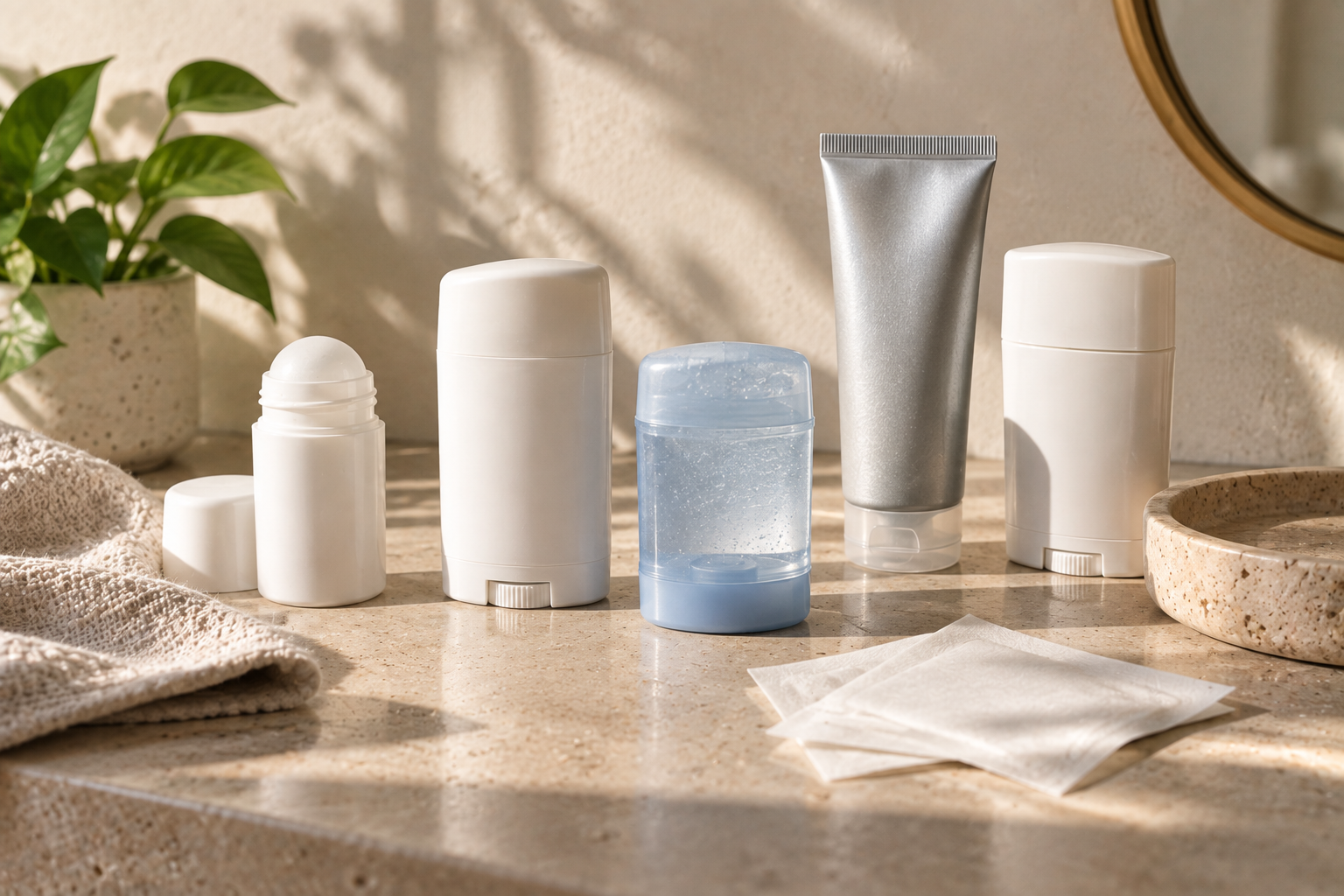
Not all sweat blockers work the same way, and that's exactly why the drugstore ones might be failing you. Some sit on top of your skin and plug the ducts. Others interrupt the message telling your glands to switch on, which matters a lot for tough spots like your palms and feet. If you're ready to figure out what fits your situation, we're going to compare the real contenders side by side.
TLDR:
- Sweat blockers work two ways: aluminum antiperspirants plug ducts, while anticholinergics like oxybutynin block the nerve signal.
- OTC brands (SweatBlock, Carpe, Duradry, SweatGuard) suit mild cases but often fall short on palms, soles, and face. See a provider to rule out serious underlying causes before self-treating.
- Dermadry's iontophoresis is drug-free and well-evidenced for hands and feet, but needs a prescription and skips other zones.
- A 2024 review found topical oxybutynin gave a meaningful HDSS improvement in 73.6% of patients versus 42.8% on placebo (JAAD Reviews).
- Twofold offers a dermatologist-guided treatment covering multiple body zones.
What Are Sweat Blockers for Excessive Sweating?
"Sweat blocker" is the catch-all term most of us reach for when we're talking about anything that cuts down excessive sweating. It covers a lot of ground: drugstore aluminum antiperspirants, at-home devices, and prescription topicals all get lumped under the same label.
Underneath, they work in one of two broad ways.
- Surface-level products plug the sweat ducts. Aluminum salts sit on the skin and form temporary plugs near the surface.
- Nerve-signal treatments interrupt the message telling your glands to switch on. Anticholinergics like oxybutynin work this way.
Excessive sweating can also be a medical condition called hyperhidrosis, where the body sweats far beyond what it needs to cool itself [StatPearls]. This list spans the full range so you can match a solution to your severity and the zones that sweat most.
How We Ranked Sweat Blockers
Everything below draws on publicly available information: manufacturer sites, clinical literature, and product labeling. We did not lab-test any of these products ourselves, so treat this as a research-based comparison, not head-to-head trial data.
Here's what we weighed for each option, and what you should weigh too based on how much you sweat and where:
- Mechanism and clinical evidence: does it plug ducts or block the nerve signal, and what do studies actually show?
- Body zones covered: underarms only, or hands, feet, and face too?
- Convenience: how it fits a daily routine.
- Cost structure and how transparent the pricing is.
- Whether medical oversight comes with it.
- Irritation and side-effect profile.
Our Top Pick for Multi-Zone Coverage: Twofold
Twofold is a virtual sweat clinic. You complete an online intake, a sweat-specialized dermatologist reviews it, and, if appropriate, a compounded topical oxybutynin 8% gel, or oral medication ships to your door. No waiting room, no live appointment.
The gel works by blocking acetylcholine, the chemical signal that tells your sweat glands to fire, right at the source. That's a different route than aluminum antiperspirants, which plug ducts at the surface. Its penetration-enhancing base is built for thicker-skinned zones like palms and soles, where many topicals never get deep enough to matter.
That mechanism matters most in the hard-to-treat zones, and the evidence base for topical oxybutynin has grown to cover exactly those (JAAD Reviews).
What stands out:
- Treats hands, feet, underarms, face, back, chest, and groin, not a single labeled site
- Once-nightly, fast-drying, aluminum-free application with minimal systemic absorption compared to pills (JAAD Reviews)
- Board-certified dermatologist review within about 24 hours, plus unlimited follow-up messaging
- Flat, transparent subscription pricing, no insurance required, with a money-back guarantee
- Oral glycopyrrolate or extended-release oxybutynin available when a dermatologist decides they fit better
Results are not permanent, and sweating returns if you stop. Any change to dose or frequency should be made with your dermatologist.
Bottom line: a dermatologist-guided, multi-zone prescription approach delivered entirely online makes Twofold a strong, well-rounded choice for people whose sweating has outgrown drugstore products.
Dermadry
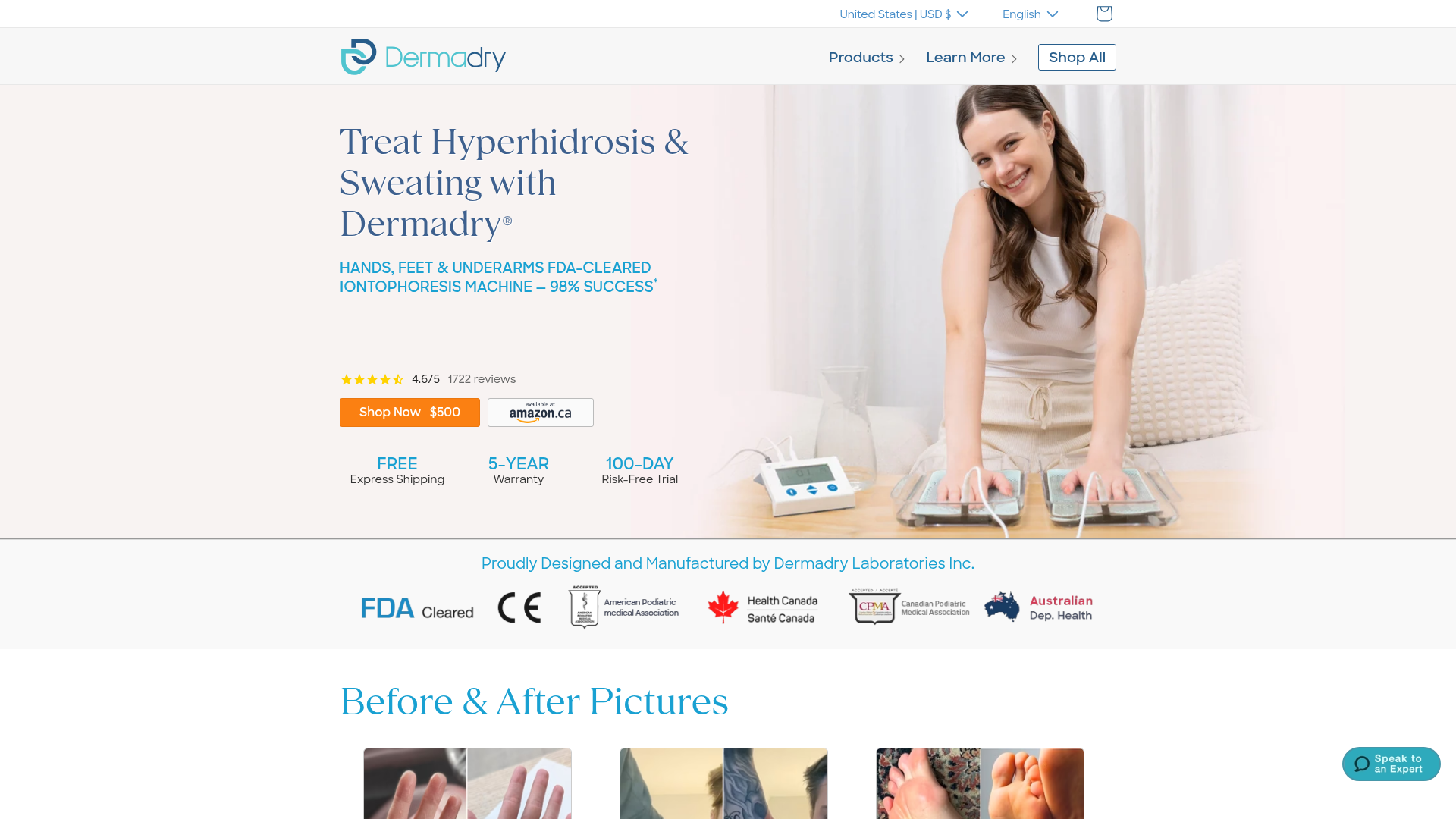
Dermadry is a Canadian company selling at-home tap water iontophoresis devices. A mild electrical current passes through water to temporarily reduce sweat gland activity. The approach is drug-free and needle-free, but the device needs a prescription for purchase in the USA.
What They Offer
- Tap water iontophoresis device for hands, feet, and underarms
- Drug-free, needle-free at-home treatment
- One-time device purchase with a satisfaction guarantee
Good for: People with isolated palm or foot sweating who want a medication-free option and can commit to a session schedule.
Limitation: Dermadry reaches only hands, feet, and underarms, never the face, back, chest, or groin. It also runs on a course-based schedule: multiple sessions per week initially, tapering to roughly once-weekly maintenance. Learn more about iontophoresis costs and side effects before committing to a device.
Bottom line: Iontophoresis is well-evidenced for palms and soles, but Twofold covers far more body zones with a once-nightly routine and included dermatologist oversight.
Duradry
Duradry is a direct-to-consumer brand built around a three-step underarm routine: a morning deodorant stick, an overnight antiperspirant gel, and a body wash. Its overnight gel leans on aluminum chloride, the same duct-plugging active found in other clinical-strength antiperspirants, forming temporary plugs that reduce sweat output the next day. The idea is that you apply the gel at night, when your glands are less active, so the plugs have time to settle in before your day starts. That timing can make it gentler than daytime application for some people, though the trade-off is a routine you have to keep up with consistently. For a deeper look at Duradry and its alternatives, see our full review.
What They Offer
- Three-step underarm system with a 15% aluminum chloride PM gel
- Clean-ingredient positioning with multiple fragrance options
- One-time or subscribe-and-save purchase, with international shipping
Good for: People with primarily underarm sweat and odor who want a clean-ingredient routine and have not yet exhausted clinical-strength antiperspirants.
Limitation: Duradry is essentially an underarm and body-odor system, with no targeted treatment for palm or foot sweating. The overnight gel can sting, and there's no clinical oversight or dose adjustment.
Bottom line: Duradry is a strong OTC antiperspirant system, but Twofold works through a different mechanism, covers more zones, and puts a dermatologist behind the plan for anyone past antiperspirants.
SweatBlock
SweatBlock is one of several antiperspirants for excessive sweating, selling aluminum chloride wipes, roll-ons, and lotions for the underarms and body. Its flagship product is a line of clinical-strength antiperspirant wipes applied to the skin.
What They Offer
- Maximum-strength antiperspirant wipes with aluminum chloride
- Products for underarms, hands, feet, face, and body
- No-prescription purchase with a money-back guarantee
Good for: People with mild-to-moderate underarm sweating who want an immediately available, low-cost, no-prescription product.
Limitation: SweatBlock plugs ducts at the surface with no medical evaluation, and its wipes carry the aluminum chloride irritation trade-off. The label says to stop if rash occurs, and ask a doctor first if you have kidney disease.
Bottom line: SweatBlock is a reasonable first-line antiperspirant, but readers who have hit the OTC ceiling get a different mechanism and included dermatologist care with Twofold.
Carpe
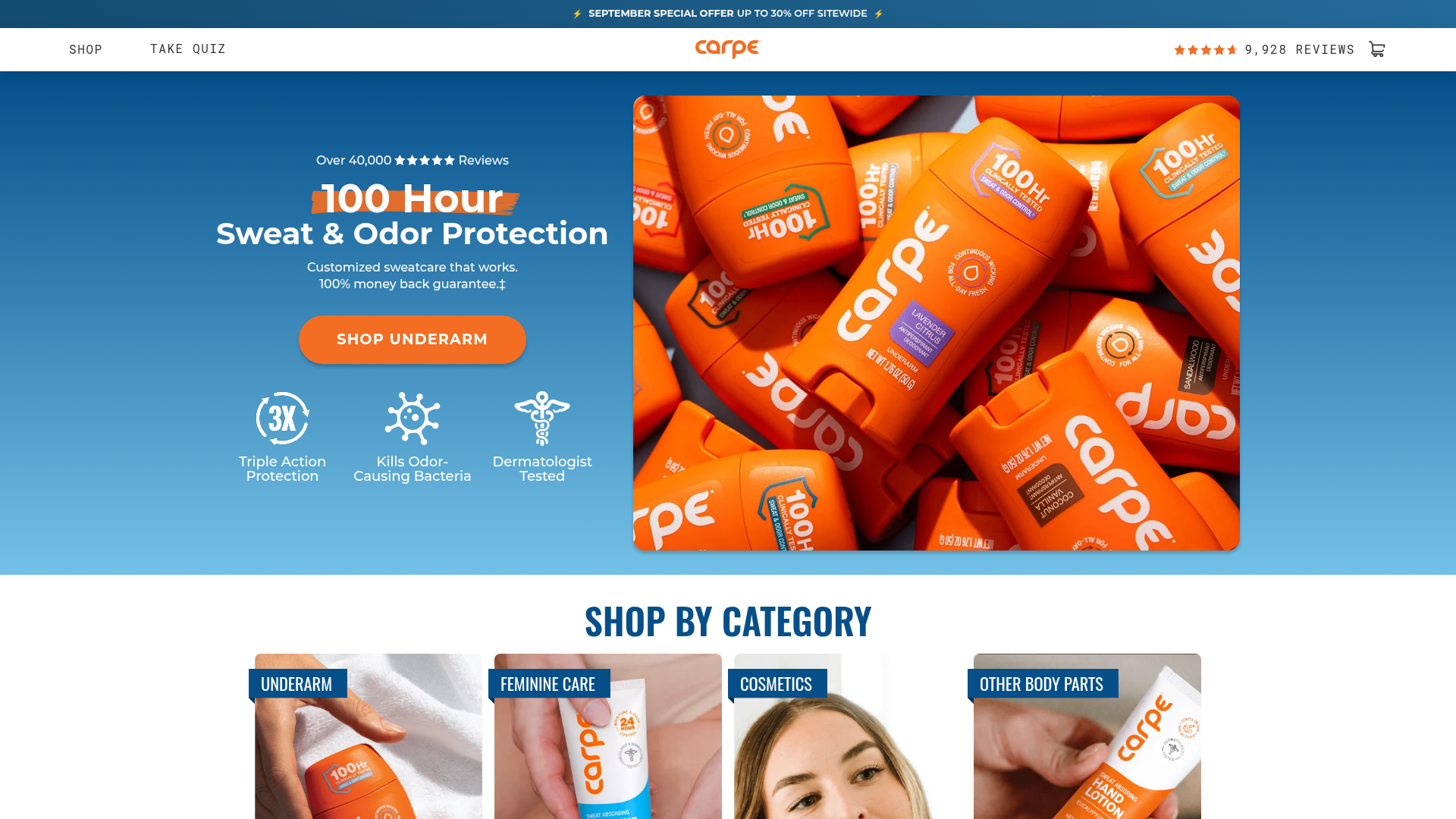
Carpe vs Sofdra is worth reading before choosing, as Carpe is a direct-to-consumer OTC brand selling aluminum-based antiperspirant lotions, sticks, wipes, and powders across many body zones, positioned as customized sweat care. Its hand lotion runs on Aluminum Sesquichlorohydrate 15%.
What They Offer
- Aluminum sesquichlorohydrate lotions for hands and feet
- Broad zone coverage including underarms, face, groin, and scalp
- Subscription bundles and a money-back guarantee
Good for: People with mild sweating who want the broadest OTC product range across many body areas without a prescription.
Limitation: Carpe is self-directed OTC with no clinical oversight or titration, and its surface duct-plugging active often struggles to penetrate the thicker skin of palms and soles where sweating is hardest to treat.
Bottom line: Carpe offers wide OTC variety, but Twofold provides a prescription mechanism, a penetration-focused formulation, and a dermatologist assessing all affected zones under one plan.
SweatGuard
SweatGuard is an over-the-counter antiperspirant in the aluminum chloride category, sold without a prescription and positioned for people dealing with excessive sweating. Verifiable product-specific detail is limited, so we're keeping this to the OTC antiperspirant category it belongs to.
What They Offer
- Aluminum-based OTC antiperspirant for excessive sweat
- No-prescription, self-directed purchase
- Primarily underarm-focused application
Good for: First-time seekers with mild sweating who want an inexpensive, immediately available option.
Limitation: It plugs ducts at the surface with no dermatologist evaluation or dose adjustment, and tends to fall short on hands, feet, and face where thicker skin resists absorption.
Bottom line: SweatGuard fits early, mild cases, but readers needing a different mechanism, multi-zone coverage, and medical guidance are better served by Twofold.
Feature Comparison Table of Sweat Blockers
Here's how the six options line up side by side.
| Product | Mechanism | Body Zones Covered | Prescription Required | Dermatologist Oversight Included | Drug-Free |
|---|---|---|---|---|---|
| Twofold | Anticholinergic gel (nerve signal) | Hands, feet, underarms, face, back, chest, groin | Yes | Yes | No |
| Dermadry | Iontophoresis | Hands, feet, underarms | Yes | No | Yes |
| Duradry | Aluminum antiperspirant | Underarms, face, body | No | No | No |
| SweatBlock | Aluminum antiperspirant | Underarms, hands, feet, face, body | No | No | No |
| Carpe | Aluminum antiperspirant | Hands, feet, underarms, face, groin, scalp | No | No | No |
| SweatGuard | Aluminum antiperspirant | Underarms, hands, feet, face, body | No | No | No |
Why Twofold Stands Out
If you're searching for a sweat blocker, chances are you've already worked through the drugstore aisle: clinical-strength wipes, aluminum sticks, overnight gels. When those plug-the-duct products stall out, Twofold picks up where they fall short. The oxybutynin anticholinergic gel interrupts the nerve signal instead of coating the surface, covers the zones antiperspirants struggle with, and comes with a dermatologist who tunes your dose over time.
That care is guided, adjustable, and delivered to your door. Results aren't guaranteed and sweating returns if you stop, so talk with a provider about your own situation, since serious causes of excessive sweating do exist.
Final Thoughts on Reducing Excessive Sweat
There's no single winner here, just the option that fits your body and your routine. Antiperspirants handle mild cases fine, but when they fall short, a nerve-signal treatment with real dermatologist oversight opens up more of the zones that antiperspirants miss. Check in with a provider about what's behind your sweating, and you'll have a clearer path to the relief you're after.
FAQ
How do I choose between Twofold, Dermadry, and an OTC antiperspirant like SweatBlock?
Start with where you sweat and how severe it is: OTC options like SweatBlock or Carpe suit mild underarm sweating, Dermadry works well for isolated palm and foot sweat, and Twofold fits people who need multi-zone coverage and dermatologist oversight after drugstore products stall out.
Is Twofold better than Duradry for palm and foot sweating?
Duradry is built around a three-step underarm routine and offers no targeted treatment for palms or feet, while Twofold's oxybutynin gel is designed to penetrate the thicker skin of hands and feet, so Twofold is the more fitting choice for those zones.
Do Dermadry and Twofold both require a prescription?
Yes, both require a prescription in the U.S., but they differ in mechanism and support: Dermadry is a drug-free iontophoresis device you buy once, while Twofold is an ongoing plan that includes a dermatologist review and unlimited follow-up care.
Which sweat blocker works best for beginners with mild sweating?
If your sweating is mild and mostly in the underarms, a no-prescription OTC antiperspirant like SweatBlock, Carpe, or SweatGuard is an easy, low-cost starting point before moving to prescription options.
When should I switch from an aluminum antiperspirant to a prescription option like Twofold?
If you've worked through clinical-strength wipes and overnight gels and they're still not cutting it, or you need coverage for hands, feet, or face, that's a good time to consider a nerve-signal treatment like Twofold with dermatologist guidance.
If you see a mistake or something you think should be updated, let us know at hello@itstwofold.com!


