

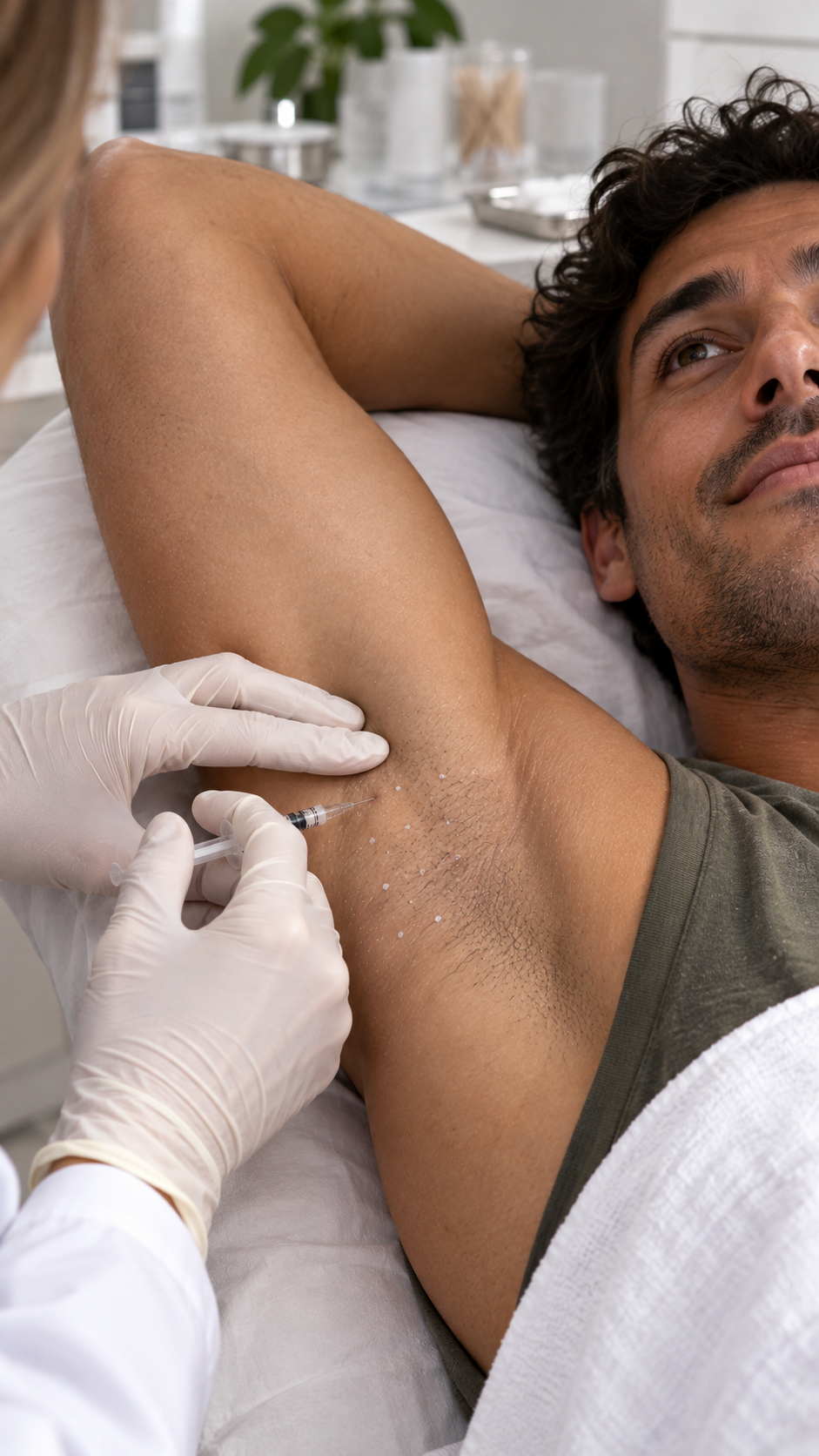
If you've tried clinical-strength antiperspirants and still find yourself planning outfits around sweat, underarm Botox is probably on your radar. We're breaking down what the treatment actually involves so you can weigh whether it makes sense for where you are right now.
TLDR:
- Underarm Botox is FDA-approved for hyperhidrosis and works by blocking nerve signals to sweat glands
- Results typically last four to six months, meaning you return for repeat visits to maintain relief
- A single session treating both underarms can run around $1,000, and that cost repeats one to three times per year
- Side effects are generally mild and short-lived, but talk through your full history with a provider before booking
- Twofold is a virtual sweat clinic connecting people with board-certified dermatologist who may prescribe treatment options as needle-free, at-home options
How Underarm Botox Works for Hyperhidrosis
Your sweat glands don't fire on their own. They wait for a chemical messenger called acetylcholine, released by nearby nerves, to tell them when to switch on. In hyperhidrosis, that signal runs overtime, so your underarms sweat when there's no real reason to.
Botox, the brand name for botulinum toxin, interrupts that conversation. Injected just under the skin of your underarms, it blocks the nerves from releasing acetylcholine to the sweat glands in the treated zone. No message, no sweat.
The effect stays local. Only the glands near each injection point go quiet, which is why placement across the underarm matters so much.
The Pros of Underarm Botox
For many people with underarm sweating, Botox has a lot going for it:
- FDA-approved for axillary hyperhidrosis, meaning excessive underarm sweating in particular, so it carries formal regulatory backing for this exact use.
- Strong, documented results. A one-year prospective study reported a 96% success rate in severe cases plus quality-of-life gains, and a 2025 meta-analysis confirmed its efficacy and safety for primary axillary hyperhidrosis.
- Non-surgical. No incisions, no anesthesia, no glands destroyed.
- Low-maintenance durability. Instead of a nightly routine, you get months of relief from one visit, which appeals if daily upkeep wears on you.
The Cons of Underarm Botox
The upsides come with real trade-offs worth sitting with before you book:
- Relief is temporary. Effects typically last four to six months, so you're back in the chair once or twice a year, indefinitely, to keep results going.
- It means needles. Botox is delivered through multiple small injections across each underarm, which some people find uncomfortable and others simply want to avoid.
- Results fade on their own timeline. Some patients notice the effect wearing off faster than expected, so your mileage may vary.
One caveat: if you're weighing Botox for your palms too, some palmar patients notice temporary grip weakness after treatment. That's specific to the hands, but worth knowing if sweat is a multi-zone problem for you.
What the Underarm Botox Procedure Involves
Most underarm Botox appointments wrap up in under half an hour. Here's the general flow:
- Skip antiperspirant on the day of, and avoid shaving right before so the skin isn't irritated.
- Your provider may run a quick starch-iodine test, dabbing your underarms to map where you sweat most.
- The area gets cleaned, and sometimes numbed with ice or a topical cream.
- You'll get a series of small injections in a grid across each underarm, usually 15 to 20 per side.
Most people describe each injection as a mild rubber-band snap, and the underarm tends to be one of the more comfortable spots to treat. Afterward, care is minimal: skip heavy workouts and hot showers for a day.
When to Expect Results
Botox doesn't work the second you leave the office. It takes a few days for the toxin to settle in and quiet the nerve signals reaching your sweat glands.
Most people notice their underarms drying out within four to five days. Full effects usually land around the two-week mark, once every treated zone has responded.
That two-week point matters for another reason. Providers often schedule a follow-up then to check for missed or under-treated spots, and a small touch-up can even out patchy areas. If part of your underarm still sweats after two weeks, flag it instead of waiting.
How Much Underarm Botox Costs
Cost is usually the deciding factor, so let's be plain about it.
A single session treating both underarms typically runs around $1,000 (learn more about the cost of Botox for underarm sweating), though the final number varies with your provider, your location, and how many units you need. Since results fade in months, that cost repeats one or two times a year for as long as you keep it up.
Insurance can help. Some plans cover botulinum toxin for axillary hyperhidrosis, but they usually require prior authorization and proof you tried other treatments, like prescription antiperspirants, first. Check with your insurer before booking so the price doesn't catch you off guard.
Risks and Side Effects of Underarm Botox
Botox has a well-documented safety record for the underarms, and serious problems are rare when a licensed provider handles the injections. The armpit is one of the more forgiving areas to treat, with a safety profile that beats trickier spots like the palms or face.
Commonly reported side effects include:
- Pain, redness, or tenderness at the injection points
- Minor bruising or swelling
- Occasional headache
Most of these fade within a few days. This is not a complete list of possible side effects, so talk through your full history with your provider before treatment.
Who Is a Good Candidate for Underarm Botox
Botox usually isn't the first thing you try. It tends to make sense once prescription-strength antiperspirants haven't given you enough relief, the standard next rung on the treatment ladder for stubborn underarm sweating.
Before going further, it's worth confirming what's driving the sweat. Primary hyperhidrosis, which shows up in symmetric areas and often runs in families, is the type Botox targets. Treatments like iontophoresis for hyperhidrosis are another option worth knowing about. Secondary hyperhidrosis, triggered by an underlying condition or medication, needs that root cause looked at first, so a provider should sort out which one you have.
You may be a poor candidate if you're pregnant, breastfeeding, or have certain neuromuscular conditions, including but not limited to those listed here. Talk it through with a provider.
How Underarm Botox Compares to Other Treatments
Botox is one option among several for underarm sweating, and the right fit depends on how you want to treat it.
| Treatment | Format | Trade-off |
|---|---|---|
| Botox | In-office injections, months of relief | Repeat visits, temporary |
| Topical anticholinergics | Daily at-home gel or cloth, no needles | Requires nightly routine |
| miraDry microwave thermolysis | In-office, near-permanent underarm results | High upfront cost, short-term downtime |
| Oral medication | Daily pill for multi-site sweating | Higher systemic side effect burden |
If your sweat is limited to your underarms and you'd rather skip needles, a topical often makes sense. Sweat gland removal suits people wanting a lasting underarm fix who can absorb the cost. Oral options fit better when sweating shows up across several areas at once; see more about reducing excessive sweating through lifestyle changes and OTC products.
Managing Hyperhidrosis Without Clinic Visits: Where Twofold Fits
If needles every few months and a four-figure bill each visit feel like a lot to carry just to stay dry, there's a gentler path to consider first.
We built Twofold as a virtual sweat clinic. You complete an online intake, a sweat-specialized dermatologist reviews it, and if it's a good fit they prescribe a compounded topical oxybutynin gel applied once nightly, or an oral option when that suits you better. The gel is aluminum-free and non-injectable, quieting the nerve signal to your sweat glands where you apply it.
No appointments, no insurance, flat pricing at $150 for a three-month supply ($50/mo) with unlimited dermatologist messaging included.
Final Thoughts on Underarm Botox Pros and Cons
Underarm Botox earns its reputation, but it asks something of you in return: a recurring bill and a needle appointment every few months. That works great for some people and feels like too much for others. Either way, knowing the full picture puts you in a better spot to decide what fits.
FAQ
What are the pros and cons of underarm Botox for hyperhidrosis?
Underarm Botox is FDA-approved for axillary hyperhidrosis, backed by strong clinical data including a 96% success rate in severe cases, and requires no surgery or daily routine. The main trade-offs are cost (around $1,000 per session), the need for repeat injections every four to six months, and the fact that results fade on their own timeline, so some people find relief wears off faster than expected.
Underarm Botox vs. topical anticholinergics for hyperhidrosis: which fits better?
Botox suits people who want months of hands-off relief and can absorb the cost and clinic visits, while topical anticholinergics like compounded oxybutynin 8% gel work for those who prefer a needle-free, at-home nightly routine with no repeat appointments. If your sweating extends beyond your underarms to your hands, feet, or face, a topical option also covers multiple zones in a single treatment, whereas Botox only quiets the glands at each injection point.
How long does underarm Botox last?
Underarm Botox typically lasts four to six months, after which sweating returns as the nerve signals gradually recover. Most people schedule one or three sessions per year to maintain results, and a follow-up at the two-week mark after each treatment helps catch any under-treated spots early.
Can I manage underarm hyperhidrosis without going to a clinic?
Yes. Telehealth options like Twofold let you complete an online intake, get reviewed by a sweat-specialized dermatologist within about 24 hours, and receive treatment, like a compounded prescription topical oxybutynin 8% gel, or oral medication, shipped to your door, all without an in-person visit.
Is underarm Botox covered by insurance?
Some insurance plans do cover botulinum toxin for axillary hyperhidrosis, but prior authorization is typically required along with documented proof that other treatments, like prescription-strength antiperspirants, were tried first. Check directly with your insurer before booking so you know what to expect out of pocket.
If you see a mistake or something you think should be updated, let us know at hello@itstwofold.com!


