

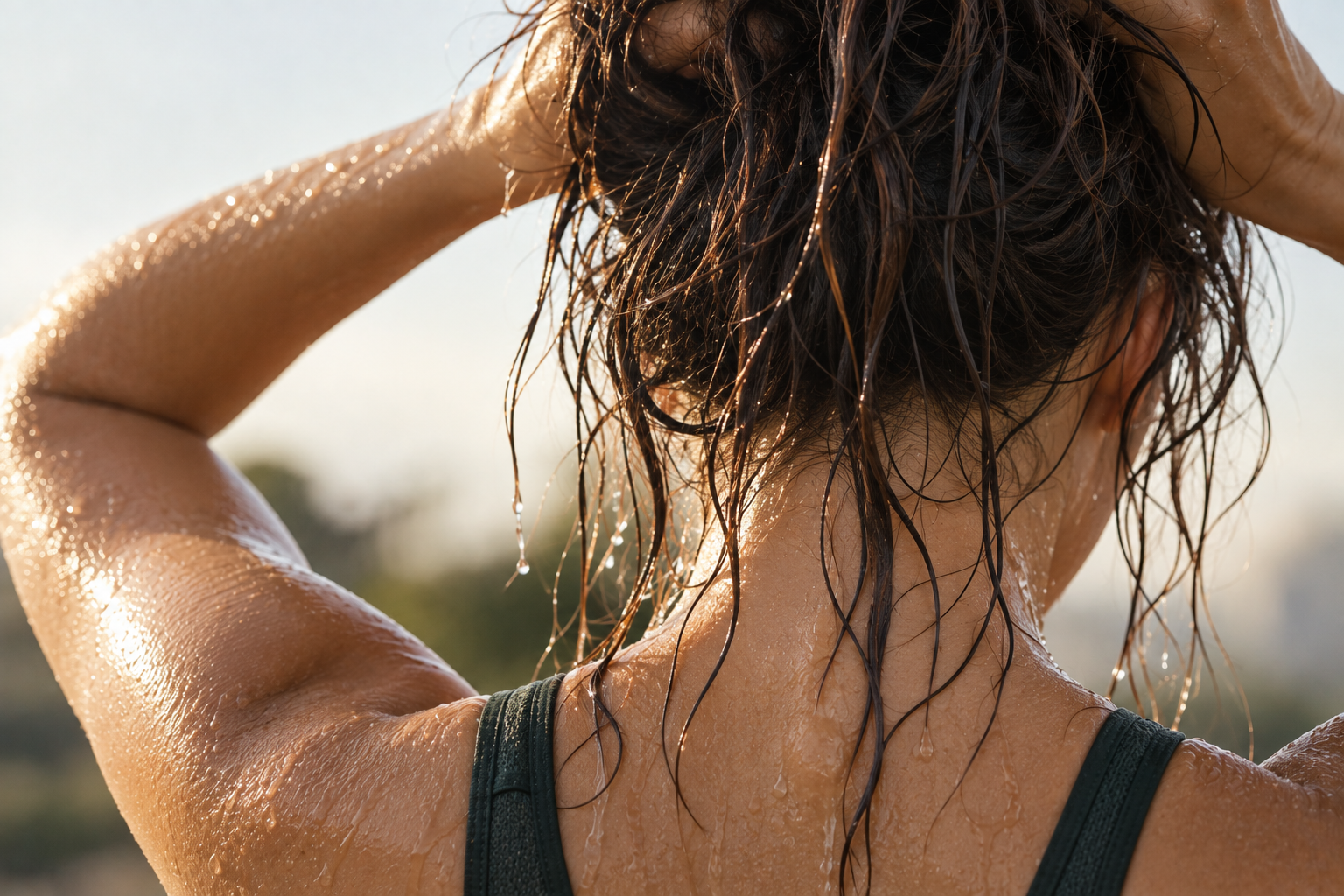
It's frustrating when your hair drips while everyone else stays perfectly dry, and hiding it feels almost impossible. If you sweat so much your hair is wet, the culprit is often heavy sweating on the scalp and face, and knowing what's behind yours changes which solutions will help. We'll cover the common causes, the everyday triggers that make it worse, and the treatments that actually target the tricky spot your hair covers.
TLDR:
- Hair that soaks with sweat often points to craniofacial hyperhidrosis, excessive sweating of the head and scalp.
- Head sweating is either primary (runs in families, starts before 25) or secondary (from a condition or medication), and the type shapes treatment.
- Cooling down, looser hairstyles, dry shampoo, and hairline antiperspirant can ease mild cases, but often only partway.
- Oral anticholinergics like glycopyrrolate or oxybutynin are the practical scalp pick since topicals are hard to apply through hair; see a provider to rule out serious causes.
- Twofold offers dermatologist-guided care online, with a compounded topical oxybutynin gel or oral options.
What Wet Hair From Sweat Actually Means
Wet hair when others are barely glistening usually points to excessive sweating of the head and scalp, a pattern clinicians call craniofacial hyperhidrosis. Craniofacial simply means the face, head, and scalp.
Normal sweating cools your body down, then stops once the heat clears. What you are describing goes further: sweat pouring out at times and in amounts far beyond what temperature control requires, sometimes leaving hair visibly wet.
That is a recognized medical pattern. Below, we walk through what drives it and what actually helps.
Why the Scalp and Head Sweat So Much
The head is a sweat hotspot for a few overlapping reasons. Your scalp and face carry a dense concentration of eccrine glands, the small glands that release watery sweat to cool you. The body holds roughly 2 to 4 million sweat glands overall, and when they run overactive, they produce sweat when others would stay dry.

Add heat and steady blood flow to the head, and output climbs fast. Hair then acts like a towel: it traps moisture. Sweat that would quietly evaporate off bare skin instead pools at the roots and drips, which is why your hair looks soaked and feels so hard to hide.
Primary vs. Secondary: The Two Root Causes
Excessive head sweating falls into two buckets, and knowing which one you have shapes everything that follows.
Primary craniofacial hyperhidrosis is idiopathic, meaning no clear underlying cause. It tends to run in families, links to an overactive sympathetic nervous system, usually starts before age 25, shows up symmetrically on both sides, and eases during sleep.
Secondary sweating is driven by another condition or a medication. It can begin at any age, may soak your whole body, and can continue overnight.
| Feature | Primary craniofacial | Secondary |
|---|---|---|
| Underlying cause | Idiopathic (no clear cause) | Another condition or a medication |
| Family history | Tends to run in families | Not typically inherited |
| Typical onset | Usually before age 25 | Can begin at any age |
| Pattern | Symmetrical on both sides | May soak your whole body |
| During sleep | Eases during sleep | Can continue overnight |
If your pattern looks secondary, a medical workup should come before treatment.
Medical Conditions and Medications That Cause Head Sweating
When head sweating traces back to another cause, the list worth knowing includes thyroid disorders, diabetes, menopause, pregnancy, obesity, infections, and Parkinson's. Certain medications can drive it too, among them some antidepressants and propranolol.
Sweat that soaks your hair and bedding overnight may point to night sweats and their causes, which are often tied to an underlying condition and warrant evaluation, especially alongside fever, weight loss, cough, or pain in one spot.
We can't tell you what's behind your symptoms from here. If any of this sounds familiar, see a provider to rule things out.
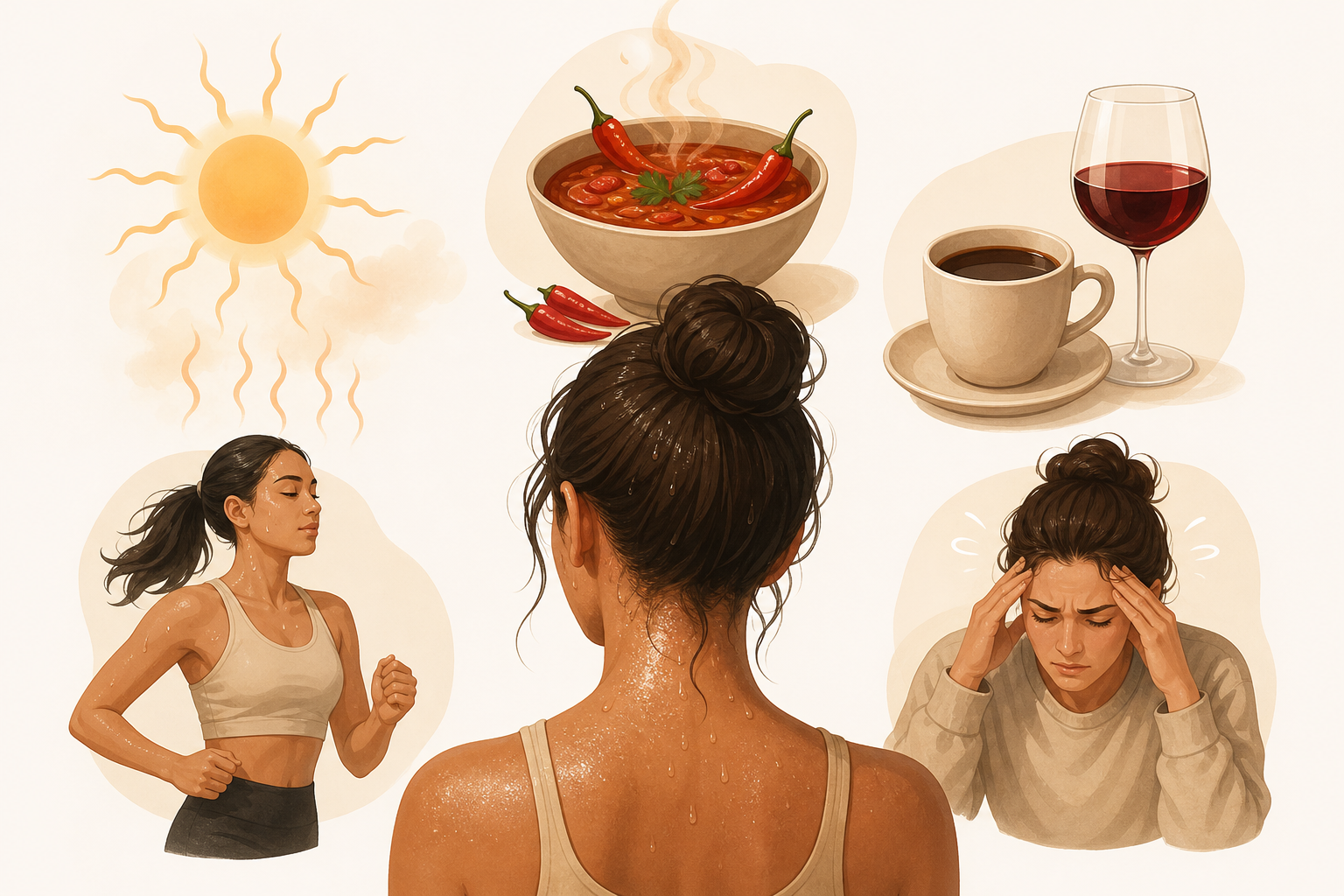
Common Triggers That Make Scalp Sweating Worse
Even with a set underlying cause, certain everyday inputs turn up the volume. Spotting yours is often the first practical step before treatment.
- Heat and humidity, which push your cooling system into overdrive
- Stress and anxiety, a classic flare trigger for head sweat
- Spicy food, which can set off excessive face sweating on the face and scalp
- Caffeine and alcohol, both known to nudge output higher
- Exercise and physical exertion
- Hormonal changes, like those around menopause or pregnancy
Keep a mental note of what precedes your worst days. Patterns tend to surface quickly once you start watching.
How Wet Hair From Sweat Affects Daily Life and Hair Health
Sweat-soaked hair goes well past discomfort. Visible dripping in a meeting or on a date can feel humiliating, so many people wash their hair far more than they'd like, and constant scalp moisture can bring irritation, itchiness, or flaking.
None of that is vanity. About 75% of people with hyperhidrosis report negative effects on emotional well-being. If your sweating shapes what you wear, where you sit, or who you see, looking for a fix is a reasonable response.
How Scalp and Head Sweating Is Diagnosed
A provider usually starts with your story. Expect questions about when the sweating began, whether it hits both sides evenly, if it quiets during sleep, and whether family members share it. Those answers map onto the criteria for primary hyperhidrosis and help separate it from a secondary cause.
From there, a few simple tools can confirm the picture:
- Starch-iodine test, where a coating turns dark blue wherever sweat appears
- Gravimetric paper test, which weighs sweat to measure output
- Bloodwork, to rule out thyroid or other underlying issues
Pinning down the cause shapes which treatment fits.
At-Home and Lifestyle Strategies to Manage Sweaty Hair
Start with what you can control today. A few adjustments often take the edge off:
- Keep cool: fans, breathable rooms, and less heat exposure lower output, and some of these overlap with natural hyperhidrosis treatments worth a try
- Trim or restyle: shorter or looser hair traps less moisture at the roots
- Choose breathable head coverings over tight, synthetic ones
- Use dry shampoo between gentle washes to manage buildup without over-stripping
- Apply clinical-strength antiperspirant along the hairline where appropriate, a tactic that overlaps with broader strategies to stop face sweating
Aluminum-based antiperspirants work by plugging sweat ducts, but the main trade-off is irritant dermatitis, with burning and stinging common. For moderate to severe cases, these steps usually help only partway.
Medical Treatment Options for Head and Scalp Sweating
The scalp is genuinely tricky to treat, so it helps to know what each option realistically offers.
- Oral anticholinergics: glycopyrrolate for hyperhidrosis and oxybutynin reduce sweat body-wide, often the practical pick for the scalp since topicals are hard to apply through hair. The trade-off is systemic side effects like dry mouth, and it helps to weigh glycopyrrolate vs oxybutynin for sweating when choosing between them.
- Topical oxybutynin for hyperhidrosis works well on the face and hairline, but coverage through dense hair is limited.
- Botulinum toxin: can quiet the forehead and scalp, though it needs a provider experienced enough to avoid brow or eyelid drooping.1
- Iontophoresis and surgery: neither targets the scalp well.
A dermatologist can match the approach to your pattern.
When to See a Doctor About Scalp Sweating
Some sweating calls for a provider sooner than later. Reach out if your scalp sweating disrupts daily life, started suddenly or later in adulthood, shows up on one side only or across your whole body, or comes with fever, unexplained weight loss, chest pain, or similar warning signs.
Serious causes exist and can't be ruled out from a symptom list, so let a provider pin down what's driving yours. If it feels awkward to bring up, know that only about half of people with hyperhidrosis ever talk to a healthcare provider. Raising it is normal, and worth doing.
How Twofold Helps Manage Excessive Sweating
If daily sweating has worn you down, we built Twofold as one way to reach dermatologist-guided care without an in-person visit. Board-certified, sweat-specialized dermatologists review your online intake in about 24 hours and, when it fits, prescribe treatment.
The flagship product available is a compounded oxybutynin gel, applied once nightly, fast-drying and aluminum-free. Since the scalp is hard to treat through hair, our dermatologists may instead prescribe oral glycopyrrolate or oral extended-release oxybutynin when that suits you better.
A few things to keep in mind: oxybutynin dosage for sweating is off-label for hyperhidrosis use, and results are not permanent, since sweating returns if you stop. For personal health questions, talk to a provider about what fits your situation.
Final Thoughts on Why You Sweat So Much Your Hair Gets Wet
A sweat-soaked scalp is frustrating, but it doesn't have to define your day. Once you understand your triggers and let a provider figure out the cause, you can match a treatment to what your scalp actually needs. Small steps now can add up to real relief down the road.
FAQ
What treatments help with scalp sweating that makes your hair wet?
Oral anticholinergics like glycopyrrolate and oxybutynin are often the practical pick for the scalp, since topical gels are hard to apply through dense hair. Botulinum toxin can also quiet the forehead and scalp when a provider experienced enough to avoid brow or eyelid drooping applies it, so the right fit depends on your pattern and a dermatologist's input.
Can I get treatment for excessive head sweating without an in-person visit?
Yes. Twofold's board-certified, sweat-specialized dermatologists review your online intake in about 24 hours and prescribe treatment when it fits, including oral glycopyrrolate or oral extended-release oxybutynin for scalp sweating that's tough to reach through hair.
Is primary or secondary hyperhidrosis behind hair that's soaked with sweat?
It depends on your pattern. Primary craniofacial hyperhidrosis has no clear cause, tends to run in families, usually starts before age 25, shows up evenly on both sides, and eases during sleep, while secondary sweating is driven by another condition or medication, can begin at any age, and may continue overnight. If yours looks secondary, see a provider for a workup before starting treatment.
How is scalp and head sweating diagnosed?
A provider reviews your history and may use the starch-iodine test, gravimetric testing, or bloodwork. See the diagnosis section above for details.
Why does my hair get so wet when I sweat but others stay dry?
Your scalp and face carry a dense concentration of eccrine glands, and when they run overactive they produce far more sweat than temperature control requires. Hair then acts like a towel, trapping moisture that would quietly evaporate off bare skin, which is why it pools at the roots and drips.
If you see a mistake or something you think should be updated, let us know at hello@itstwofold.com!


