


Menopause and heavy sweating tend to arrive together, but the fix depends on the type you're dealing with. Whole-body flashes respond to one set of treatments, while sweaty hands or underarms that ignore the thermostat need something aimed directly at the glands. We'll sort out the difference so you can figure out what might actually work for you.
TLDR:
- Menopause narrows your body's internal thermostat, and up to 80% of women get hot flashes or night sweats.
- Hot flashes and night sweats respond to whole-body treatments; focal sweating needs gland-targeted options.
- Hormone therapy cuts vasomotor symptoms by about 75%, but nonhormonal prescriptions exist if it's not your fit.
- See a provider if sweating disrupts your life or comes with new symptoms; serious causes can't be ruled out alone.
- Twofold treats localized sweating via telehealth with prescription treatments.
What Menopause Does to Your Body's Sweat Response
Your body runs on a kind of internal thermostat, and it lives in the hypothalamus. Estrogen helps keep it calibrated. As estrogen declines and swings during menopause, the thermoneutral zone (the temperature range your body tolerates without reacting) narrows. Small warmth that once passed unnoticed now trips the alarm, and you flush and sweat to cool down.
That reaction is common. Up to 80% of women get hot flashes or night sweats, and roughly 30 to 50% call them frequent or severe.
Hot Flashes, Night Sweats, and True Hyperhidrosis: Knowing the Difference
The words get used interchangeably, but they behave differently and respond to different treatments.
- Hot flashes: sudden daytime waves of heat and sweating, a vasomotor symptom driven by that narrowed thermostat.
- Night sweats: the same episodes happening while you sleep, sometimes soaking the sheets.
- Localized hyperhidrosis: persistent heavy sweating in the underarms, palms, or soles that isn't tied to a heat wave.
Vasomotor sweating tends to respond to whole-body approaches, while focal sweating often needs treatments aimed directly at the sweat glands.
| Type | When it happens | What's behind it | Treatment approach |
|---|---|---|---|
| Hot flashes | Sudden daytime waves of heat and sweating | Vasomotor symptom driven by a narrowed thermostat | Whole-body treatments |
| Night sweats | The same episodes while you sleep, sometimes soaking the sheets | Vasomotor symptom driven by a narrowed thermostat | Whole-body treatments |
| Localized hyperhidrosis | Persistent heavy sweating in the underarms, palms, or soles, not tied to a heat wave | Overactive sweat glands, not the menopausal thermostat | Treatments aimed directly at the sweat glands |
Common Triggers That Intensify Menopausal Sweating
Not every episode comes out of nowhere. Certain everyday things widen that heat response and set off a flash faster, and once you know yours, you can sidestep a good number of them.

Commonly cited triggers include:
- Caffeine and hot drinks
- Alcohol, especially red wine
- Spicy foods
- Warm rooms and heavy bedding
- Stress and anxiety
- Smoking
- Tight or synthetic clothing that traps heat
Triggers are personal, though. Keep a short symptom diary for a week or two, noting what you ate, wore, and felt before each episode. The patterns tend to show themselves quickly.
When Excessive Sweating Might Not Be Menopause
Menopause is easy to blame, and often it's the right answer. Still, midlife sweating can come from elsewhere. Thyroid disorders, diabetes, some infections, anxiety, and certain prescription medications (including some antidepressants) can all cause or worsen heavy sweating.
You can't sort these out on your own, and serious causes can't be ruled out from the outside. So if your sweating is heavy or new, see a provider to find what's driving it. This article is educational and not a substitute for personalized medical advice.
Lifestyle and At-Home Strategies to Manage Sweating
Before medication, most of us start with everyday adjustments. They help mild to moderate symptoms and cost nothing to try.
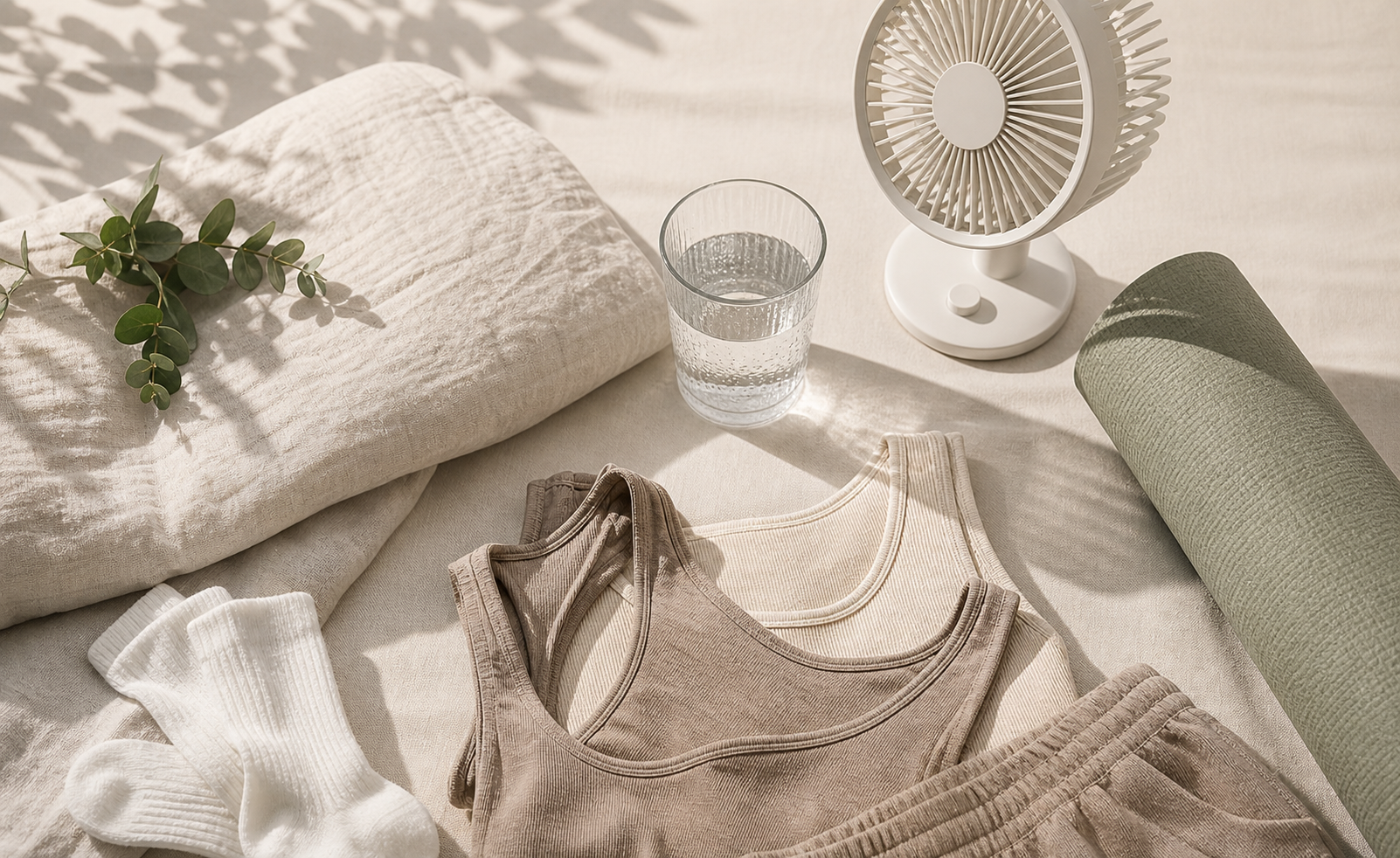
- Keep the bedroom cool, and choose breathable bedding plus layered clothing you can peel off fast.
- Aim for a healthy weight, since extra insulation traps heat.
- Go easy on alcohol and caffeine.
- Quit smoking and stay active most days.
- Practice paced breathing to calm the stress that feeds a flash.
Be realistic with yourself, though. If sweating stays heavy or persistent, these steps alone may not cut it.
Hormone Therapy for Menopausal Sweating
Hormone therapy, sometimes called menopausal hormone therapy or HRT, is one of the most well-studied treatments for hot flashes and night sweats. It works by replacing the estrogen your body is losing, which helps widen that narrowed thermostat back out. It comes as pills, skin patches, gels, and sprays.
The results are strong. Systemic estrogen is the effective treatment for hot flashes, cutting vasomotor symptoms by about 75%.
It isn't right for everyone, though. Eligibility depends on your age, time since menopause, and personal and family history, so decide with a provider.
Nonhormonal Prescription Options
Not everyone can take hormones, and some would rather not. Real prescription options for hyperhidrosis exist, each prescribed and monitored by a provider.
- Certain antidepressants (SSRIs and the SNRI venlafaxine): shown in studies to reduce hot flashes by 19 to 60 percent and generally well tolerated, though individual results vary (per older but widely cited data).
- Gabapentin: often used for night sweats.
- Clonidine: a blood pressure medication that can ease flashes.
- Fezolinetant: a newer nonhormonal option targeting the brain's temperature signaling.
Each carries its own side effect profile, so weigh the fit with your provider.
Treating Localized Sweating: Antiperspirants and Topical Anticholinergics
When menopause overlaps with focal hyperhidrosis in the underarms, hands, or feet, whole-body treatments often miss it. Two approaches target the glands directly.
Aluminum-based antiperspirants, clinical-strength or prescription-strength, plug the sweat ducts near the skin's surface. Irritation is the common trade-off.
Topical oxybutynin gel blocks acetylcholine, the signal telling sweat glands to switch on, cutting sweat right where you apply it. Local action generally means less systemic exposure than pills. Commonly reported side effects include application-site reactions, dry mouth, and thirst. This is not a complete list, and these are prescription decisions made with a provider.
Procedural and Device-Based Treatments for Stubborn Sweating
When simpler steps fall short, focal sweating has a next tier, usually reserved for stubborn cases.
- Iontophoresis for hyperhidrosis: a mild current through water treats palms and soles. It needs several sessions a week at first, then ongoing maintenance, and sweating returns if you stop.
- Underarm Botox injections: target underarms, hands, or face in-office. Results typically last around 4 to 6 months, then repeat.
- Microwave thermolysis: destroys underarm sweat glands in one or two sessions, with longer-lasting results but a higher upfront cost and some soreness.
Each trades cost and invasiveness for durability, so talk options through with a provider.
Alternatives to In-Person Visits: Telehealth for Sweating Treatment
Getting treated for heavy sweating no longer requires a waiting room. You can get a hyperhidrosis Rx online without a live video call entirely.
- You complete an online intake covering your symptoms, health history, and current medications.
- A licensed provider reviews it remotely, often within a day, and prescribes if it's a fit.
- A pharmacy ships the treatment right to your door.
It suits localized, well-defined sweating well. Cases needing a physical exam or workup for secondary causes still belong in person.
When to See a Provider About Menopausal Sweating
Some sweating you can ride out. Some deserves a professional look. Reach out to a provider if any of these apply:
- Sweating disrupts your sleep or daily life
- Symptoms appear suddenly or change without explanation
- Sweating comes with weight loss, fever, or other new symptoms
- Lifestyle adjustments haven't helped
Waiting it out has a real cost. The median duration of frequent or moderate to severe hot flashes and night sweats was 7.4 years, which is why a treatment plan often beats toughing it out alone.
How Twofold Approaches Menopause-Related Sweating
For focal sweating menopause brings, Twofold works as a virtual sweat clinic. Complete a free intake, a board-certified dermatologist reviews it within about 24 hours, and medication ships in 2 to 5 business days.
The flagship compounded topical oxybutynin 8% gel, applied nightly, cuts sweat across underarms, hands, feet, and face. Oral glycopyrrolate or extended-release oxybutynin can fit better too.
Final Thoughts on Easing Menopause Sweating
There's no single fix here, and that's good news, because it means you have room to find what works for your body. From daily habits to hormone therapy to treatments for localized sweat, the right plan starts with knowing what's really behind it. Talk it through with a provider and take it from there.
FAQ
What's the best treatment for menopause excessive sweating if hormone therapy isn't an option?
Nonhormonal prescriptions like the SNRI venlafaxine, gabapentin, clonidine, and the newer drug fezolinetant can reduce hot flashes and night sweats without estrogen. For focal sweating in the underarms, hands, or feet, topical anticholinergics like oxybutynin gel target the sweat glands directly, and each of these is a prescription decision to make with a provider.
How does oxybutynin topical gel work for controlling excessive sweating?
Oxybutynin gel blocks the signal that triggers sweating, acting locally where you apply it.
What are the best telehealth options for treating hyperhidrosis in 2026?
Telehealth sweat care works well for localized, well-defined sweating, usually running asynchronously so you skip the live video call entirely. Twofold operates as a virtual sweat clinic where you complete a free intake, a board-certified dermatologist reviews it within about 24 hours, and medication ships in 2 to 5 business days, though cases needing a physical exam still belong in person.
How do I know if my sweating is menopause or something else?
You can't sort this out on your own, since thyroid disorders, diabetes, infections, anxiety, and some medications like certain antidepressants can all cause or worsen heavy sweating. See a provider if your sweating is heavy or new, appears suddenly, or comes with symptoms like weight loss or fever.
How long do menopausal hot flashes and night sweats usually last?
Hot flashes and night sweats can persist for years, so a treatment plan often beats toughing it out. If sweating disrupts your sleep or daily life or lifestyle changes haven't helped, it's worth talking with a provider about your options.
If you see a mistake or something you think should be updated, let us know at hello@itstwofold.com!


